Dressing Your Baby For Winter: Our 6 Top Tips

As the cold breeze of winter comes, here’s another dilemma among new parents: “How will I dress my baby for winter?” Apart from the poor control of their body temperature, babies can’t effectively verbalize if they already feel too cold or too warm. So how would you know if you’re dressing them enough for winter? Let’s hear it from the experts.
The American Academy of Pediatrics (AAP) recommends newborns to be dressed with layers of clothing to keep them warm during the cold weather (under 75 degrees Fahrenheit or 23.88 degrees Celsius). It is advised to dress your newborn in an undershirt and diaper, top it up with a dressing gown or pyjamas, and then cover him with a receiving blanket, a wearable blanket or a sleep sack.

If your baby is premature, dressing him with an additional layer is required to keep him warm until he reaches the age of a full-term baby. Premature babies have underdeveloped organs and less fat underneath their skin, making them more at risk of hypothermia, or the sudden drop of body temperature, which is risky for their health.
Since winter-proofing your baby involves the layering of clothes, it will be utmost important to pick which types of fabric to let them wear. You’ll need to keep them safe and comfortable despite the several layers of clothing, so how can you tell if you’re lacking or overdoing your baby’s outfit? Be it indoors or outdoors, here are some tips that you may find useful in dressing your baby for this winter season.
6 Tips for How to Dress Your Baby for Winter
Apply the one layer more than what you wear rule

As advised by the AAP, the rule of thumb in dressing babies is to add up one more layer of clothing than what you are comfortable wearing in a certain situation. Babies lose heat more quickly when compared to adults, so adding up an extra layer will help insulate the warmth more effectively and prevent babies from chilling.
Layer up comfortably
A major concern in dressing up babies for winter is how to keep your baby warm without overheating and making him uncomfortable. One trick to do it effectively is to start off with a comfortable onesie, then adding up a long-sleeved top and leggings. You may also add up a coat or snowsuit when you plan to go out and it is extremely cold outdoors. This way, you can easily remove the outermost layer of clothing once you enter a nearby establishment with regulated room temperature or upon heading back home.
Gear up with hats, mittens and booties
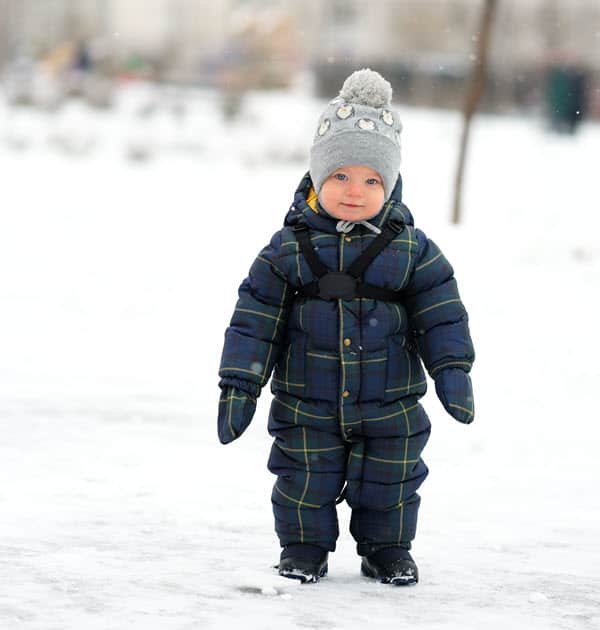
Your baby’s ears, fingers and toes are prone to frostbite, so make sure you cover them up when going outdoors during the winter days.
The hat should cover your baby’s ears. It will also be more convenient if it comes with a strap that you can fasten under your baby’s chin to prevent it from falling off. However, do be careful of using hats when your baby is sleeping indoors because it may add up the risk for SIDS due to overheating.
The mittens and booties for winter should snuggly fit your baby’s tiny hands and feet. Most varieties can roll up to your baby’s sleeves and leggings.
Safely cover up as you buckle up
Experts warn against the use of coats under the safety straps of a baby car seat. The thick fabric will provide more space between your baby and the safety straps, which can potentially be hazardous while you’re travelling. Instead, it is recommended to secure your baby in the straps first, before you cover him up with a winter coat or blanket.
Don’t overdo with covers and scarfs
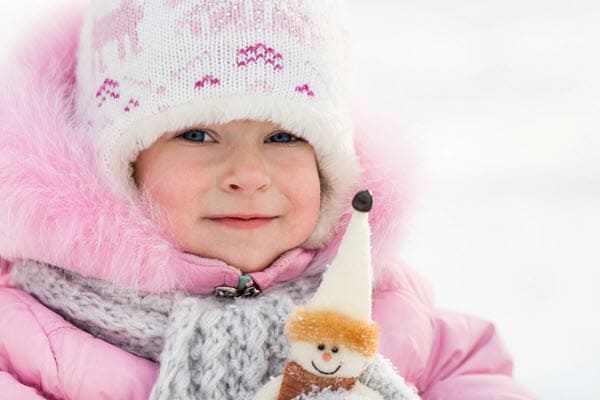
When going out for a quick stroll outdoors, it will be very tempting to wrap that cute tiny scarf around your baby’s neck or load up the stroller with a thick, fashionable blanket. But no matter how cute they appear to be, they are still not recommended for babies while on a stroller because they increase the risk of strangulation. To protect your baby from the cold winter breeze outdoors, take advantage of a stroller canopy instead. It will also help to wear your baby in a sling or a baby carrier to provide natural warmth while you go for a short walk outdoors.
Choose clothes with breathable fabric.
It is essential to choose comfortable baby clothes with breathable layers like pure cotton because they can keep air circulation underneath those layers of clothing and thus, minimizing the build-up of moisture under the clothes. This excess moisture can lead to heat rash and eczema and increases the risk of hypothermia. Baby onesies with breathable fabric can also be used all-year-round, ending to huge savings when it comes to buying baby clothes.
Conclusion
In dressing your baby for winter, you’ll never go wrong if you keep your baby’s safety and comfort a priority. On top of that, make sure to offer plenty of warm cuddles for your little one. No matter what the weather is, nothing’s more important for babies than the warmth coming from their parent’s embrace.