Post-Partum Exercise for Health and Fitness

Giving birth can be an extremely tiring and exhausting event, but the post-partum period can sometimes feel even worse. It’s imperative to take proper care of yourself post-partum, and exercising is one of the best ways to do that.
In this article, we’ll go through all the things you need to know about post-partum exercise and give you a few workout ideas to help you get back to your fitness level and improve your overall health.
Benefits Of Post-Partum Exercise
- Promotes better sleep
- Relieves stress and anxiety
- Improves your energy levels
- Helps prevent post-partum depression
- Setting a positive example for your child
- Strengthen and tone the muscles that were stretched during pregnancy
When And How To Start Exercising After Birth
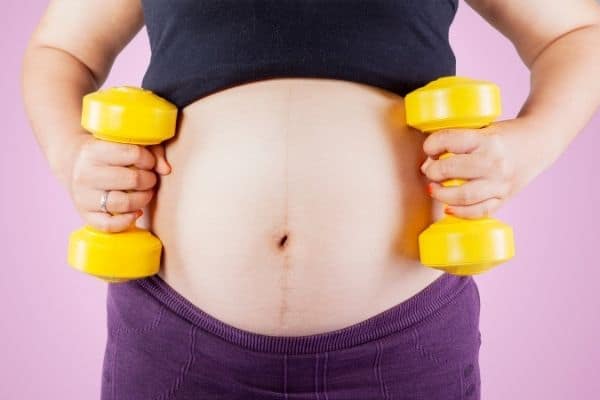
The most important thing to remember about post-partum exercise is that it isn’t about smashing goals and pushing your body to its limits. Instead, it’s about recovering after 9 months of pregnancy and strengthening your body to meet the high demands of a newborn baby.
Many new mums lack the confidence to start exercising, mainly because of the disbalance in hormones, lack of sleep, and the overwhelming emotions of having a baby. However, working out can help you overcome most of these issues to get back to feeling like your usual self and be a better mother to your child.
As for the timing, if you’ve had a healthy pregnancy and a vaginal delivery without complications, it’s safe to start exercising a few days after birth, or as soon as you feel like you’re ready.
However, if you’ve had a cesarean birth or any other complications during pregnancy, make sure to consult with your doctor about a safe timeframe.
Should I exercise while breastfeeding?
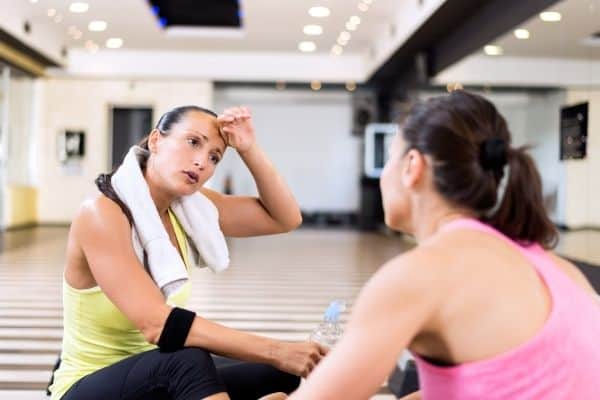
Yes, it’s perfectly safe to work out while breastfeeding. Just make sure that you’re getting enough water in your body, and try to breastfeed before working out.
Another thing to look out for is high-intensity anaerobic exercises, like jumping or doing a spin bike class. These activities can sometimes increase the lactic acid in your body, slightly changing the milk’s taste. But this is not too common and can be overcome by simply breastfeeding before working out.
Now that we’ve got that all covered, it’s time we take a look at some post-natal exercises to help you get back into shape.
The Best Post-Partum Exercise You Can Do
According to experts at the American College of Obstetricians and Gynecologists (ACOG), you should aim for 150 minutes of moderate aerobic activity that moderately increases your heart rate – like jogging – and two days of strength training.
One of the critical areas you need to target is the core. According to a 2015 study, almost all women experience the separation of the right and left abdominal muscles (diastasis recti) during pregnancy. Nearly half of them still have it at some level, even 6 months after giving birth.
Let’s go through some of the exercises you can do to increase your post-natal fitness.
Walking
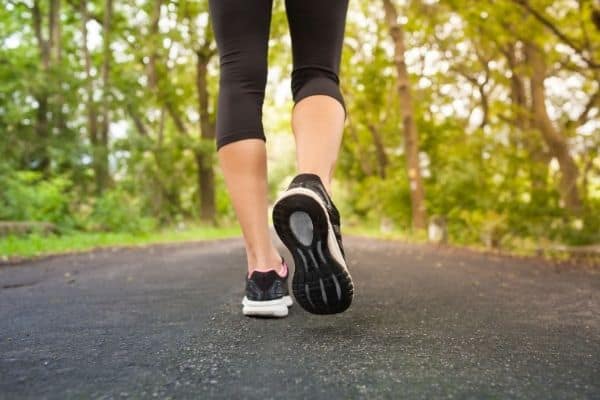
Starting with the cardio exercises or aerobic activity, walking is a great way to give your whole body a workout. It’s a gentle start to post-partum exercise and can be done anywhere and at any time.
If you don’t have time to walk around the block, consider getting a treadmill for home use on which you can walk, jog, and even run after a few months after birth.
Pelvic Floor Exercises (Kegels)
Chances are you’re already familiar with Kegel exercises if you’ve been through pregnancy. Continuing to do these exercises after birth will help you recover faster and strengthen the pelvic floor muscles.
Tighten your pelvic floor muscles, the ones you use to stop the flow of urination, hold for 10 seconds, and release. Repeat this multiple times throughout the day.
Diaphragmatic Breathing
You can start with these post-partum exercises just days after giving birth. Take a few moments each day to lay down, inhale deeply, and exhale as you push your lower back into the ground. It’s a gentle way to start your ab workouts, and it even helps you relax and reduce stress.
Cat/Cows
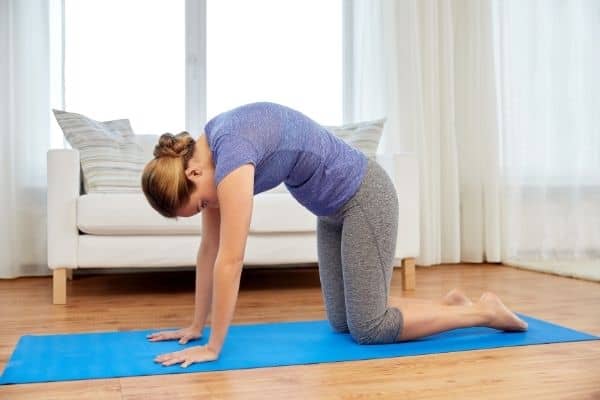
The Cat/cow is a beginner yoga stretch that strengthens the back muscles and the core, improving your spine mobility. Including it in your exercise after birth can help you reduce back pain, improve circulation in the backside of your body, and promote relaxation.
Get down on both arms and legs, and arch your back up while drawing your navel in. Then, press your belly towards the ground and bring your head upwards. Repeat this ten times.
Leg Lifts
Leg lifts can further strengthen your deep pelvic muscles and your transverse abdominal muscles. Lie down, and bring your legs straight up into the air. Then, slowly lower them down as far as you can, and bring them up. Repeat this ten times.
Bridge
Bridges target many muscle groups that support your core and posture, allowing you to transfer energy throughout your body more efficiently.
From a neutral lying position, lift your hips as high as possible while still keeping your upper body on the ground. Hold that position for a couple of seconds, and then come down. Repeat this ten times.
Planks
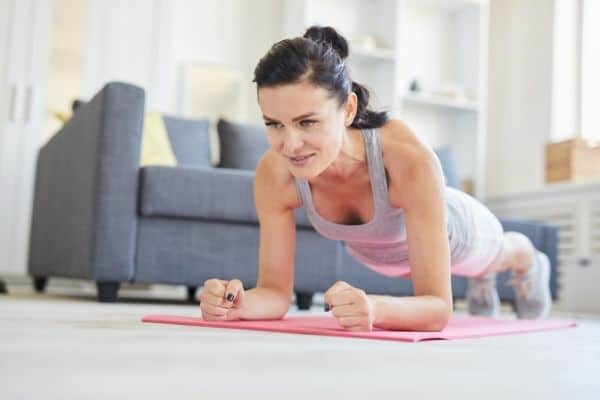
Another easy-to-do post-partum exercise that you can do shortly after birth, the plank, is one of the best ways to strengthen the entire core and the upper body.
Lie on your stomach, facing towards the floor. Contract your glutes and core and rise on your forearms and toes, and make sure that they’re the only ones touching the ground. While in this position, contract your abdominal muscles and breathe. Hold this for 30 seconds, and repeat 2-3 times.
You may not last as much at first, but after a while, you’ll get stronger and be able to increase the hold time.
Conclusion
Doing post-partum exercise can help you quickly recover from the challenging pregnancy period. It helps strengthen your core, reducing back pain along the way, and improves your overall health and mood. It’s also a great way to combat post-partum depression.
Just make sure that you’re staying safe and not striving for the best results, but pushing to recover your body and get back to full health and fitness levels. Taking a gradual approach will allow you to better take care of your little loved one and your whole family.