Bringing Home A New Puppy (Tips For How to Prepare!)

How exciting you have a new puppy to welcome into your family! The early days can be as challenging as they are fun but follow our simple tips and advice for a smooth transition to bringing your new puppy home.
Getting Your Puppy Home
It’s all too easy to think about what your new puppy needs when it arrives home but don’t forget to think about how you will transport your new furry friend from the breeder to your home. Remember that it’s a legal requirement to have your new dog in a harness or travel crate.
There is a great range available online and perhaps you have a friend who could loan you a travel crate if you don’t intend to crate train or wish to buy one in these early days. Your breeder may also be able to lend you a crate.
Living and Sleeping Areas
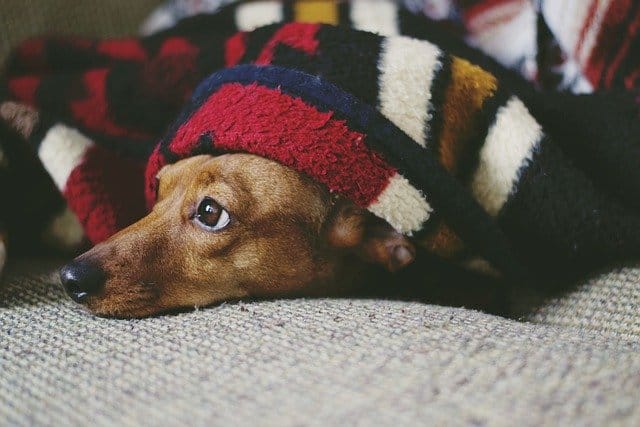
Before you get your puppy home it’s important to think about how your new dog will fit into your family. Are they going to be an inside dog, outside all the time or a mix of the two? We recommend that you decide upon this and set the routine from the beginning.
Regardless of where they will live and sleep ensure you provide a space where they will feel safe, secure, and out of drafts, and if they will live outside make sure they have protection from the sun, wind, and rain. It’s wise to make a general check of your home and garden to ensure anything dangerous or unsafe has been removed – puppies are great at getting into trouble. Check your fences and gates too – they are fabulous escape artists.
Feeding and Water
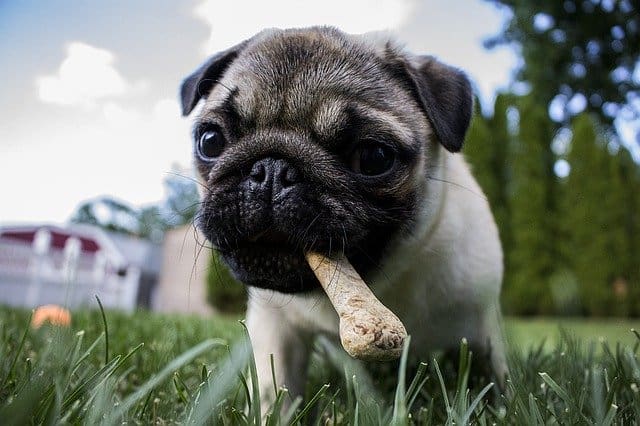
Your new puppy should be weaned off their mother’s milk by the time you take him or her home, and we suggest you continue feeding your puppy the same food as the breeder or where-ever you got your puppy so that it is something their stomach is familiar with. A premium commercial puppy food will provide a well-balanced and quality diet providing also the vitamins and minerals a growing puppy will need.
As your puppy grows you can transition onto junior food. You may prefer to give your dog a natural or raw food diet but remember to only give your dog human-grade meat and meat bones once they are old enough. As ever we advise you to talk to your vet for food advice.
In the early days, it’s best to feed your puppy four small meals a day, to avoid bloat, and being careful not to overfeed. Raw bones can be introduced gradually if you wish but generally not until your puppy is 12 weeks old. They may help with ‘teething’ issues and may also help reduce their chewing on your furniture! Even when your dog is older never feed your dog cooked bones which are prone to splitting – they must always be raw.
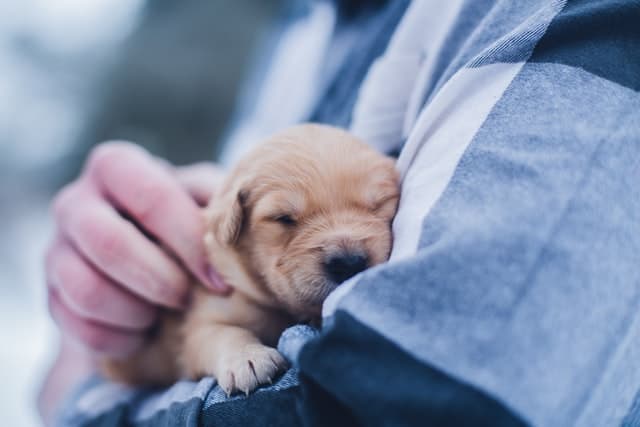
Avoid toxic foods that might seem like a treat but are not a healthy food option for your new puppy. This list includes items such as chocolate, bread, grapes, raisins and sultanas, any fruit seeds, and overly fatty and/or salty foods.
Bringing your new puppy home can be a challenging time for them and it is not uncommon for them to experience diarrhea in the early days.
It goes without saying that your puppy should always have access to a supply of fresh, clean water.
Toys For Your New Puppy, Chewing and Biting
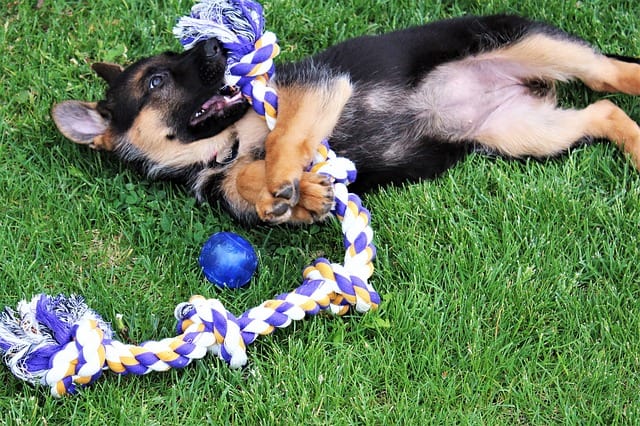
Puppies are notorious for chewing and biting – those little teeth can be like razors! Like small children, they will have a short attention span so provide a selection of safe toys to keep them occupied. A mix of soft and hard toys will help with teething and sore gums, and something cool to chew on like a Kong from the freezer can help if their gums are giving them trouble.
You can read more here on how to stop a puppy biting.
Toilet Training
This will take time and patience and we have found that a reward-based positive reinforcement method is the most effective and successful. Your new puppy will not have full control of their bladder yet and will need to go often so give them plenty of opportunities to go to their toilet area.
Take them to the toilet area first thing each morning as they will often need to relieve themselves at this time. In the early days though you will need to take them out at night times too. But they should soon learn to hold overnight. Dogs like routine and this is no different for puppy toilet training.
Reward your puppy every time they toilet in the right place or when you take them out to relieve themselves and they toilet correctly. You can either use a treat of a simply say ‘good dog’ in a nice tone of voice.
By keeping an eye out for when they look like they need to go to the toilet, taking them outside, and rewarding when they finished you will soon create the necessary routine and successfully complete toilet training. If you are new to puppies and dogs observe how they sniff and often circle before going to the toilet. You will soon recognise your own dog’s behavior.
If they toilet in the wrong place, such as indoors, pick them up as quickly as you can and take them outside. We do not recommend any negative training method such as scolding them, rather it is better to simply ignore the mistake and take them to where you want them to toilet. Don’t make a fuss which re-inforces this the wrong behaviour.
Puppy School and Socialisation
Socialising your puppy is a fundamental part of your puppy’s development and helps to reduce behavioural problems. Most vets have puppy school programs that provide an excellent starting point for you. Here you’ll learn basic commands such as “sit” and “down” whilst the puppies get to know each other and learn how to behave and relate to other dogs.
Most puppy schools will work to a reward-based training method which is both kind and effective to build a positive relationship between the puppy and its owner.
First Walks and Exercise
A walk will no doubt become the highlight of your puppy’s day! A chance to explore, run around and bond and play with its owner. Exercise provides an important part of both your dog’s physical and mental health and wellbeing – in fact, obesity is a big problem in many pets these days.
In the early days, your first walks will be short but as your puppy develops you can venture out for further and longer walks. Remember their bodies are still developing so don’t overdue those long walks. Your vet will be able to provide guidance on how long to walk your puppy for or you could also ask at puppy school for advice.
Vaccinations and Desexing
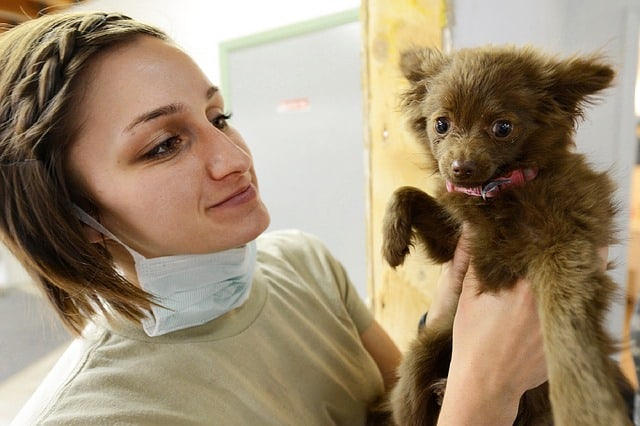
Your breeder should ensure that their first vaccinations are completed around 6 to 8 weeks, with a second booster between 10 and 12 weeks. Their final puppy vaccination will be due at 14 to 16 weeks. You can fully socialise you new puppy once these final vaccinations have been administered. Don’t forget your dog will need annual boosters each year to maintain their immunity.
Desexing your puppy is a personal choice and involves an operation under general anaesthetic to remove their reproductive systems. It is often known as spaying for girls and castration for the boys. It is recommended for boy dogs since it addresses some behavioural aspects such as aggression and can inhibit their instinct to wander. It can also reduce the strong smell that a male dog’s urine can have.
Obviously for girls spaying prevents unwanted pregnancies, it stops their cycle and associated bleeding. For both boys and girls desexing can also reduce diseases such as cancer and tumours. Talk to your veterinarian for further advice.
We wish you much fun and loving times with your new puppy – the newest member of your family. They can be so rewarding and truly can be man’s best friend.