Bokashi vs Traditional Compost: 8 points of difference, pros and cons

Despite how much I dislike food waste, it’s simply not possible to avoid it.
Food waste is something all Australian families produce, and often there’s a lot of it! The best option I have come across is composting all of that waste into fertile soil!
What is the best method to do this? Or what method is easier and less time consuming if you don’t want to spend hours in the garden?
This article will discuss the main points of difference between Bokashi versus traditional composting.
Spoiler alert! Both methods are fantastic and they can be co-existed!
1. What’s the main difference between traditional compost and the Bokashi method?
There are two main differences: how compost is broken down and the environment where the breakdown occurs.
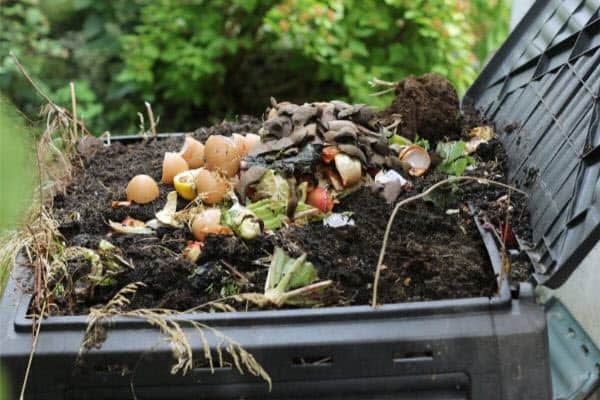
Traditional composting is based on decomposition, which breaks down your waste to make soil. The compost is placed in a container that permits airflow. To achieve optimal results you need to balance nitrogen-rich (or green) waste with carbon-rich wate. Brown waste such as paper and leaves can be used as fertilizer. The traditional composting process is an “aerobic” one that requires oxygen to decompose. This means the compost bins must be constantly stirred and tumbled to allow air (aka Oxygen) to do its job. .
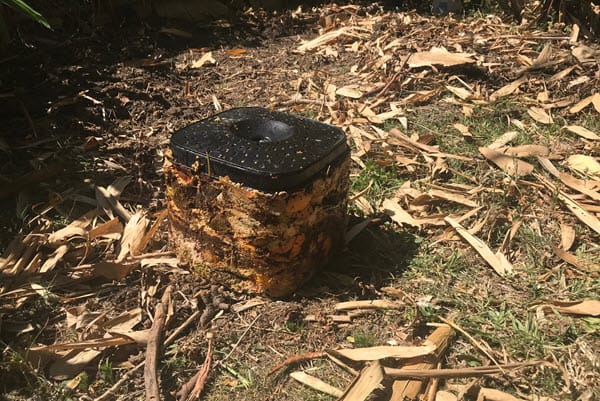
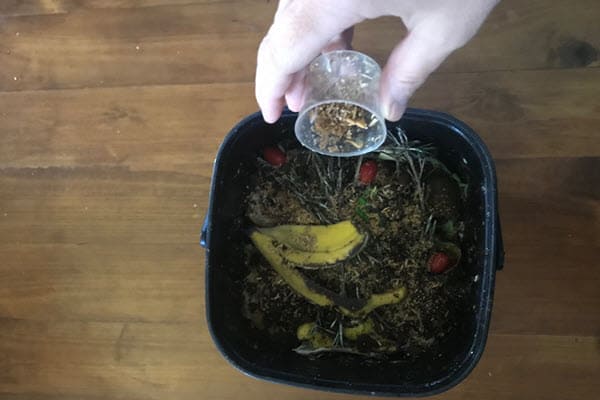
Bokashi is Japanese for ‘organic fermentation method’. It relies on fermentation (rather than decomposition) to make your food scraps disintegrate. Bokashi takes place in a closed environment that has no aeration. You simply need to put food scraps and other organic material into a container. Then add Bokashi bran (or spray) to the bucket. This bran or spray contains microorganisms that ferment the waste. This microbe is considered a ‘good bacteria’ – they disintegrate your waste. The bacteria will create white mold in your bin, which is an indicator that it is functioning well.
For best results, this method relies on anaerobic conditions (lack of oxygen). To eliminate air pockets and liquids (known as Bokashi tea), food scraps must be “pressed down” together and constantly drained.
Hint: The ‘pressing down” can be done with an old potato masher!
2 Compost is a one-stage process, while Bokashi is a two-stage process.
Bokashi composting differs from traditional composting in that it involves two steps.
After your Bokashi bucket has been filled, there is one last step before it turns into nutrient-rich soil. You will have to either bury it or place it in a traditional compost container.
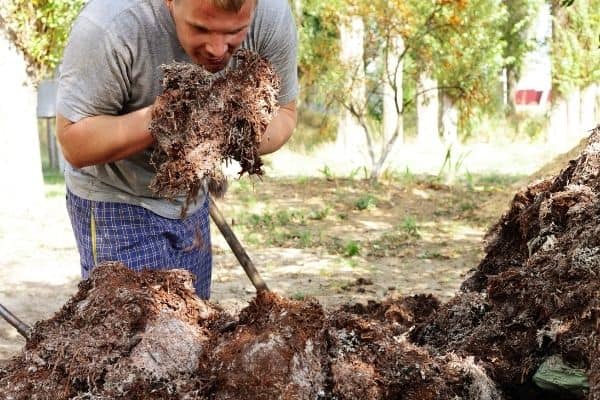
Traditional compost, on the other hand, is one-step. You add food scraps and mix with carbon-rich materials (such as dry leaves), stir to allow air through and, after a few months, you have soil that can be used in the garden.
So, why bother with Bokashi when you have another step to go?
My experience shows that there are two major advantages to doing Bokashi first: more types of food can be added and there’s a reduced processing time.
I will discuss both benefits in point 3 and point 4
3 Bokashi can accommodate foods not recommended for compost
Traditional composting is not suitable for certain foods. This includes all meats, milk, eggs, bread, fats, and oils. These items may also have strong smells (think rotten salmon) that can attract rodents and other pests. Chances are these creatures will rapidly find a feast in your garden way before that food has decomposed!
I know from personal experience that a rodent infestation can prove difficult to eradicate without professional assistance. With an abundance of food, these creatures quickly reproduce, migrate and take up room inside our houses in no time!
Bokashi – being a tightly closed system – is a much safer place as far as insects and rodents go.
But there’s more. The fermentation process will break down food scraps and, by the time that gets buried or added to a traditional compost bin, it is less attractive to the visiting wildlife.
You should also note that some items can technically go in a Bokashi container, but due to space limitations, they are better suited for traditional compost. A classic example of green material that many households have is lawn clippings. This type of waste is best placed in a larger bin.
Bokashi buckets can be used to collect kitchen waste but are too small to use for gardening waste.
4. Time needed for processing
Bokashi + composting or Bokashi + burying is faster than composting only.
Traditional compost can take up to six months before you have soil that can be added to the garden. If you are a dedicated composter – keep your bin aerated and have the right balance between food scraps (nitrogen-rich) and dried materials (carbon-rich) – that can be reduced to up to three months.
When Bokashi is added to your compost bin or buried in your garden, chances are that the food waste has been fermenting and breaking down for weeks. That will fast track the entire process – from food scraps to nutrient-rich soil – to approximately 6 to 12 weeks.
5 Bokashi vs compost smell – what is best (least worse)?
The smell is another big difference!
Bokashi composting is done in a sealed container. This ensures that there’s no odour unless the lid is not on or is not tightly closed. Obviously, you will need to remove the lid to dispose of food scraps into the bucket and the accumulated liquid needs to be drained – and that’s when you get exposed to the smell of Bokashi.
Some Bokashi fans will say it has a pleasantly sour pickles-like smell – a bit like sauerkraut! Personally, I don’t find the fragrance particularly pleasant, but it is definitely not a stinky rotten-food smell. The exposure to the sour smell is only a few minutes every day – which is easy to manage.
Traditional compost requires airflow for it to decompose. It happens in a container, but it’s not sealed – air goes in and out. Said that traditional compost does not have to smell terrible if there is the correct balance of food scraps (nitrogen-rich) and brown (carbon-rich) components. To avoid unpleasant smells, you need to be very careful about the compost bin balance. This is something that I frequently fail to do.
I find Bokashi is a lot easier – all you have to do is to put the lid firmly on!
However, it is not uncommon to hear people say how Bokashi stinks the whole house 24/7. The thing is a properly sealed Bokashi bucket does not and should not smell. If it does, it is a sign something is not right!
6 Pests and diseases in compost bin
Bokashi, a well-sealed system, is great at keeping rodents, insects and other pests away. Your risk of being infested is almost zero.
In the case insect larvae and eggs get inside your Bokashi bin via food scraps, they won’t be able to survive! So, the problem can be quickly solved by not opening your bucket overnight.
Because traditional compost bins don’t have a perfect seal, they can be more easily accessible to rodents and insects. Constant aeration through stirring is often the secret to keeping your compost pest-free as this will raise the temperature up to very hot levels until it becomes unattractive to most creatures.
7 Space available – indoor vs outdoor system
While not everyone can have a garden or a backyard, almost everyone has a kitchen bench. Bokashi is essentially an indoor system. Larger Bokashi buckets can hold up to about 20 litres of waste – which is still suitable for most indoor spaces.
Traditional compost bins are made for use in the garden (or outdoors). They are large enough to handle large quantities of yard waste like tree branches and lawn clippings.
What can I do about my Bokashi, if I live in an apartment and can’t transfer the contents to a compost bin or bury it?
Nowadays, around Australia, there are a lot of community gardens that accept Bokashi fermented food waste. Moreover, apps such as ShareWaste are becoming increasingly popular at connecting neighbours who exchange food waste.
8 Bokashi tea needs constant draining
Bokashi’s famous ‘Bokashi tea’ is a distinctive aspect of the fermentation process. It’s a result of food breakdown and must be continually drained from the bucket. Many Bokashi fans swear by this tea and regard it as a powerful fertilizer.
I must say I have not been particularly successful in using it as a fertilizer! It is an acidic liquid that must be diluted. I certainly don’t recommend it for smaller potted plants – in fact, I have killed some plants doing so. However, my garden seems to deal pretty well with it.
Bokashi tea may not be the reason I do Bokashi, but many people enjoy it. They may have figured out the best way to get the most from it.
Final Thoughts on Bokashi vs Traditional Compost
Although there are some differences between Bokashi and traditional composting they can co-exist.
Most Frequently Asked Questions
What is the best Bokashi bin?
The best Bokashi bin depends on the size of your family, your budget and the space you have available. You can check our Bokashi bin review for more details on specific products available in Australia.
Is there a difference between Bokashi and compost?
There are two main differences in the environment and method of breakdown: Bokashi uses fermentation for organic waste, while compost uses decomposition.
Can I put fermented Bokashi in a compost bin?
Yes, you can. A compost bin that has fermented Bokashi waste added to it will lead to faster decomposition.
Is Bokashi suitable for pet waste?
We don’t recommend it. If you are after a pet poop compost system, please check out our Ensopet review.
Is it possible to put eggshells in Bokashi?
It is safe to use Bokashi eggshells. Important to remember that eggshells can take some time to break down so you may want to reduce them to smaller pieces in order to speed up the process.