
How to Ship Large and Heavy Items?

One of the biggest challenges you encounter while moving is shipping large and heavy items. Not only is finding a competent bulky item courier laborious, but not all courier services in Australia also are equipped to transport heavy objects. Annoyingly, some even do not offer delivery status updates.
Therefore, you should wisely pick your large item courier, and we are here to help you with that.
Steps To Consider While Shipping Bulky Items
Getting Started
The first step in transporting heavy things is to get a courier quote from a dependable and reputable firm that deals in the delivery of bulky items. To get a precise quote, you should be ready to give the shipping company the correct details of your package. Provide them with accurate:
- Weight of article
- Dimensions of the piece
- Address of shipping from and address of the destination
- How soon do you need the delivery at the destination
Compare Quotes
We suggest you get quotes from various service providers in Australia and compare their plans. Understand the difference between ‘heavy,’ ‘large,’ and ‘oversized’ items. A shipment over 23 kg and under 70 kg is usually considered heavy, while items over 500 kg come under the ‘oversized’ category.
Other Things to Consider
Most importantly, ask your courier service to confirm if there are any restrictions on the items they can ship. When you want to transport heavy and large items, choose the service provider that focuses on the interstate delivery of large, heavy, and bulky packages.
Here are a few examples of big equipment and bulky or heavy items:
- heavy gym gear, furniture articles, boxes, and parcels
- garage articles, comprising lawnmowers, workbench, and massive tools
- construction materials such as timber, bales of insulation, etc.
- machine and locomotive components, such as car seats, wheels, tyres, powerplants, suspension, etc.

Insurance
Although item damage is an odd occurrence, particularly if you deal with a reputable shipping firm, you may still want to consider optional insurance for your bulky things. It will give you peace of mind in the event your items get damaged while shipping.
That said, freight insurance comes with its own restrictions, so it is better to get a list of prohibited items you cannot insure. For instance, some freight service providers do not cover costly stones and high-value stuff like artwork, antiques, etc, unless these are specifically mentioned in the policy.
How to Pack Heavy Items?
Unless you’re planning on using a packing company, you will need to pack your items yourself. Packing heavy objects is an important task – need to make sure your packages can endure vibrations during transport, temperature variations, and compressions. Here are some tips for packing your bulky items properly.
- Wrap them in a robustly created box with stitched or stapled seam. Avoid glued seam boxes.
- Ensure you pack your item in a new box instead of a reused one.
- Close each box with durable tapes. Try strengthening the taping by using it multiple times and aiming the joints.
- Make use of engineered foam enclosures and tailored grooved boards to protect the contents of your bulky item. Please note that crumpled paper does not provide good protection in such cases.
- You may also consider doubling the box by slipping the main one into a bigger container and stuffing the empty area around the box with ample cushioning.
Now that you have packed your stuff, please keep the following tips in mind while moving large items. It will save your time and make a move less difficult.
Top 4 Tips To Move Bulky Items
1. Create A Plan
Before moving your products, create an inventory of things you want to move. Categorise the items as light, heavy, and large to have a fair idea of safely loading and unloading them on the truck.
It is also wise to calculate the distance to and from the transporting vehicle before moving heavy objects. It will aid you in avoiding unexpected issues and damage to the products.
Creating a budget before your move is also a good idea, allowing you to stash money aside for the shifting of things.
2. Disassemble the Objects to Reduce Weight
If possible, try dismantling the big and heavy objects to lift them easily. Disassemble legs, drawers, knobs, bed frames, etc., to quickly move them to the truck. Furthermore, the heavy items that you cannot take apart should be protected suitably to avert any damage to the objects as well as to the people carrying them.
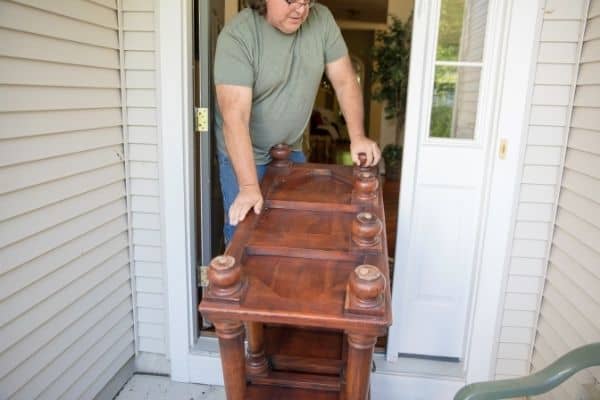
3. Employ Moving Tools
If you do not consider a trusted and professional removalist, you need moving equipment. You can buy things like sliders, lifting straps, moving blankets, stair rollers, moving dollies, etc., or rent them for this task.
4. Know the Proper Lifting Methods
If you are considering shifting the entire contents of your home to another place (either local or interstate), we suggest you hire a removalist. However, if your budget is tight and you have arranged some helping hands for lifting heavy objects, make sure you know the right techniques. Doing some warm-up stretches before you start, and using the correct lifting technique can help to avoid accidents and injury during the moving process.
Follow our guide on shipping large and heavy items, and we are sure you won’t find any trouble in your local or interstate move.