Sun Protection Recommendations for Children & Adolescents

Childhood is a critical time during which exposure to UV radiation is more likely to lead to skin damage and skin cancer later in life. As parents, we play an important role in ensuring the health and safety of our children’s skin, and helping them establish protective habits early. Modelling good sun protection behaviour ourselves means that our children are more likely to do the same.
When UV levels are above 3, it is imperative that sun protection is used. This information is readily available in the newspaper, on the radio and on various apps and the Bureau of Meteorology website. When the UV levels are below 3 (usually from May to August), sun protection isn’t generally required, but it is recommended to use protection if children are likely to be near reflective surfaces, such as hitting the slopes during snow season.
We don’t want to stop our children enjoying outdoor play. It is essential for their health, well being and development. However, by using the following sun protection recommendations and keeping the whole family protected, we can all enjoy some fun in the sun.
1. Use protective clothing. If you can see skin, UV rays can damage it. Try covering up as much as possible with loose-fitting, cool and breathable clothing. Long shorts, elbow length tops and darker coloured clothing offer great protection. Rashies for swimming provide high UV protection and keep the skin cool without getting tight when wet.
2. Use broad-spectrum, water-resistant sunscreen with an SPF of 30 or higher. For skin that can’t be covered up completely, a sunscreen needs to be applied at least 20 minutes before going out into the sun. Choose easy to apply products and remember to re-apply after swimming or playing and every 2 hours. Avoid sprays, as it is difficult to measure how much has been applied. Give each child their own sunscreen and encourage them to apply it themselves from about the age of three in front of a mirror (under adult supervision of course!). Be generous with application – it’s not about making sure the tube or bottle lasts a long time, it is about ensuring adequate protection from sun damage. One application should be between 30-50mL of sunscreen. Be a good role model for your children – they learn best from following what adults are doing, so apply your own sunscreen too.
3. Seek shade. Babies 12 months and under need to be well-protected and kept in shade as much as is practically possible. Their sensitive skin is not able to deal with chemical sunscreens as well as an older child or adult. They absorb a higher amount of any chemical applied to the skin, so widespread chemical sunscreen use isn’t recommended. It’s important to recognise that there haven’t been an adverse effects occurring as a result of sunscreen absorption, so certainly use is recommended if all skin cannot be completely covered to protect against UV damage. Ultra Violet light can still reflect off surfaces like sand and concrete, so even in the shade, keep hats and sunglasses on and keep skin covered on high UV days.
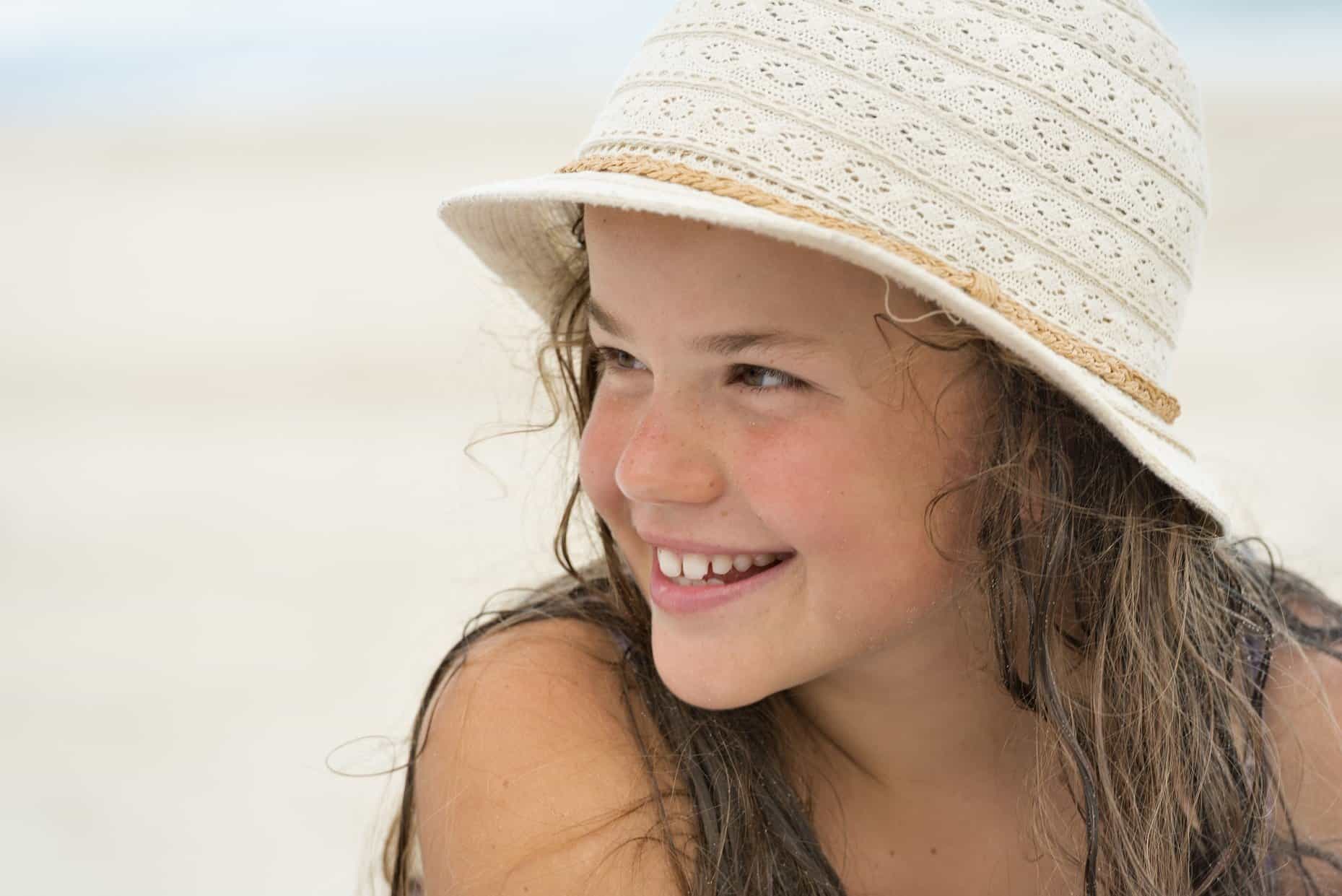
4. Put on a hat. A great sun protective hat covers the head, face, ears and neck. Wide-brimmed hats are best. Baseball style caps leave the ears, cheeks and neck exposed and are not recommended. It can be difficult to get your child to wear a hat at times. It’s all about persistence and getting them to understand that it is a non-negotiable part of a routine for outdoor activities. Role modelling is again crucial. If parents wear hats, their children are more likely to follow suit.
5. Don’t forget eye protection. Eyes are particularly sensitive to UV damage, and even one day in the sun can result in a burned cornea. Cumulative exposure may lead to cataracts later in life. A combination of a hat and sunglasses will give optimal eye protection during high UV times. Check that sunnies are close-fitting and preferably wrap around the eye, and that they meet Australian standards for UV protection.
Summers in Australia are filled with fun days in the sun, and it need not lead to future skin issues for our children. Children learn behaviours from their parents, and one of the most important lessons we can impart is that of healthy skin and sun protection. Because we know, early skin care and sun protection can make a difference.
Written by Deborah Williams Pharmacist, Formulator & Mother
Deborah Williams is an award-winning Pharmacist and Pharmacy owner, and has been involved in pharmaceutical formulary as a consultant for leading dermatologists in Melbourne. From this experience, she developed a special interest in skincare, which became targeted to children’s skin when she became a mother. Deborah has been formulating skin products for patients for over a decade and has decided to make a skincare range exclusively for girls to meet a need in the community. Her formulations have been developed using a range of highly effective, nourishing and protective botanicals and active ingredients, safely complemented by the best of science.
For further information and young skincare advice, or to shop Girl Lane, visit www.girllane.com.au MumsDelivery readers will receive an exclusive 15% discount by entering Promo Code: MyGirl15 upon checkout.