Fussy eaters - two young girls at the dinner table

3 Things You Need to Know About Fussy Eaters

MumsDelivery caught up with Dr Heather Smyth, a flavour and sensory scientist at the Centre for Nutrition and Food Sciences, the University of Queensland. After finding out more about her work, we grilled (pun intended!) Heather about how we can deal with fussy eaters. Listen to the interview with Dr Smyth below, or go to the bottom of this post for the transcript:


Subscribe to the Unperfect Parent Podcast on Apple PodcastsSpotifyStitcherPocket Casts or wherever you listen to podcasts!

3 Tips for Dealing with Fussy Eaters

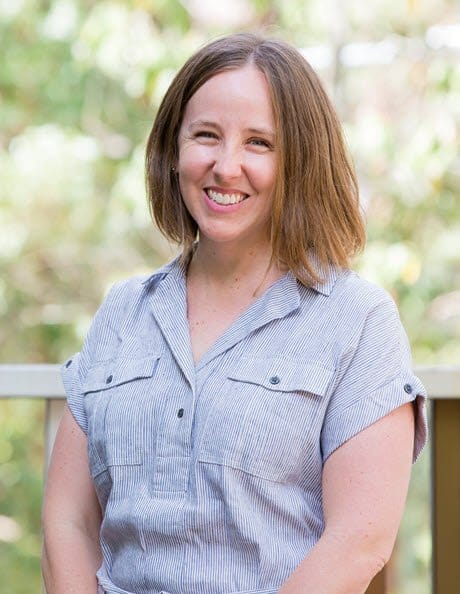
Dr Heather Smyth, Flavour and Sensory Scientist
Dr Heather Smyth

We felt that there were three take-home messages for parents of fussy eaters:

1. It’s normal

It’s completely normal for kids to seem fussy about foods and proclaim to not like foods that are new to them. Kids are pre-programmed to be wary of and dislike strong sensations.

2. It’s about familiarity

Rather than think about your fussy eater having a natural dislike of certain (most?!) food, it’s better to think of it in terms of them being unfamiliar with that food. And the best way to make them more familiar is more exposure to it! Trying it in a variety of different ways can also be helpful.

3. Don’t give up!

Keep trying! It may take many exposures to a particular food for your child to become familiar with it. Don’t give up! Mix things up (literally..), keep things separate, cook it different ways, pair with other flavours. Your best shot at their acceptance of a new (to them) food is for them to try it a number of times.

Don’t let the first experience of rejection dictate your dinner routine. Keep exposing your child to a broad range of healthy foods, as it can take several exposures before a child will even try something new.

Dr Heather Smyth, Flavour and Sensory Scientist

How to Get Out of a Dinner-Time Rut

Research commissioned with Pureprofile by HelloFresh, a global leader in providing meal kits to busy families, found that 85% of aussie parents cook the same meals regularly because they know that the kids will eat it without fuss. I know we are guilty of that! While a quarter of Australian families select meals each week from 5-6 options, as many as 28% of Aussie families are restricted to the same 3-4 meals each week! Concerns about feeding fussy children are no doubt a big contributing factor.

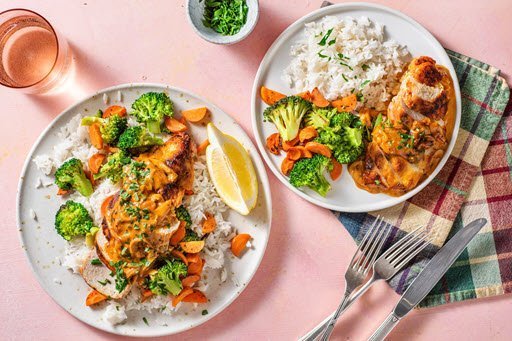
Healthy looking meals on plates

But, how do you get out of a ‘rut’ like this? I know from our experience, that it’s hard to find the energy to come up with new dinner-time ideas, especially when you have the nagging doubt about whether your fussy eaters will eat it. One way to take the stress out of this, save yourself time and try new meals that you might never have thought of, is to try one of the increasingly popular meal kit providers.

Father of three and Founder and CEO of HelloFresh Australia, Tom Rutledge, believes meal kits provide a simple solution for families with fussy eaters: “Creating a meal everyone will enjoy is really important to parents. A lot of life lessons can be learned around the dinner table. From looking at the results of our survey, parents are spending extra hours making multiple meals in order to feed the entire family and are still met with resistance from fussy eaters.

Dinnertime should be an opportunity to expand your kids’ food horizons, helping them discover new foods and flavours, rather than feeding them the same meals from a small repertoire. HelloFresh has a team of professional recipe developers and cooks who use the feedback from customers to better understand what Aussie families like to cook and eat. This ensures that every recipe in the Family Plan is loved by the adults and the little ones too!

Tom Rutledge, Founder and CEO of HelloFresh Australia

How Does HelloFresh Work and Can it Help With Fussy Eaters?

If you’d like to give HelloFresh a try, click the link below to read more about their meal plans and how their service works. If you like what you see and sign up via our link, you’ll get 40% off your first box! There are a number of plans to fit a variety of lifestyles, portion sizes, frequency, and of course – to help you deal with your fussy eaters! It’s really quite customisable! Better yet, it’s an easy, low-stress way to get out of a dinner prep rut!

Save 40% off your first HelloFresh box with MumsDelivery!

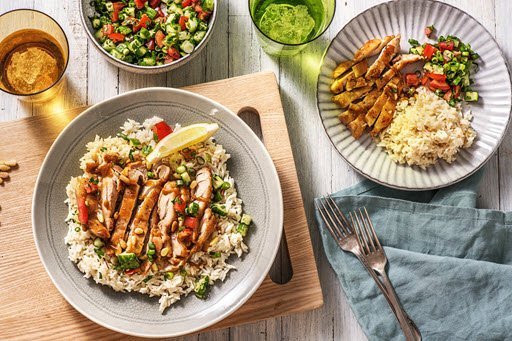
A selection of delicious looking meals on plates

MumsDelivery has several other articles about fussy eaters, including:

Transcript

Mark:           Hi, Mark here. On this episode of the Unperfect Parent podcast, I’m talking to Dr. Heather Smyth from the University of Queensland. Heather is a flavour and sensory scientist and really, we’re talking about how to get fussy eaters to eat a wider range of foods. I really enjoyed doing this interview, not the least because I found out that Heather and I have a very common background having both studied synthetic organic chemistry. I hope you enjoy the interview. Heather. Thanks for coming onto the Unperfect Parent Podcast. How are you?

Heather:     I’m very good. How are you doing?

Mark:           Good. So, where are you talking to us from today?

Heather:     Well, I’m actually at St. Lucia campus today at University of Queensland. I’m not normally based here, but that’s where I am today.

 Mark:          Yeah, and I understand that you’re a flavor and sensory scientist. What actually is a flavor and sensory scientist?

Heather:     Yes. Well, it’s not something that I dreamed about at high school to think that was what I was going to become, of course. I’d never heard of such a thing. So, as a flavor and sensory scientist, my job really is about understanding food and understanding what the components are in food that provide sensory enjoyment. So, what’s causing the crunchiness, what’s causing the sweet flavor, what’s causing some of the bubble gummy notes or lemon flavors that we might have in food. That’s really my role.

Mark:           Yes. And leading up to our interview, we are actually talking about this. There’s a common background here. We both have a chemistry background.

Heather:     Yes, we do.

Mark:           So, I do teach the chemistry and sounds like you work in chemistry…?

Heather:     Yes, I did Synthetic Organic Chemistry at the University of Adelaide. Yes. (laughs) I nearly went on to do a PhD in that area specifically. Only—sorry, Mark but I thought to myself, “Gee, that sounds really boring” (laughs) Well, I love the chemistry, but I just thought you can’t relate to people necessarily when you’re talking about…

Mark:           It’s funny you know. First thing, when I tell people that I did Organic Chemistry, normally there’s a bit of eyeroll and like, “Oh, I hated that” or things like that. (laughs) So, certainly there’s a bit of a stigma around it in some places. It’s funny how you talk about sort of leading into careers. When I was at university, I was trying to decide between becoming a computer programmer or a chemist. And I thought, well at least as a chemist I get to do things in my hands all day and not sit in front of a computer all day. And then in modern life, lo and behold, you end up sitting in front of a computer all day (laughs) in most roles anyway, don’t you?

Heather:     (laughs) Well, yes, certainly when you get to mid-career, you’re not the one in the lab turning the tester around all day, unfortunately.

Mark:           That’s right. So, I guess that leads me to my next set of questions. Day to day, what do you do as a flavor and sensory scientist? Do you sit in your office crunching on, you know, some Cadbury’s and taking notes, thing like that? Or…?

Heather:     Well, actually… Yes, I do a lot of tastings. I do a lot of tastings day to day. Well, I’ll take a step back. So, after I did this honors degree in Synthetic Organic Chemistry, I took a bit of time out, worked for a consultancy firm and then I actually saw a PhD being advertised in Wine Flavor Chemistry and I thought, “What? That’s perfect!” My love for chemistry and some practical application to the real world.

Mark:           (laughs) And Adelaide is certainly the hot spot for that.

Heather:     It was. It was the spot to do wine. And so, really, we were tasting wines every day. I tasted, you know, every morning at 9:30 a whole lot of panelists would come in and literally we would be tasting and describing ten to fifteen wines on a daily basis. (laughs)

Mark:           I think most of our listeners are now going to the web looking for how they apply for these positions. (laughs)

Heather:     Yes, exactly. (laughs) Well, you’ll never have heard of them at high school, let’s put it that way, to really get the young kids listening. So, I moved to Queensland after that and obviously there’s not as much wine in Queensland. A very small amount of grapes are grown here that go into the crush each year so I moved more into doing foods. A lot of tropical and subtropical foods. I’ve done some work in coffee flavour, a lot in mango and things like Macadamia. Even barramundi and prawns, and different seafoods as well–

Mark:           Okay, I think I’m hungry now. (laughs)

Heather:     I know, yes.

Mark:           So, you’ve covered quite a gamut of different sort of flavors and foodstuffs.

Heather:     Absolutely, yes. I’m mostly interested in whole foods and interested in real foods rather than processed foods. I took a little bit of process foods work but the natural world is much more interesting, I have to say. (laughs)

Mark:           So, I guess that sort of leads us to the next thing. You’ve named all these wonderful foods and I could put across against the number of those that a lot of kids don’t like. So why some kids, not all kids, but why are a lot of kids so fussy with their foods?

Heather:     Being a kid and being fussy with food is actually quite a natural response, you know. It’s interesting because you think about a baby and you think that they’re putting everything in their mouth. And you think, what’s gone wrong here? They were prepared to eat everything almost (laughs) to suddenly being prepared to eat nothing. But you know, at a certain age, when a child starts to eat and be expected to consume sort of different flavors and different types of food, they start to reject certain things. And the reason for this is called food neophobia. So, food neophobia is a natural aversion to new tastes, new sensations and new types of foods. And it really is a protective mechanism for a child. If they were not afraid of putting new flavors or whatnot in their mouth, then they would just eat anything, you know? They come across a bush and grab some berries and chomp on them and swallow them and they could kill themselves quite quickly. So really, it really is quite natural for kids to have a natural aversion to new foods.

Mark:           So historically, if berries tasted like chocolate, then maybe these days we would not… (laughs) You would have a bit of an aversion to trying something. I know where I’m going with that analogy, but…

                        (laughter)

Heather:     Absolutely.

Mark:           So, there’s a couple of specific things. I was just talking to another parent the other day and he said that he had heard about this aversion to bitterness amongst the… Like a lot of kids don’t like bitter foods and I guess that’s like broccoli and the brassicas and things like that.

Heather:     Yes, definitely.

Mark:           He had read somewhere that there’s some studies that show that kids have like a heightened ability to sense bitterness or you know, heightened response to bitterness or something like that. Have you…? Is there any truth behind that or…?

Heather:     Yes. As a sensory scientist, I do a bit of work in that field and look at people’s bitter responses. Certainly, when we’re younger, we do have a stronger response to bitterness and are more sensitive to bitterness. I’m not really sure that there’s evidence to say that young children are particularly extremely responsive to bitterness. I think more than anything, it would be a relatively strong sensation. And for all, if we had something bitter, we respond quite strongly to it. However, for a young child, if it’s not something they are familiar with, then it’s not something they are willing to accept.

Mark:           Okay.

Heather:     And that really is key when we think about children, you know. And if they have rejected eating broccoli for instance, or rejected eating a vegetable, which might be higher in bitterness and lower in sugar or something else is that we need… It’s not that the bitterness is bothering them so much as the unfamiliarity of that product. So, that’s what you need. That’s what you’re tackling here. That’s what you’re tackling, the familiarity. And if you think about it that way, you need to repeat, expose the child again and again to that same broccoli or to that same food product to slowly build acceptance.

Mark:           Okay. There are some cogs this time that’s turning my mind because I think, you know, talk to fussy kids of my own… So, Silvia and I have three kids between us. We’ve got two. A seven and a ten-year-old that are fairly fussy and then another 10-year-old who just eats everything. He’s the most adventurous, 10-year-old I’ve met.

Heather:     Awesome! (laughs)

Mark:           And I think, just in my head, I think about certain foods as being the types that kids don’t like. But it sounds like that’s not the right approach. It’s really not, “Oh my kid doesn’t like broccoli, but my kid has only tried broccoli once or twice or something. They have not sort of been repeatedly exposed or they haven’t sort of built up that familiarity. Is that a good way of looking at it?

 Heather:    That’s absolutely a good way of looking at it, particularly for younger children. I think, sort of that 10-year-old kind of age… I’ve got kids of my own, and I know my younger daughter, she’s elected to remove mushroom from her diet. I have given them each one food that they are allowed to not like and they can change it once. Once a year they can change it but they have to lock it in and I’m happy to avoid that one particular food. But that is a joke. (laughs) If I sneak mushroom for instance, into something, she won’t even notice it’s there. If I stick it in a lasagna or something like that, she doesn’t even realize. So for her I know that it’s not a taste aversion. It’s more of a psychological thing. And yet, when she was younger, she used to eat mushrooms raw and eat quite a lot of them so–

 Mark:          Sorry. The sneaking vegetable is an interesting angle isn’t it? I don’t know whether this is what other people say, but Silvia and I talk about stealth veggies. (laughs) We’re trying to get them in under the radar kind of thing. And so, there’s so much of what we—well, I’m thinking other parents would find the same thing. So much of what we cook, you know, base flavors that are often onion and garlic and things like that. And then obviously with a lot of other flavors, but if we have a dish where our fussiest kids can spot pieces of onion in that dish, oh my goodness.

Heather:     Oh, yes.

Mark:           Each little piece of onion is being picked out one by one out of the bolognaise or whatever it is.

Heather:     (laughs) Yes. In those situations, I think you’re tackling something different. It’s almost a psychological, not even necessarily an aversion, but a choice that they have made related to whether or not they like that particular vegetable. But when we go back and we’re talking about toddlers, we’re talking about kids that we’re trying to introduce foods to for the first time, they have not developed this ability to decide that, “I have elected that mushrooms, I will never eat again!” In that in that situation, that’s where repeat exposure is so critical. And parents who say, “Look, no, we tried broccoli once” or that “We’ve tried carrots and they won’t eat it, so what do I do?” Well, how many times did you try it? How much did you…? And how did you invest to make that familiar to them? And it has to be—maybe it has to be night after night after night for two weeks before you could really have given it a good shot to know whether that child’s going to consume that food or not.

Mark:           I get the feeling that in your household, your kids didn’t get away with trying it once and never having it again. (laughs)

Heather:     (laughs) They used to be much better eaters than they are now. Certainly, my thirteen-year-old and off its hormones or anything, she was always my very best eater. She used to eat parsnip as a young child then. They are very little.

Mark:           Oh, that’s interesting.

Heather:     Yes, and parsnips are reasonably bitter. It’s not as sweet as carrot.

Mark:           But not sort of one that you’re drawn to in, yes.

Heather:     Exactly. I was always amazed at the things that she would eat. She was a great little eater but now, I don’t know. Her choices and peer pressure that’s on her to make particular choices as well when to decide she doesn’t like things that’s… That is probably more of a challenge at that age.

Mark:           Yes. Obviously, your specialty area is flavours and senses and things like that, but I’m just wondering… I don’t want to start again with child psychology deep end here, but what can parents do in terms of…? I think often times, like you say, repeat exposure is good but if the kid is like—Basically, you put it in front of them and they are turning their head away and acting like they are actually going to die if they put it into their mouth, do you have any tricks about how we can deal with that?

Heather:     I would say, you would change the way that you perhaps presented. Change the format that you are presenting that particular food. I would definitely think about… You know, eating food separately on their own. So, the broccoli separate from the carrot, separate from the corn for instance. Well then, if that’s not working, perhaps mix it together and put it in a sauce at your savory mince or something, and change the way that you’re presenting that particular food. But don’t give up, certainly don’t give up. I certainly encourage parents to make sure that, you know, it’s kind of a rule that kids are presented with the different types of foods and a variety of different types of foods. You don’t have to hit them with exactly the same meal every night until they finally eat it. But mix it up, have different types of meals. Variety is the spice of life for children as well as us. And certainly, we’re talking about elderly people as well where the ability to chew food and  enjoy of food really becomes a challenge. Variety is essential.

Mark:           Yes, I think food in nursing homes and so on is probably a whole extra topic for a podcast.

Heather:     Absolutely. Oh, well and truly.

Mark:           So, I guess what I’m hearing from you is that there’s not really sort of one particular tactic or tip or secret ninja strategy that you can use or anything like that, but that you just repeatedly trying different ways. Different things is the way to go.

Heather:     Absolutely.

Mark:           I was going to ask you, should you say your kid doesn’t really like broccoli. Should you try sort of hiding the taste of broccoli by putting it into like a stir fry with a different sort of flavor. But I guess what I’m hearing for you is maybe yes, that is one of the things you could try. Put it in a different context than a different sort of dish. Is that right, or…?

Heather:     Yes, absolutely. I remember seeing some work a little while ago from a group in Adelaide actually that was looking at brown flavor in vegetables and that children didn’t… For instance, if you roast the potato as opposed to boiling it and you have browned, caramelized kind of roasted potato versus steamed potato, which doesn’t have any of those browned over types of flavors on—

Mark:           Brown, the study by the browning or…?

Heather:     Yes, and kids. So, they found that actually, particularly for younger children that roasted vegetables or vegetables that had more of those brown flavors were more complex and kids were less likely to eat them. So, they much preferred the vegetables in the version that didn’t have those sorts of browned reaction types of flavors that were present. Although they are delicious to us. I mean, we love to have a good bit of roasted potato, don’t we? (laughs)

Mark:           That’s what I was wanting to get to next is, you know, one of the big problems that a lot of families face is that their kids… They may be, you might say fussy, but actually they just have different preferences to other kids in the family to the parents and so on. And so, you hear about families, they are cooking two, three different meals at meal time. I mean, how do we deal with this? How do we…? Say, your kid doesn’t like brown taste on your veggies but you’re like, “I love brown veggies and brown this and brown that.” How do you deal with that? Do you cook two different dishes for the family or is it once again about repeated exposure and trying to get them used to those brown tastes?

Heather:     As a parent, I think I wouldn’t judge anyone who is doing that. If that’s what’s working for you and you have to cook three different meals… I know your kids with allergies is another problem too, where you have to maybe remove dairy or eggs from something, but the other kids get good protein from that so you don’t want them to miss out. So, if that’s what’s working for you then I say that’s what’s working for you. But I think if it’s possible… Each family, to their own, they need to make their own rules. But you know, I would certainly be mixing up that each night of the week someone’s different favorite meal could be part of the menu that on the night that your child, particular child didn’t like that particular food or the rule is you have to do your best and you have to at least try it and give it a good go. And definitely, that repeated exposure. If you let children… If you think about it from that concept, that that’s their lack of familiarity of consuming this food rather than actually a true sensory aversion to that food, then insisting that they need to eat breaks down that familiarity problem rather than thinking about you forcing them to eat something that they really hate, you know? (laughs) Because that’s not what you’re battling. It really is that familiarization. So, if they have to eat these different things, then they will be more inclined to have a diverse diet. And that’s just not beneficial for now when we’re a child, but also later in life. In your twenties, we know that there’s a certain age where if you’re the sort of person who eats a very limited small sort of amount of different types of foods, then you’ll probably be that type of person when you’re sixty. However, if by your sort of mid-twenties, if you’re the sort of person who’s willing to try different foods that you’ve really broken down that food neophobia that you like eating hot food or spicy food and different types of cuisine, then that will be the sort of eater you are for the rest of your life. And that sets you up for good health because we know that a diverse diet means a diverse range of nutrients that our body is getting. And that’s so much healthier for us than just eating all the whites. For instance, mashed potato, chips, white bread, et cetera.

                        (laughter)

Mark:           Yes, I guess that’s another thing I wanted to touch on with you is variety. I think that our family… we try to provide nutritious meals as often as we can. We’re not perfect, that’s for sure. That’s the name of the podcast. But we do tend to settle into our sort of groove and we have the same sort of meals at a fairly regular basis. I do worry that maybe that is not giving our kids the kind of broad exposure that will help them out later in life. Do you have any tips about how do you get out of a bit of a same old thing kind of rut?

Heather:     And it is hard isn’t it, as a busy parent to not just go to your (laughs) same tuna mornay again. Let’s have tuna.

Mark:           Spaghetti bolognese again! (laughs)

Heather:     Go do it, yahoo (laughs)

Mark:           Yes.

Heather:     Because a, you know you’ll eat it, b, you know you’ve got the ingredients and c, it’s quick and easy to prepare.

Mark:           Yes.

Heather:     I think certainly for the busy modern parent, there are options out there and there are different sorts of companies these days that are producing meal solutions that can be delivered to your door. And if you’re able to afford, you know, that is a little bit more expensive. There is a lot less food waste in that sort of approach as well. There are some companies that deliver a recipe and all of the ingredients that you can use to make those meal. That’s a great way to take the mental effort out of preparing a meal. You know how long that’s going to take. All the ingredients are there. It’s going to be delicious. They’ve got chefs and whatnot, developing these sorts of recipes to go with these sorts of meal boxes. There are other companies that deliver entire finished meals to your door as well so you can go down that option too. I honestly think that in the future, that will be where sort of agriculture and food is taking us. That we’re delivering whole diet and meal solutions to families and to individuals rather than with the way that we currently do it.

Mark:           Yes.

Heather:     We waste, what is it, one in three grocery bags or something like that we throw in the bin.

Mark:           Oh, it’s crazy isn’t it? This is a pet thing of ours. We’ve been putting it off and putting it off, but we recently got a bokashi. One of the kitchen sort of, bokashi… you know. It’s not quite composting, but it’s close to composting. That really brought home to us how much food we’re wasting because all the food scraps go in a separate container. It’s like, “Wow, that container’s full already?” And it also brought home  the fact that, you know, sometimes our kids bring home most of their lunch uneaten.  (laughs)

Heather:     Yes, absolutely. We’ve got chickens thankfully that take care of that.

Mark:           That’s another recycling.

Heather:     Yes, It’s heartbreaking. (laughs)

Mark:           So back to that, I think it is interesting this move toward… Well, not a move, but I guess just this real explosion in companies available that will provide meal kits or pre-prepared meals and things like that. And actually, one interesting thing I heard from someone recently is that an unexpected benefit they found of going down that line is that it got them to be they’re, the husband and wife, to be more adventurous with what they cook because they cooked the same things over and over. They started with one of these services and they’ve got some things that sounded really fancy. Like you know, “Oh we’re going to cook that? How are we going to do that?” And they cooked it and they we’re like, “Well, actually, that was easier that what we thought and it was really, you know, quite yummy” so I think you’re right. It is really interesting thing to watch in the future, isn’t it?

Heather:     I think so. And you know, we also have limited cooking skills to be honest with you. It’s a great way to sort of increase your repertoire of… We love to watch the Master Chefs and whatnot, don’t we? And then imagine that, “Yeah, well no one’s really going to eat like that. That’s impossible. Back to the spaghetti bolognese names, doing some stir fry

(laughter)

Mark:           That’s right.

Heather:     But yes, it does help you get out of that culinary rush, I think. And I certainly think that is a good option in that respect. Even just in terms of your diet, in case of sorts of boxes as well. And if you are able to pick and choose which types of meals that you had, you can cater that to your family. But you know that all of their nutrition is being taken care of there as well. The protein and the vitamins and whatnot, the veggies and everything that you get. So, I think it’s a clever way to go.

Mark:           Yes, no, I agree.

Heather:     Particularly if you’re in a rut. That could be quite helpful. (laughs)

Mark:           Well, I don’t think I was in a rush (laughs) I don’t think we’re in a rush but I look back with what we cooked and I think, “Wow, we really do the cycle through the same things a lot”

Heather:     Yes, I hear you. (laughs)

Mark:           Maybe because there are kids. We’re actually more adventurous. Actually, I’ve got a little secret to tell you. Our eldest, who’s very adventurous, we almost wish he would be less adventurous. (laughs)

Heather:     (laughs) Why shouldn’t he?

Mark:           Sometimes we’ll get, you know, sometimes you get that special food that you know you like as the parents, but it’s a little bit expensive.

Heather:     Right. I get it.

Mark:           And maybe the kids not having it isn’t such a bad thing. And so, Silvia and I like to do sashimi and ceviche.  Ceviche is like a South American sort of raw cured fish kind of thing. And my oldest son, he loves these. (laughs)

Heather:     (laughs) Exactly.

Mark:           So, we just need to make sure there’s a variety of other things for the kids to eat before the sort of sashimi comes out on the table. (laughs)

Heather:     Oh, definitely. Absolutely, yes. My youngest loves salmon. Salmon in all kinds so we’re getting a lot of salmons.

Mark:           That’s great. Salmon is so healthy. I think it’s such a great thing for the kids to eat and for the adults to eat as well. It’s great to see them eating them. So certainly, when it comes to cost, you don’t mind buying them all for good quality food that is going to be nutritious for the kids and they are going to like.

Heather:     Absolutely. And it’s like blueberries as well, you know, and strawberries. I have no problem for them to sit down and eat–

Mark:           You can afford blueberries? Wow. (laughs)

Heather:     (laughs) When they are on a good price, I have to say. But you know, at the moment strawberries are what $3.50 for a 250 gram or something. For them to sit down and have an entire one of those after school, really what parents could possibly go and–

Mark:           The blueberries, they are a hot commodity though so you’ve got to get in quick in our household otherwise, they are gone. We’ve traveled a bit in other countries. They are so much cheaper than in Australia and I just… I would die for some of these raspberries and blueberries to be a bit cheaper here so you can indulge a bit more often. But anyway, they are very nice little treat and are certainly health.

Heather:     Yes. (laughs)

Mark:           Mindful of the time. We might start wrapping things up now. Do you have any final things that we didn’t cover that you would like to say to parents who are struggling with fussy eaters about how to get their kids to eat more widely?

Heather:     Yes. Just hang in there. Remember, it’s about familiarization rather than actually a sensory distaste. I also think it’s important for parents to model the behavior that they want in their children. I do think that if you’re not eating the right sorts of foods and if you won’t eat the broccoli or the brussel sprouts, how can you expect your child to… So, I definitely think that’s important. Plant foods, it’s so important for our long-term health. I mean the work that we do here in my research team at Centre for Nutrition and Food Sciences is the group that I work within at UQ. Long-term health benefits of eating a diverse range of plant foods. It can’t be more important to us. So, it’s important to instill that in our kids from a young age and don’t give up. Don’t give up on the veggies.

Mark:           That sounds great. Okay, well thanks. I think you mentioned that you’re at UQ and the center for… What was it again?

Heather:     My research group is the Centre for Nutrition and Food Sciences. And I’m part of a big institute called QAAFI, which is another acronym, Queensland Alliance for Agriculture and Food Innovation. So, we’re one of only few institutes at the University of Queensland. So, that’s where I sit.

Mark:           Cool. So, if anyone is curious about the work that you do or wants to call you, do you have any social presence or website or anything to direct people…?

Heather:     I certainly do. If you wanted to track me, @SmythDr is my Twitter account. And also, you can find me on the UQ website if you just type in Heather Smyth UQ, you’ll find me and my profile. And the rest of our group, if you wanted to have a look at any of the other types of research that we do.

Mark:           Excellent. Well, thanks for your time and good luck with all your research.

Heather:     Awesome. Thanks, Mark.

Mark:   Thanks.