Returning to Work and Finding a Career You Love

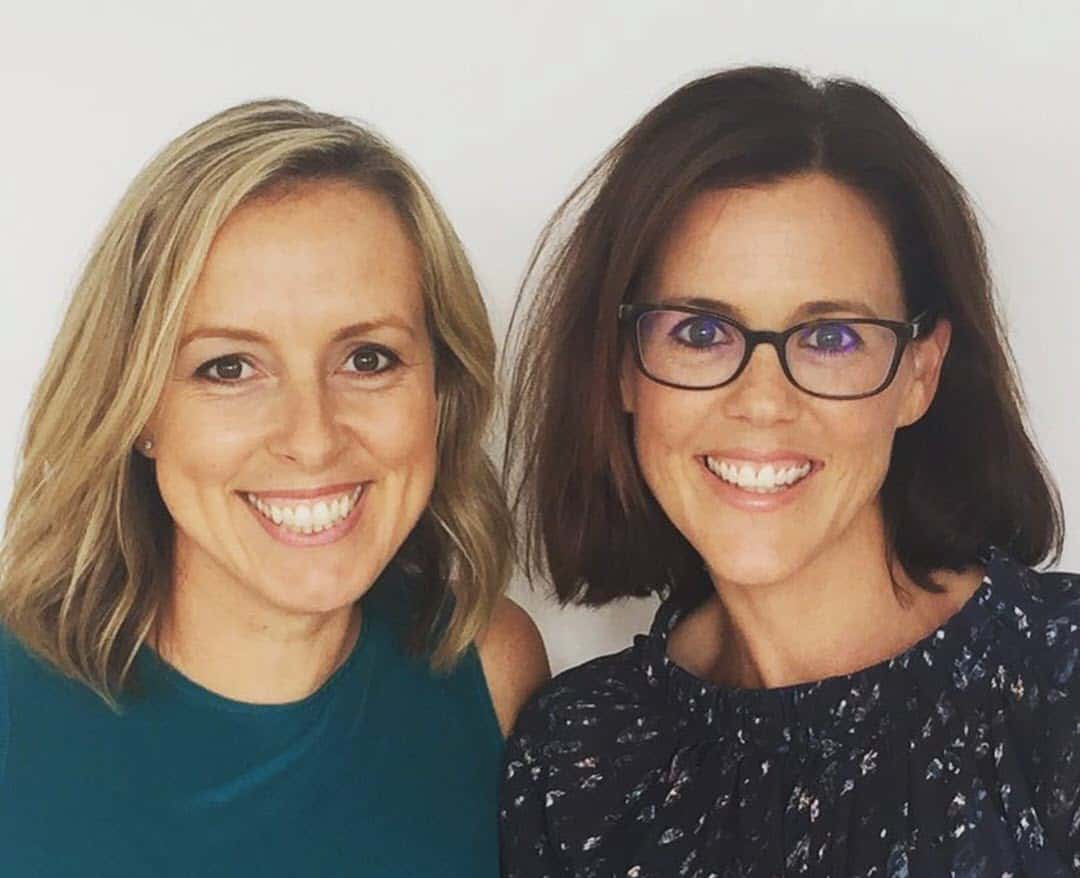
We spoke with Amy and Bel from SheThrives. These two founders have, between them, returned to work 5 times and they have a passion for coaching other mums to get back to work after kids. They also shared a free PDF for Unperfect Parent Podcast listeners to help you discover a career that you’ll love – link below!
Listen to our interview with Amy and Bel, or go to the bottom of this post for the podcast transcript:
Free PDF – 5 Steps to Choosing a Career You Love
If you’ve been thinking of getting back to work and are confused about which direction you might head in, we hear you. Getting clear on your next career move is a really important first step to making a career change or returning to work after a career break. Start by downloading this free guide that outlines the 5 steps you can take to discover what work will fill your soul and fit in with your family.
About SheThrives
Belinda and Amy are Co-Founders of shethrives.org, a platform dedicated to supporting women to coach themselves back to work after a career break. As mothers of 5 energetic boys between them, Belinda and Amy have unpacked the art and science of a successful career relaunch and now spend their time helping women all over the world to achieve fulfillment from work whilst accommodating their role as a mother.
Transcript
Mark: Hi, it’s Mark here. In this episode of the Unperfect Parent Podcast, Silvia and I talked to Amy and Belinda from SheThrives. SheThrives helps busy mums get back into the workforce and find a career that they really love. If you’re looking for a bit of career clarity and direction, then we’ve got a special freebie for you. There is a downloadable PDF called “Five Steps To Choosing A Career That You Love” from Amy and Belinda from SheThrives. So just head over to our website linked on this podcast episode and you’ll be able to download that PDF and start finding that clarity about the career that you really want to do and that you really love. So, hope you enjoy the rest of this episode with Amy and Belinda from SheThrives.
Silvia: Good morning. Belinda and Amy with us today. Thanks for coming and joining us here in the Unperfect Parent Podcast. Can we start by asking you how did you two meet?
Belinda: Yes, sure. Well, Amy and I actually worked together in a previous life. We were both group marketing managers at a big global organization so we both lead separate teams, but we started off as friends at work. And then we both then started to go in slightly different directions. I retrained in the coaching field and started working with women to help them to return to work and Amy continued on the corporate path and became quite a senior mentor with a lot of women who are looking to re-engage with their careers or make some big career changes. So, a few years ago, we reconnected on a professional level and found that we had a really shared passion to support women to return to work or to make a career transition once they became mums. We shared our own stories and we found that there was so many women who were struggling with figuring out work and how to fit working with their family. And we decided that we wanted to do something about it.
Silvia: Yeah, sounds very familiar. So, tell us about your business, SheThrives.
Amy: Well, SheThrives is fairly new. We (found) SheThrives about 18 months ago. We’ve been working on it for a lot longer than that. And really, our mission at SheThrives is to support women to return to the workforce and to thrive once they’re there. And that’s all about finding work that they love, and that fits with their families. So, we work with women all over the country and also across other countries as well. And we also work in partnership with organizations. What we offer really is support to encourage women to step back into the workforce when they’ve had a break and also support to help them navigate the parental leave process and journey. So, we have online programs which science backs. So, we use a lot of psychology and the science of psychology in our material and our content. But we deliver it ourselves through very engaging and live videos, and our students, our participants complete those programs online. And then in addition to that, we offer coaching support for those that wanted… And we have a whole lot of really supportive group forums like Facebook member only groups, and we also run live coaching group sessions to sort of further support women on those journeys. So yes, we find it very rewarding to help. I guess be the coach and a mentor to those women as they navigate what is really quite a… you know, can be a challenging and quite vulnerable time for women. And what we see is that every woman has a different pain point, has a different challenge, struggles with different things. And so, our programs are designed to really tap into whatever those areas of challenge are.
Mark: Okay, that’s cool. So, you mentioned Psychology at some point there. Do you have a background in the psychological aspects of these programs?
Belinda: Yes. So, I’ve been working in the coaching psychology space for a long time. And currently, I’m completing my Master’s thesis on the identity change that happens with women when they transition back into the workplace. So, through my studies and experience, we’ve really integrated as a core part of what we do, evidence based. A lot of them are positive psychology strategies, but also more traditional strategies to really have that grounding behind what we do. So it’s not just about you know, “Believe and you will receive”. It’s bringing behavioral science into what we do and using strategies that have been proven to be really effective to create change in mindset and also in behavior.
Mark: Looking at these programs in a little bit more detail. So what kind of timeframe people you work with completing these programs, or how long are they working on your programs for?
Amy: Yes. Look, it really varies depending on the point at which they engage in the program and I guess the extent of their needs. So, we have a number of different programs. One of them is called “Career Clarity” and that program is, I guess, slightly shorter. It’s four chapters and then within each chapter, there’s five to six videos. And so, we find women on that particular program. So that’s for women who know they want to work but they’re not quite sure what they want to do. Or they might be already in the workforce, but a feeling like they’re not fulfilled by what they’re doing or they need to change. They feel like they need to find something that fits better with their new parameters. And so that program, women complete anywhere from four weeks to twelve weeks but that gets… The thing with all of our programs is we give our students lifetime access. So what we also see is that some students might have an initial burst of focus in the program. They get kind of what they need out of it but then maybe in six months’ time, they find (or) they hit another road bump or experience another challenge and they will dip back into the program and redo that tutorial on confidence, for example, or remind themselves of what their unique strengths are. So, the Career Clarity Program, as I said, that’s four chapters. Our flagship program called “Career Comeback Lab”, that’s a bigger program. That’s got eight chapters and so that one… That program’s all about supporting women to build the confidence and the plan, and the readiness to return to the workforce. And so that journey, again, can be a bit of a longer journey, but it sort of depends on when the woman taps into the program. We do have some women that literally just jump in and do one masterclass on getting interview ready. So that’s a quick do it in a couple of hours type of approach but then we have others that go from the very beginning to the very end of the process, and that could be a number of weeks or a few months. So, what message do you have for women who are going back to the workforce who are our main audience in this podcast and our website Mums Delivery?
Belinda: I think one of the key things that we discuss a lot with our community is that it’s never too late to return to work that really lights you up. We often have conversations with mums who are thinking, “It’s all about my kids” and “My time has passed” or “Maybe I’ve just got to let this part of me go”. And our message is that you don’t need to. If there’s that part of you that was alive and that you invested in before kids, it’s never too late to reawaken that side of you. You really do have, I guess a core belief at SheThrives, that finding work that really lights you up contributes to your wellbeing and when that part of you is not able to be expressed, you’re not able to really reach your full potential. So, we do really believe that it is never too late. And we’ve got an incredible email the other day from a mum who’s got three grown up kids. She left a fairly toxic work environment and thought she’d take a year off to help her youngest to get through the HSC. And the older kids were off at Uni and at work. That year turned into a much longer break than she had intended and that was just because of life (laughs) with children. And so, she was feeling really unsure about how she was going to return. Whether she was up to it, you know, there was a lot of self-doubt there. She embraced our program and sent us an email the other day, telling us how thrilled she was because she landed a job in an industry that she had been dreaming of entering for a long time.
Mark: Oh, that’s great.
Belinda: Yes. And when we get emails like that, it really gives us such a boost and reminds us that all the hard work that we put into our business is worth it. So, whether your children are very young and you feel like you want to make a change or get back in or whether your kids are grown up, really, it’s never too late.
Mark: Belinda, it sounds like this isn’t all just a theory coming from you guys. You guys have really lived this by the sounds of it because I presume that SheThrives wasn’t something you’ve been doing your whole career. It’s something that’s fairly new. And before that you’re in other sort of roles. Do each of you have your own personal experiences along these lines?
Belinda: Yes.
Amy: Well, I guess, part of the reason we identified with this problem and this opportunity and need is because we ourselves lived it. (laughs) So as we say, we were in the corporate world. Me for 20 years, leading teams, teams of women and men and navigating to lots of parental leave myself. And what I saw was how challenging it was, how tough the juggle was to sustain in a way that was healthy and I witness so many women just drop out. Opt out of the workforce and quite senior women just because it all got just a bit too hard. And when we saw that happening, and Belinda had a similar experience, we felt that it shouldn’t be like that. There has to be a way for work to be feasible for women because at the end of the day when we have our children, were often only 15 or 20 years into our career. And if you think about by the time you’re finished having children, you might only be 45. And there’s still a good 20 years of career potential ahead of you. So, if you’ve decided to opt out at that really hard stage of parenting when you know the juggle is intense and you kind of feel going a lot, almost half of your career, maybe more than half. So that was the trigger for me, having experienced it myself and seeing my team members really struggle with it to try and contribute to making it more possible and not as difficult.
Silvia: Can you tell me about the three pillars of your program? I was having a look at your website.
Belinda: Yes, so we had been working one on one with women for a long time. And we found that even though every woman has a really unique journey and a beautiful and amazing and unique story, we found that the challenges that were holding women back were very, very similar. And so, we did a lot more research and looked deeper into what was really holding women back. And we found that you could cluster I guess, the key obstacles into three main areas. And what we found in working with women is that usually, if they weren’t focusing on all three areas, there was going to be, you know, further stumbling, and it was going to be holding them back. So, the three areas that we really focus on and every bit of training, all of our articles that we write, any of our free videos, they all come back to one of these three core areas because we really do believe that these are fundamental pillars of getting it right. Not just of returning to work, but once you are there. Making that return really sustainable so that you can continue to work and to thrive. The first of those areas is the Cycle or the Mindset Pillar. And this is where you can either start to thrive, or you can start to flounder. And what we really aim in this area is to really give women the tools to thrive more often than not. So from a mindset perspective, it’s not realistic to be thriving every single day of the week. And you know, for children in the mix, and it’s virtually impossible to feel like you are absolutely killing it all the time. What we want to be able to do is to recognize when the wheels are falling off, that it’s okay, and I’ve got some tools in my back pocket to get me back on track. And usually these areas are things like drops in confidence, self-doubt, guilt is a huge one that crops up. But guilt is something that, you know, there are some really fantastic techniques that you can put in place to be able to get on top of your guilt so that when it crops up, you’re able to do with it. The whole motivation piece as well is really important. So there’s so much in each of the pillars. Amy, can you talk about the professional pillar?
Amy: Yes, so the Professional Pillar is really sort of quite a gutsy one. But it is all about getting job ready and supporting women to feel that they’ve got all those bases covered. So it’s quite broad and it goes very specific into different areas. We cover things like how to reignite your network. So if you’ve been out of the workforce for a while, you can feel really disconnected with the world. Giving some very practical tools and steps that women can take to do that, to re-engage their networks, all about things around interviewing or getting interview-ready and some very, again, specific guides and role play examples that can help you get yourself on the front foot there. Bringing your resume up to date. And then all the way through to things, areas such as when you do land that job, how you can make the most of the first few months back in the seat. So, we have some really great templates around building a 30-day, a 60-day and a 90-day plan for those first couple of months back so that you can ease back in and feel like you’re delivering but not get to the point where it’s all too overwhelming. The professional area is very rich and very deep. And some women choose just to sort of jump in that territory. If they are not experiencing any kind of major mindset issues or challenges or barriers there, then they might just tap into our sense of resource from a professional perspective. So yes, that’s the second pillar. And Bel, do you want to cover the third pillar?
Belinda: So our third pillar is what we call the Practical Pillar. And this is a hugely important piece because this is the… I guess, the foundation of making your return to work sustainable. So, there’s just two areas in this pillar that I wanted to mention, and I guess they are two that we’re super passionate about, and one of those is how to establish a true partnership at home. So, this is a big part of this pillar. And this area is one of the areas that a lot of women struggle with because when they go on maternity leave, they tend to take on the bulk of the caring and domestic responsibilities. And then when they go back to work, they hold on to them. Not always because they want to. So, really helping our mums to be able to navigate that really elegantly to open up conversations with their partner, with their kids, to be able to reestablish how we run the household at home so that the burden isn’t falling on mum. And this particular area, Amy and I studied it in detail. We pull together the best tools that we could find around the world and then we did it in our own homes. And it honestly has made the most incredible change to the way that we live. You know, we’re mums of boys and our partners both have full-on jobs just like we do. But we both got to a point really early on where it wasn’t sustainable for us. And this is often the point where your mum goes, “It’s all too hard, I’m going to dip out. You keep working, I’m going to step back. I’m just going to do something small or something that will just keep me busy.” It doesn’t need to be like that. So, this part of the program is a huge piece. We’ve tried and tested it. We pull it out every now and then we have to have family meetings about reviewing where we’re at (laughs) but this piece is really the glue that keeps it all together. I guess the flip side to that and the more important part of the practical side is self-care. And that’s really helping mums to feel okay, with investing in self-care. And that includes self-compassion, which is around the language that we speak to ourselves in. And we find that if we can support mums to make those changes in terms of how they manage life at home, and how they really fill their own buckets, by investing in self-care. Then everything else starts to work. And often when things aren’t working, go back to these things to remind yourself to get you back on track because, like I mentioned before, the family and as individuals, we’re not thriving all the time but we want to be thriving more often than we’re not.
Mark: I can imagine the community that you’ve built that’s related to the programs must be really helpful as well because, Amy, you were talking about women having lost their network while they’ve been on parental leave. Having that community that is associated with your programs must be really helpful on giving women that kind of support when they do go back to the workforce. Is that where you find…?
Silvia: “It takes a village” as what they say. (laughs)
Amy: Absolutely. It’s really the gold in the program to be honest. It’s what happens outside of what you do on your own. So we have… For any student, they’re invited to join our closed Facebook group, our members-only Facebook group, and that’s a really safe environment where women share all sorts of topics and issues. It could range from, “I really don’t know where to start” or “I need to return to work but I’m not quite sure how to start” through to “Oh my gosh, I’ve got an interview in three days’ time, does anyone have any advice?” So, it’s a very important thing for women to have that community and these… I guess our participants are like-minded in so much as they have an interest in work or in trying to make work with their family. So it’s a huge benefit, yes.
Silvia: So I think we are approaching the end of the podcast but just to finalize, I was wondering if you have any memorable stories to share with us. I think Belinda mentioned before an email she got, but is there any other personal stories without obviously making names or anything that you could share with us?
Belinda: Yes. I think another one that stands out is one of our mums who was actually made redundant on maternity leave. And she had started a program with us around how to really make the most of her parental leave. And through that process, there were some changes at her organization and she was made redundant.
Silvia: Wow.
Belinda: Yes, so… And, you know, this story is not uncommon.
Silvia: No, not at all, yes.
Belinda: Yes. And her organization, it was a very legitimate redundancy. So it wasn’t dodgy, which we have heard of some really awful stories. It was a legitimate redundancy, and they were very supportive. What we absolutely love with the woman is that her redundancy did not sent her into an awful spiral. That she really used the opportunity. Because she felt like she had the tool, she used the opportunity to actually land herself to new job opportunities within a matter of weeks. And it absolutely blew us away. The fact that she felt like she was worthy enough to be able to seek these new opportunities and that she had the confidence… Because of the last three to four months that she’d been working through our program, she’d been building all of her mindset tools, all of her psychological assets around confidence around her ability, around self-doubt. She’s done a lot of work on her strengths. So she was very clear on that. She was also very clear on her purpose when it came to work and how that fit in with her life. So, she had almost done all this homework without knowing that she was going to be tested in this way by the redundancy. I think I even had a few tears when I was chatting to her when she got in touch with us and told us how grateful she was that she had the tools to be able to do take the redundancy on the chin. Just to see it as what it was. Not for anything bigger or worse than it was, but to really see it as something that just was an event that did not reflect in any way on her worth and her abilities. So that experience really stands out for us as well.
Mark: That must be a really rewarding part of the work that you do seeing that impact on people’s lives as well.
Belinda: Yes, this is exactly why we do what we do. And when we’re up at night working when our kids are sleep and we’ve got a few extra gray hairs… You guys know, running a small business is not for the faint hearted. But when Amy and I caught up and we talked about the business we wanted to build, it was about these women. Women who we were going to help. So, these stories and these results are why we do what we do.
Silvia: Fantastic. Sounds like a very rewarding business for you two. Congratulations on achieving this.
Amy: Thank you. Thanks for having us.
Mark: So before we close off, would you like to just let our listeners know if they want to find out more about SheThrives or follow your work, where should they go?
Amy: Yes, sure, we’d love you to. If anyone’s interested jump on over to our website, which is SheThrives.org and you’ll be able to read all about what we do and all the different programs that we offer. And you can also follow us. If you want to be part of the community online, on social, you can follow us on Instagram @SheThrivesTribe.
Silvia: Fantastic. Thank you for your time today. We really appreciate it.
Amy: Thanks guys.
Belinda: Thank you so much.
Mark: Thanks Belinda. Thanks Amy.