Best Outdoor Toys for School-Age Children: 6 Australian Picks

For school-age children, start with a soccer ball if you want something flexible for the backyard or park. A Micro Sprite scooter suits a child ready to balance on two wheels, while Wahu Phlat Ball or a cricket set offers play with siblings and friends. Older children may prefer target challenges or organised games to toys with a younger theme.
Updated October 2026
We may earn a commission from links on this page, at no extra cost to you.
This researched shortlist covers six products sold through Australian brand or retailer pages when checked for the October update. It is a guide to choosing for primary-school ages, including 10–12-year-olds, rather than a claim that we have tested these toys. Space, safe use and whether your child actually likes the activity matter more than a toy’s novelty. Amazon links open product searches, so check the exact model, age label and seller.
Quick picks for school-age outdoor play
| Product | Best fit | Age or size guidance | What to check |
|---|---|---|---|
| Umbro Sigma Soccer Ball Size 4 | Flexible solo or group games | Size 4; check child/club fit | A clear place to kick it |
| Micro Sprite Kids Scooter | Two-wheel riding | Brand: 5 years–adult | Balance, fit and helmet |
| Wahu Phlat Ball | Throwing and catching | 6+ | Room away from windows |
| Wahu Double Cricket Set | Backyard team games | Check current pack age label | Clear batting area |
| Nerf Elite 2.0 Commander RD-6 | Supervised target play | 8+ | Eye protection and agreed rules |
| Zuru Crazy Bunch O Balloons 3 Pack | Occasional warm-weather play | 3+; school-age focus here | Balloon cleanup and water supervision |
Age labels do not replace matching an activity to your child’s abilities. A five-year minimum on a two-wheel scooter does not mean every five-year-old is ready to ride it. The ball’s size is an equipment choice, rather than a verified age rating. For younger siblings, use our outdoor toys for toddlers guide and keep older children’s equipment separate.
Umbro Sigma Size 4: a ball with lots of possible games
A soccer ball is a practical first purchase because it can be used alone, with a sibling or as part of a team. BIG W lists the Umbro Sigma Size 4 for recreational and casual play. We have chosen the specific size-four listing so you can compare the actual product rather than an unnamed ball.
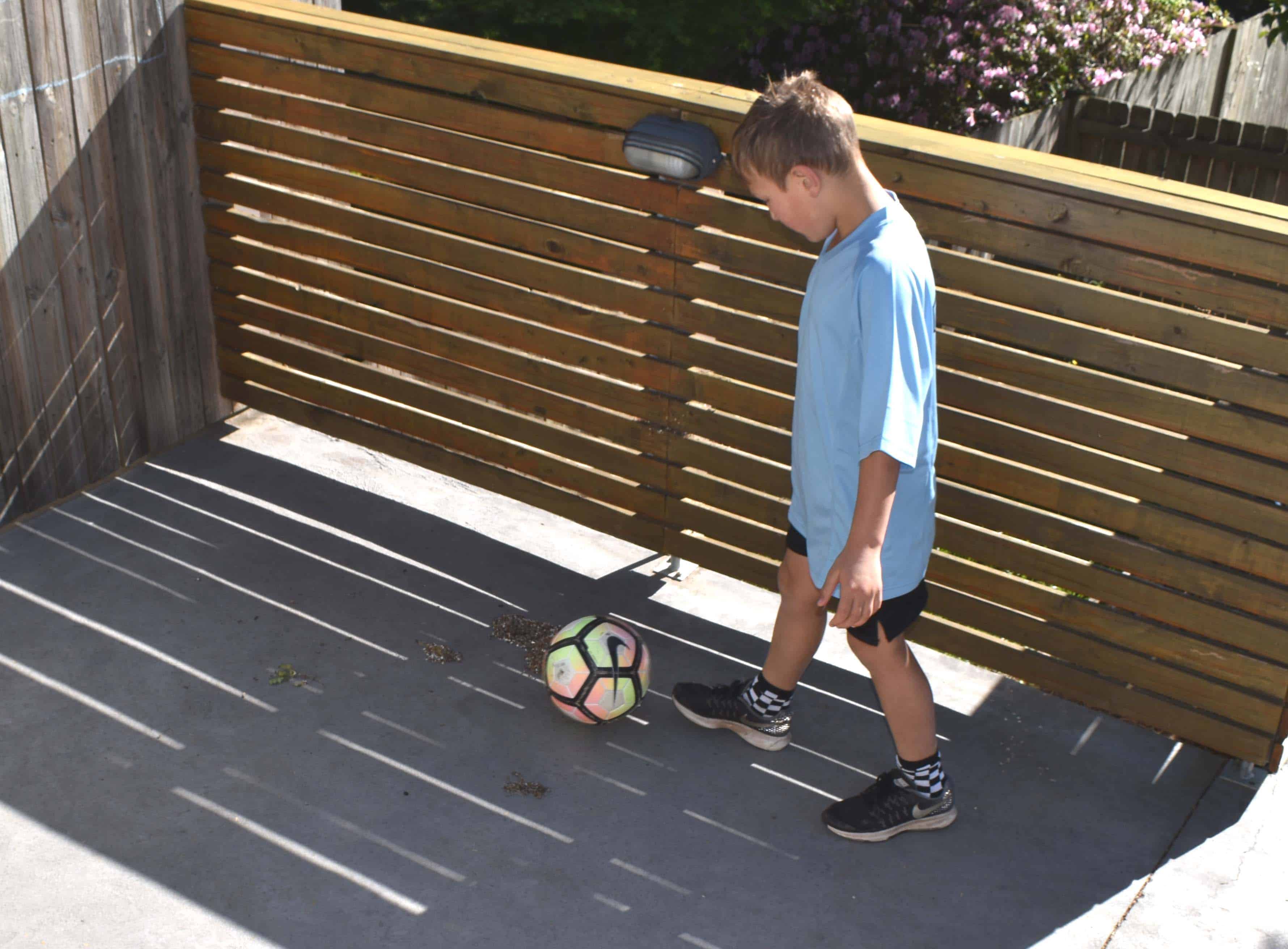
For backyard play, try passing through a gap marked on the ground, keeping the ball in a small area or taking turns aiming at a target. You do not need a full goal or a perfectly marked pitch. Check the surroundings before starting, especially windows, parked cars and pets.
Size four will not be the right choice for every child. If the ball is also for club training, ask the club which size they use. For home play, check that your child finds it comfortable to control. We are not assigning a manufacturer age label that the retailer has not supplied.
The limitation is space. A small courtyard may allow gentle passing but not hard kicks, and balls are not equally suitable for every surface. Store it where it is easy to find, follow the inflation instructions on the ball and make the rules about where kicking is allowed clear from the start.
View Umbro Sigma Soccer Ball Size 4 at BIG W · Check price on Amazon AU
Micro Sprite: for children ready for two wheels
Micro’s Australian site lists the Sprite for ages five through to adults, with a 100kg maximum load. It is a non-electric, two-wheel scooter with a folding mechanism and adjustable handlebar. The listed handlebar range is 63–93cm, which gives you a measurement to compare with your child rather than buying by age alone.
Choose it for a child who can manage balance, steering and braking on two wheels. It is a stronger candidate for a park path or another permitted riding area than for a rough lawn. Being foldable can help with taking it to a suitable place, but it still needs a secure storage spot at home.
Budget for correctly fitted protective gear as part of the decision. Raising Children Network’s riding advice recommends a helmet and scooter protection, a suitable scooter and supervised practice away from roads, driveways and steep slopes.
Check the folding lock, handlebar and brakes before use. A kick scooter is a different purchase from an electric scooter; electric-device rules vary by location. For comparisons across ages and formats, see our kids’ scooter guide and check current product labels.
View Micro Sprite Kids Scooter at Micro Scooters Australia · Check price on Amazon AU
Wahu Phlat Ball: a change from ordinary catch
Phlat Ball compresses into a flying disc and changes back into a ball. The BIG W listing labels it for ages six and up and describes flexible plastic construction. We would choose it when an ordinary game of catch needs a small change, without setting up equipment or teaching a long set of rules.
Start with gentle throws over a short distance. Children can invent targets, count catches or try different throws once they understand how the toy behaves. For 10–12-year-olds, the challenge can be accuracy and teamwork rather than simply watching the change of shape.
It needs an open area where a missed catch will not hit a window or passer-by. Do not treat a flexible toy as a reason to aim at someone’s face. Make sure everyone wants to play, and put it away if children begin throwing too hard for the group.
BIG W supplies assorted colours, so an online order may not deliver the particular colour shown in one image. Its appeal is the throwing action rather than a permanent display item. Choose a conventional ball instead if your child mainly wants to practise their sport.
View Wahu Phlat Ball at BIG W · Check price on Amazon AU
Wahu Double Cricket Set: for a group at the park
Wahu’s Australian site lists a Double Cricket Set with bats, stumps, bases, a ball and a carry bag. It is a more complete starting point for an informal group game than buying only a bat. The brand’s current text does not give an age label, so check the exact pack before purchase rather than assuming an older catalogue’s label applies.
It suits children who want to bat, bowl and take turns in a shared game. Keep the first version simple: everyone gets a turn, the distance can be adjusted and you can decide together how to score. A mixed-age group may enjoy trying to keep a rally going more than declaring a winner.
Make a clear batting area before playing. Other children should stand out of the batter’s swing and wait until the bat is still before collecting the ball. A plastic set still needs sensible boundaries, and it should not be used in a crowded space beside other families.
The main limitation is that cricket needs room and some willingness to wait for a turn. For a small yard, passing a ball may be easier. If you take the set to the beach, set up away from the water and keep ordinary water supervision in place; a game does not replace it.
View Wahu Double Cricket Set at Wahu Australia · Check price on Amazon AU
Nerf Elite 2.0 Commander RD-6: for supervised target games
The BIG W Marketplace listing, sold by Tates Toys, labels this Commander blaster for ages eight and up. It is delivery-only; check the seller’s delivery and returns terms. It has a six-dart rotating drum, comes with official darts and requires no batteries. Eyewear is recommended. We would consider it for a child who enjoys aiming at a safe, agreed target, rather than making running battles the default.
An empty cardboard target area can make taking turns straightforward. Set boundaries so nobody walks into the firing area. Agree that the toy is put down while someone collects darts, and stop if a person or pet enters the space. A child who ignores those rules needs a different activity.
Follow the warnings supplied with the exact model. The ACCC’s projectile-toy guide says children should not aim at eyes or faces. Use only the supplied or manufacturer-recommended darts. Do not modify the darts or blaster. Use protective eyewear for players and people within range, and follow the pack’s safety directions.
Darts are easily misplaced, and younger siblings may pick them up. Count and collect them after play, then store them out of younger children’s reach. Check any venue’s rules before taking a blaster to a park, holiday site or school. A birthday gift can be unsuitable even when the child meets its age label.
View Nerf Elite 2.0 Commander RD-6 at BIG W · Check price on Amazon AU
Zuru Crazy Bunch O Balloons: for an occasional water game
Rebel Sport lists the Crazy Bunch O Balloons three-pack as self-sealing water balloons, recommended for ages three and up. This guide suggests them for supervised school-age play, with adult handling of filling and cleanup. They are an occasional activity rather than a long-lasting toy you can put back in the cupboard.
Use them for tossing at a ground target or a gentle game of catch, with clear rules about distance and where throws can go. Nobody needs to be hit to make it fun. Children who do not want to get wet should have an easy way to opt out.
Uninflated and broken balloons can be choking hazards, as the ACCC’s balloon safety advice explains. Adults should handle unfilled balloons and keep broken or deflated pieces away from all children. Collect every fragment promptly and follow the pack’s choking warning. Healthdirect also identifies popped and deflated balloons as choking hazards for children. The ACCC toy guide explains the need to keep small items and older children’s play materials away from younger siblings. Do not leave balloon pieces on the lawn, in drains or at the beach.
Water on a hard surface can make it slippery. Empty any buckets afterwards, and supervise closely if play is near a pool, pond or other water. Our existing Bunch O Balloons article gives another look at the activity; check current packs rather than relying on old prices or range details.
View Zuru Crazy Bunch O Balloons 3 Pack at Rebel Sport · Check price on Amazon AU
Choose for your space, not just your child’s age
- Small yard or courtyard: favour controlled passing or target activities that fit without sending equipment into neighbouring homes.
- Large lawn or a park: group ball games and cricket give children room to spread out. Check local rules and leave other users space.
- Safe riding area: a scooter needs the right surface, protective gear and supervision, as well as a child ready to use it.
- Several children: choose a game with easy turn-taking or team rules. A toy that only one person can use may need a plan to share it.
- Limited storage: look for equipment you can pack away quickly and carry without losing its parts.
Outdoor safety before you start
Plan for shade, suitable clothing, hats and sunscreen, rather than relying on a cloudy day. Raising Children Network’s sun-safety advice explains that sun protection is needed when the UV level is three or above. Keep drinking water available and choose a cooler part of the day for active games.
Keep play away from water unless a responsible adult is actively supervising it. Raising Children Network’s water-safety guide stresses close, constant adult supervision, even when a child can swim. An older sibling is not a substitute for an adult. Empty buckets and other containers after water play.
Inspect equipment for damage and follow assembly, age, size and load instructions. If your child has a health condition or you are unsure about a physical activity, ask your GP which activities and precautions suit them. For more ways to get started, see our ideas for getting kids outdoors.
Frequently asked questions
What are the best children’s outdoor toys?
The best fit is one your child can use safely in the space you have. A soccer ball offers many games without much equipment. Phlat Ball adds variety to catch, and a cricket set suits a group with more room. A scooter is a bigger commitment because fit, ability, protective gear and a safe riding area all matter.
What outdoor toys suit 10–12-year-olds?
For many older primary-school children, sport equipment, a correctly fitted kick scooter or a game with an accuracy challenge has more appeal than a preschool theme. Ask what they want to practise or play with friends. From this list, ball games, cricket and supervised target play offer different choices. Check each label and their ability.
Which outdoor toys are useful for schools?
For school or out-of-school-hours care, simple shared ball games are a practical starting point, subject to the school’s equipment and supervision policies. Ask staff before buying or donating. They need to check age suitability, maintenance and how equipment will be used. Blasters, balloons and scooters should not be assumed acceptable simply because they suit some home activities.
What toys work for school-age children in a small backyard?
Choose activities with a short, controlled range rather than hard kicks or long throws. Gentle passing or aiming at a ground target may work if the surrounding area is clear. The setting matters more than the toy name. Use a park or another permitted area when your child wants to run, ride or swing a bat.
Do outdoor toys need to be expensive?
No. Start with a type of play your child already enjoys and consider borrowing equipment or using a toy library before a large purchase. A familiar ball used for several invented games may give you more play than a bulky toy. Include storage, maintenance and any protective gear when deciding whether a purchase is practical.