Humidifier for Baby Congestion: Help, Limits and Safety

A humidifier may help a blocked nose feel more comfortable, but it does not cure a cold or treat breathing difficulties. For a congested baby, check breathing, feeding and wet nappies first. A clean cool-mist unit is an optional comfort measure to discuss with your GP or maternal and child health nurse, especially for a newborn.
Updated October 2026. We may earn a commission from links on this page, at no extra cost to you. This information guide draws on Australian health and safe-sleep guidance checked on 7 October. It has not been reviewed by a clinician and does not assess individual babies.
First: when congestion needs medical help
Call 000 if your baby has severe trouble breathing, pauses in breathing, blue lips, or is difficult to wake. Seek urgent assessment if breathing is getting faster or harder, feeds are much smaller than usual, or there are fewer wet nappies. The Royal Children’s Hospital bronchiolitis guide explains the warning signs, including skin pulling in around the ribs and neck. A baby can start with a blocked nose and then develop a chest infection; a humidifier cannot tell you which it is.
A baby younger than three months with a temperature of 38°C or higher needs urgent medical assessment. Follow healthdirect’s fever advice and go to the nearest emergency department. If you are unsure how unwell your baby is, call healthdirect on 1800 022 222. Our baby thermometer guide explains equipment choices, but getting help takes priority over shopping.
Does a humidifier help baby congestion?
A room humidifier adds moisture to the air. Healthdirect’s advice for children with respiratory illnesses includes a humidifier as something to try for a blocked nose, with cleaning after each use to help prevent infection. That is advice about symptom relief, rather than evidence that humidifiers shorten an illness.
The sources reviewed for this guide do not establish an effective humidifier setting, treatment duration or measured benefit specifically for newborn congestion. We cannot promise better sleep, easier feeding or fewer sick days. A product description saying “helps breathing” is not enough to establish those outcomes either. Ask a health professional whether added humidity makes sense for your baby and your room before buying a unit.
| Situation | Useful next step | Role of a humidifier |
|---|---|---|
| Blocked nose, otherwise feeding and breathing comfortably | Ask about infant saline drops and comfort care | Optional, if appropriate for the room and baby |
| Room already damp or mouldy | Address moisture and ventilation | Avoid adding more humidity |
| Hard or fast breathing, poor feeding or unusual sleepiness | Seek medical assessment | Must not delay help |
| Barking cough or suspected croup | Get advice about croup and breathing symptoms | Steam and humidified air are not recommended treatments |
For croup specifically, Pregnancy, Birth and Baby advises against inhaling steam or humidified air. Advice for one respiratory symptom should not be carried over to every illness.
Cool mist, warm mist and vaporisers
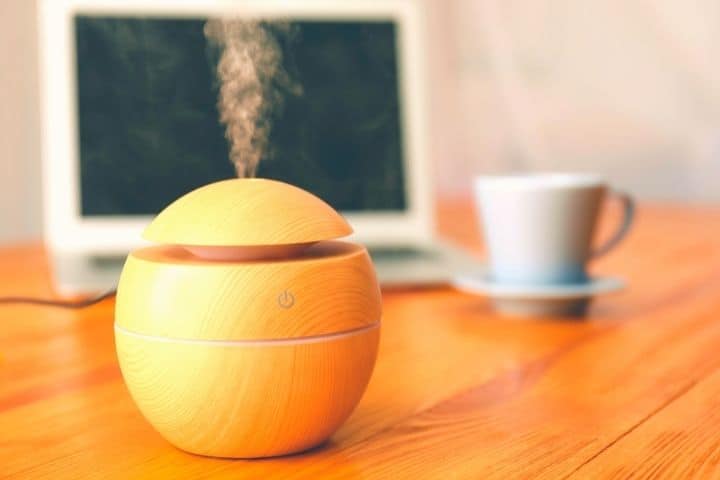
Cool-mist units add moisture without producing hot steam. Warm-mist units heat water, introducing a hot-water or steam hazard. Product names are inconsistent: something sold as a “vaporiser” may heat water, while a diffuser may be intended for fragrance. Read the operating instructions rather than judging by the name or a nursery picture on the box.
If your health professional suggests a humidifier, a cool-mist model avoids the hot-steam hazard, although it still needs careful placement and cleaning. Do not use bowls of boiling water or steam inhalation for a baby. Raising Children Network explains that hot liquids and steam can cause scalds. Keep any appliance and its cord out of children’s reach, on a stable surface, following its clearance instructions.
Keep essential oils and medicines out
Use plain water. Do not add eucalyptus oil, fragrance, medicated liquids or vapour rub to a humidifier for a baby. A separate aroma tray does not establish that an additive is appropriate for an infant. Raising Children Network’s cold guidance warns that inhaled essential oils can irritate or burn some children’s airways. Ask a pharmacist or GP before using any medicated product and check its age restrictions.
The same guidance suggests saline nasal drops as a possible way to ease a blocked nose. Ask which infant product and technique to use; this guide does not recommend a dose or home-made solution. Continue normal breastmilk or formula feeds, and get advice if your baby cannot feed comfortably. For bronchiolitis, the Royal Children’s Hospital suggests smaller, more frequent feeds. Difficulty feeding is also a reason to seek help.
Humidity: more is not always better
A muggy Brisbane bedroom and a dry room with heating need different decisions. Check the actual room rather than assuming congestion means dry air. A hygrometer measures relative humidity; it does not diagnose why your baby is blocked up. Read it away from the direct mist, and follow the unit’s specified humidity limits. There is no newborn treatment target established by the Australian sources reviewed here.
Stop adding moisture if windows, walls or bedding become damp. NSW Health’s mould guidance recommends limiting humidifier use and reducing indoor dampness. If a room already has condensation, a musty smell or visible mould, deal with that problem first. Running a stronger mist setting is not the answer.
Keep mist away from the cot, bedding, walls and electrical equipment. Follow the manufacturer’s positioning instructions, and check the surrounding surfaces during use. If heating is part of your room setup, our baby-room heater guide covers appliance considerations. Neither a heater nor a humidifier replaces watching your baby’s symptoms.
A cleaning routine you can keep up with
HealthyWA’s home infection-prevention advice says humidifiers should be emptied, washed with warm water and dishwashing liquid, and rinsed daily, with components allowed to air-dry. It advises distilled water or water that has been boiled and cooled. Check the unit’s instructions for water requirements, safe handling of electrical parts, descaling and any additional disinfection steps.
- Switch off and unplug before cleaning. Empty leftover water rather than repeatedly topping up the tank.
- Clean accessible water-contact parts as instructed. Never immerse an electrical base unless the instructions expressly permit it.
- Rinse, let parts dry and refill with fresh suitable water before use.
- Replace filters or cartridges on the specified schedule. If you cannot remove residue, mould or a persistent smell, stop using the unit and contact the manufacturer.
Before buying, check whether you can reach the tank corners, obtain replacement filters and understand the instructions. A large tank does not remove the daily cleaning job. If that routine is unrealistic during a rough week, leave the humidifier off and ask about simpler comfort measures.
Keep the sleep space safe while baby is snuffly
Continue to place your baby on their back on a firm, flat sleep surface, with their face and head uncovered. Do not prop up the mattress or add a pillow or wedge to manage congestion. Red Nose’s safe-sleep recommendations remain the basis for the sleep setup. If you are choosing a sleep space, see our bassinet guide alongside that safety advice.
Frequently asked questions
Should I buy a humidifier for my newborn’s blocked nose?
Ask your GP or child health nurse first, particularly if this is a new symptom. You may not need another appliance. A humidifier is optional comfort equipment; it cannot assess breathing or feeding, and a damp room is a reason to avoid it.
Can I leave a humidifier on all night?
There is no universal overnight recommendation. Check the instructions and the room’s humidity, and discuss use with your health professional. Automatic shut-off protects against some appliance problems; it does not prevent excess moisture or make a dirty tank safe.
What should I put in a baby’s humidifier?
Plain water of the type specified by the instructions and health guidance above. Do not add oils, fragrances or medicines. Clean the unit daily and let it dry; suitable water does not remove the need for cleaning.
Can a humidifier treat RSV or bronchiolitis?
A household humidifier is not treatment for a chest infection or breathing distress. Monitor feeding and breathing and follow medical advice. Hospital respiratory equipment is different from a nursery appliance; seek help promptly if your baby is worsening.