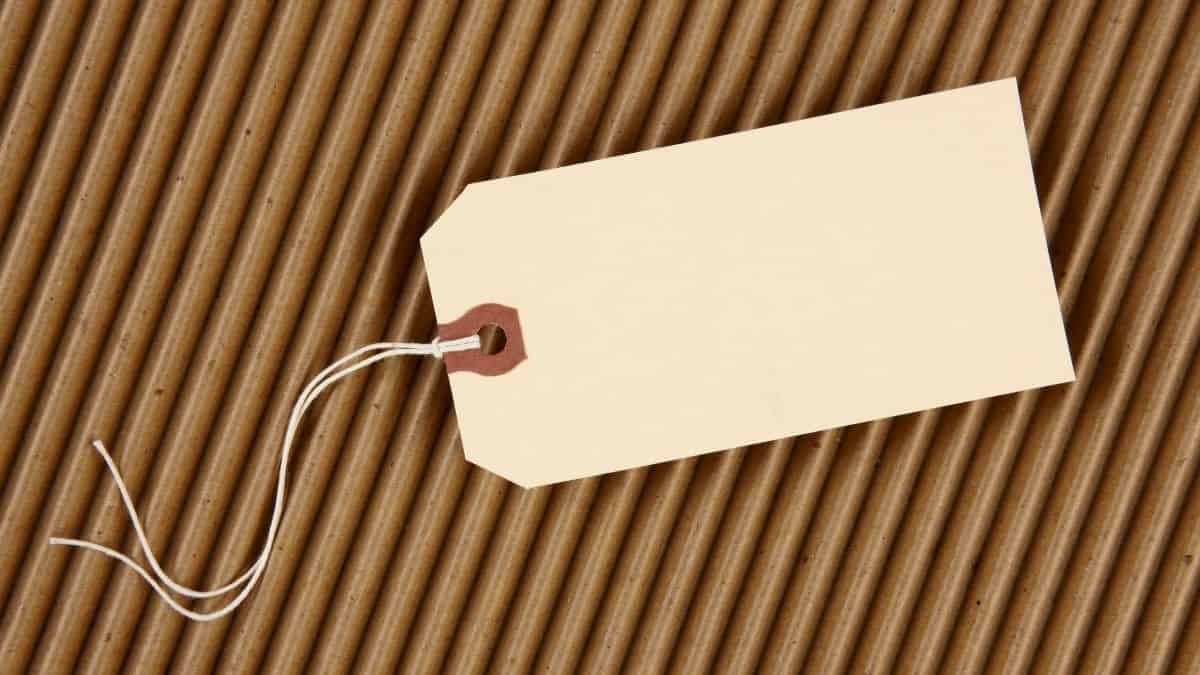
Can Hang Tags Make a Difference to Your Business?

Anyone who runs a business, small or large will always be thinking of ways to improve their concern. If you own a business, then you are probably often wondering how you can improve your products or make them more popular. You might be looking to increase sales, make profits larger, and grow the business.
There are many elements you can change that will make improvements. Some of these involve an injection of capital, and others are more about making tweaks or coming up with some inspired ideas. For example, being a mum and running a business can be tough, so you want to find easy ways to improve your performance.
One, very simple way you might make a difference is through the use of hang tags.
What are hang tags?
In short, they are a form of labeling. They are a way to give information to a customer in the form of print. More broadly though, they are a way to advertise your company’s mission or social responsibility statement, your brand, and attract attention.
Below you can see exactly what they are, what they can do, and how to use them to make a difference to your business.
Can they help you?
Whether hang tags can help your business will depend on what industry you work in. If you are a car manufacturer, then hang tags won’t help. They are utilized on a wide assortment of different products though. You can see them on bottles of whisky, wine, and champagne. They are attached to clothing such as t-shirts, jackets, and hoodies. They might be pinned to soft toys, tied to shoes, attached to kitchen utensils, and much more.
You probably haven’t realized how much they are used, but it is guaranteed that you have looked at them dozens of times when you wanted to find out more information on a potential purchase.
Used effectively, they can entice consumers to choose your product over another by offering a unique selling point. Perhaps your coat is made from locally produced organic materials and the one hanging next to it comes from overseas. The shopper likes both coats but notices your hang tag and chooses to buy the more environmentally friendly one; yours.
How are they used?
They are employed in different industries to convey information. In some circumstances, they are there purely to explain materials used, manufacturer details, and to be compliant with the law. For example, a kitchen spatula needs to show certain information, but the object itself doesn’t lend itself to be labeled easily. Perhaps there is already a barcode stuck on the handle, and the manufacturer doesn’t want to add extra packaging. So, a hang tag is attached to the hanging hole in the handle and that contains all the necessary information.
For a designer t-shirt, however, it is likely the hang tag has a clear logo of the brand so any shopper can recognize it from across the floor. Then they may have minimal details on the rest of the tag. Jars of artisan pickles are likely to have tags explaining who makes them, where the produce is grown, and how the farmers are paid plus other information their target market is likely to be interested in.
The use of hang tags really depends on how you view your audience and the people you are targeting, along with the brand you are selling.
Ways to use hang tags effectively
It isn’t just enough to put a hang tag on your product and expect your sales to go through the roof. They need to be effective too. For this, you need to consider how they stand out initially. If you are not a famous brand, then your tag needs to attract customers’ eyes in other ways.
Use clever design and shapes. Hang tags don’t need to be rectangular. They can be cut unusually and folded. Make them with bright colours, make your logo stand out. Have attention-grabbing detail on the front.
You can use different materials too. This is a very important consideration though. You want to attract buyers and not alienate them, so think carefully of what your tag is made from.
Choosing the best material
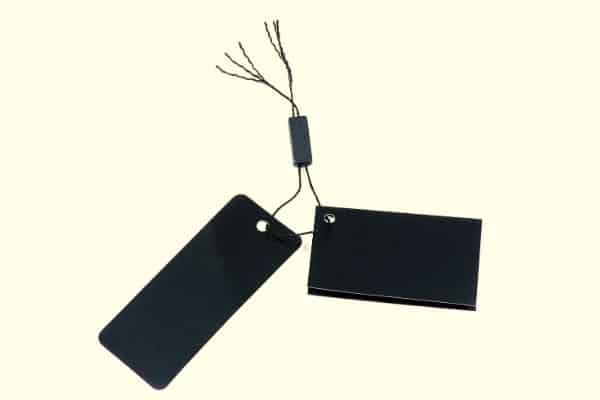
This is significant for several reasons. Firstly there is cost. Secondly, there are issues about how well the design will transfer to the material and also there are environmental concerns.
Normally a hang tag would be made of card. This would then be ready to be recycled. If laminates and adhesives are used then this makes the process more complicated and not so easy to define as recyclable or not. Nowadays, hang tags can be made with bamboo, hemp, and cotton. They can be made with metal, plastic, and leather too.
When choosing the material, think of your market. Leather and plastic could put buyers off. If you must use plastic then choose biodegradable ones and then use them in a special way; make the tag credit or business card sized with useful information so that someone would want to keep it instead of throwing it away. It could have a unique code on it to be registered for online discounts, for instance.
Eco-friendly options will attract people interested in sustainability and the environment. There are some amazing natural alternatives to plastic now that can be used in the same way without hurting the planet.
Putting incentives on the tag
The hang tag can also have something there that makes the customer feel that buying your product is a good deal. In these tough times, finances are important and if your tag has a perforated, tear-off strip with a discount for future purchases, then it will be more appealing to shoppers.
They could also be collected for special offers. Depending on what products you are selling then a buyer could make 5 purchases and then redeem the tags along with proof of purchase for a free item or post them for a special gift.
Promotional offers can lead to large increases in sales and are used by large corporations periodically to boost income.
Call to action
This is a way to make someone interact with you or your business. On a website, it can be as simple as ‘click here’ or ‘checkout’, on a social media post directing you to a product you might put ‘view it here’. Hang tags, although printed, can still be used to make a call-to-action. In this case, putting a web address so that buyers can sign up for your marketing list would work. Or perhaps get them to visit a secret page that only buyers will know about that lists details of upcoming product releases and perhaps special offers.
Legalities of label information
One area that you cannot overlook is what needs to be on labels legally. This will depend on what you sell but generally, the country of origin, care instructions, any hazards or safety instructions for children’s products, plus manufacturer details will be needed.
Hang tags are not necessarily concerned with this area. If you are selling clothing, then you will have to have a fixed label in the garment, and the hang tag is an extra piece of material that you can choose to use as you wish. You cannot, of course, use it for any false claims or misleading information.
How can you get them?
If you are creative, you can design your own hang tags and then find a suitable printer to produce your product. Searching online will find custom hang tag makers for your region; for instance, if you wanted hang tags for Australian companies, then Google something like that. This would bring up a choice of businesses that can not only print but also advise and design your tags.
Summary
These tags, used effectively, can boost your business in many ways. They can add a certain prestigious air to a product, show off your eco-friendly credentials and lead to more customer interaction.