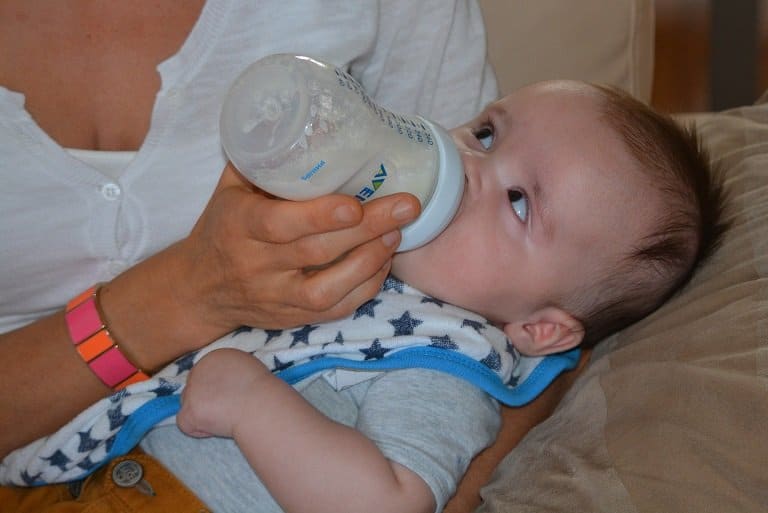
Different Options for Baby Formula

Until they are 6 months old or so, all of your baby’s nutritional needs can be met with either breast milk or from a suitable formula.
A mother may choose to feed their baby with formula for many different reasons. One thing that should be considered carefully when deciding to provide your baby with formula is which one to choose and why.
With so many types of specialty baby formula available, before making a decision it is best to discuss this with your doctor or health care professional.
The majority of baby formulas are made from cow’s milk that has been tailored in some way with added vitamins and minerals and other ingredients with the aim of making the formula as close to human breast milk as possible.
Continue reading to find out about the differences in specialty baby formula to determine which is right for you.
What Is Specialty Baby Formula?
Like some adults, some babies are unable to tolerate cow’s milk. The problem can become apparent if the baby has constant diarrhoea or colic. Other children might suffer from a medical condition that requires specific nutrition. Specialty baby formulas are made to meet the demands of different babies who cannot eat normal formula for whatever reason and have special nutritional needs. There are a growing number of baby formulas on the market today with an option for just about any need.
Soy-Based Formulas
Entirely free of lactose as they are not made from cow’s milk, soy-based formulas are made from the protein found in soya beans. If you have an infant that is lactose intolerant, this type of formula can be a great help. However, the American Academy of Paediatrics advises us that using cow’s milk-based formula wherever possible instead of soy-derived formula is best.
A problem with the soy-based formula is that even though they are lactose-free, they do not help babies that have milk allergies because the infants that are allergic to cow’s milk are also often allergic to soy-based milk. However, soy-based formula is a good choice for babies with galactosemia, which is when the infant cannot break down galactose, a sugar found in milk.
Hypoallergenic Formulas
These formulas that are also referred to as protein hydrolysate formulas can be helpful to babies that suffer from skin rashes, wheezing, and allergies to milk proteins. They are usually a bit more expensive than the normal formula but may be the best choice for a baby troubled with allergies.
Lactose-Free Formulas
Normal cow’s milk formula contains lactose. This type of formula is still made from cow’s milk, but the lactose has been removed so it is ideal for babies who cannot digest lactose or have galactosemia. If your child has diarrhoea, that does not automatically mean that they need a lactose-free formula, as true lactose intolerance is quite rare, but it is worth talking to your paediatrician as this can be a symptom.
Partially Hydrolysed Formula
In this type of formula, the protein has been altered or “hydrolysed” so that it is already partially broken down. This results in a formula that is much easier to digest for your baby.
This formula can be a good choice for babies who come from a family where a large proportion of the family members have allergies, which puts the baby at high risk of developing allergies as well. Partially hydrolysed formula sometimes helps the baby to avoid developing allergies. These formulas might offer some defence from the skin disease eczema.
Preterm Formula
An extremely nutrient dense formula that has additional protein, calories and calcium so that babies who are born before 37 weeks can catch up on development.
Anti-Reflux Formula
Some babies have an underdeveloped valve to the entrance of their stomach and so they suffer from reflux. Signs may include spitting up milk, being very irritable and having difficulty eating. This formula is thickened with rice-starch and it can help if your baby is very uncomfortable.
Choosing The Right Formula
These are the specialty formulas that are generally available but there might be others available to you if your baby has a very specific medical condition. It is important to realise that just because your baby has some diarrhoea or throws up some milk, there is not necessarily a need for specialty formula.
Take your time to read about the different types of formula and consider which would suit their needs best. Talking to your doctor or paediatrician is always the best approach to ensure that if you are thinking about changing to a specialty baby formula, you choose the right one.
Article by E Hudes