Do Solar Bug Zappers Work? A Guide for Australian Homes

Solar bug zappers can kill insects attracted to their light, but they are a poor choice if your main goal is preventing mosquito bites. Solar describes the power supply, not how well the device controls mozzies. For a family backyard, start with screens, removing standing water, suitable repellent and clothing that covers skin.
Updated October 2026
This researched guide explains what a solar zapper can do, what to check before buying one and how to use an existing unit around children. There is no particular model recommendation: a big voltage number or a tray of dead insects does not establish protection from bites.
Solar bug zappers: the quick answer
| What you want | What to expect |
|---|---|
| Fewer mosquito bites | A UV-only zapper is not a reliable solution. Use personal protection and reduce breeding sites. |
| To kill insects flying towards a light | A functioning zapper can do this, including killing insects you were not trying to target. |
| To avoid a power lead across the garden | A solar unit may help, but check charging requirements, mounting and weather suitability. |
| All-night operation | Check the exact model’s manual. Sunlight, battery condition and operating mode affect runtime. |
| A child-safe garden gadget | Keep the unit inaccessible to children. Solar power does not make the electrical grid safe to touch. |
Do solar bug zappers actually work?
It depends on what you mean by “work”. An insect can fly into an operating electrical grid and be killed. That does not tell you whether the insects biting your family are being controlled.
NSW Health Pathology’s backyard mosquito advice explains that bright-light bug zappers are ineffective mosquito controls and can kill other insects. The noise can make a zapper seem busy while mozzies continue finding people nearby.
Purdue University’s entomology guidance also reports that outdoor studies of UV-only zappers found them ineffective at controlling mosquitoes or reducing biting. Devices using carbon dioxide or other attractants are a different category; results from one trap cannot be assumed to apply to another.
Our buying advice is to ask for evidence of reduced bites in realistic outdoor conditions, rather than relying on an advertised coverage area. A claim such as “covers a large garden” needs more context: which insects, under what conditions and measured how?
How solar charging changes the practicalities
A solar panel charges a battery that powers the unit. The details vary by model: some have dusk sensors, separate lantern settings or another charging option. Do not assume all solar zappers have USB charging, automatic switching or enough stored energy to run until morning.
Think about the spot where you will actually use it. A shaded verandah may be convenient for dinner but unsuitable for charging. Check whether the panel is separate, whether the device must be moved and how the manufacturer says to secure it. Moving a gadget every afternoon is another job for a busy parent.
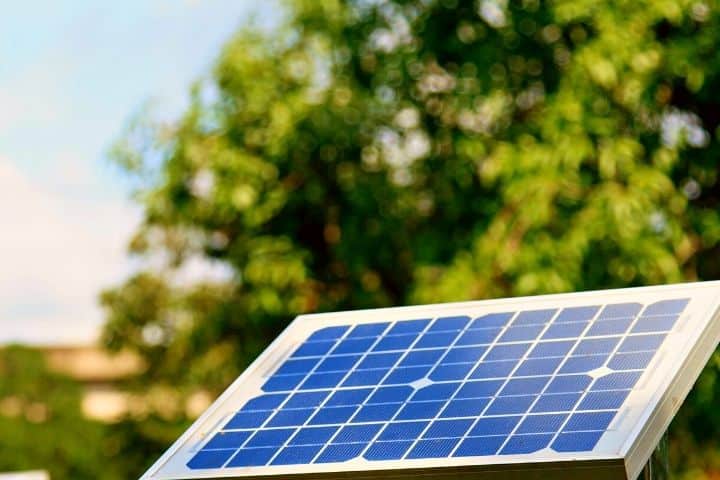
Solar and mains units have different convenience trade-offs. Mains power avoids dependence on daily charging but introduces a lead and a suitable power connection. Neither arrangement fixes the limitations of UV attraction. Compare the complete job, including mounting, cleaning and replacement parts, rather than choosing on the word “solar”.
What to check before buying
- The target insect: is the claim about moths and other light-attracted insects, mosquitoes or reduced bites?
- The manual: look for charging conditions, runtime for each mode and maintenance instructions.
- Outdoor suitability: check where the unit and any charger may be used. “Solar” is not a weatherproof rating.
- Family placement: can you mount it securely beyond children’s reach without obstructing a path?
- Parts and support: can you obtain the manual and get help from the supplier if a guard breaks or charging stops?
- Safety information: check model-specific warnings and the ACCC’s product-recall guidance. Stop using a recalled device and follow the supplier’s remedy.
If you still want to compare formats, see our bug-zapper buying guide. Keep the intended insect and the limits of light-based traps in mind when reading performance claims.
Child safety and cleaning
A solar zapper is electrical equipment, not a toy. Keep fingers and objects away from its grid, and put the device, charger and leads beyond children’s reach. Do not let a child carry it around as a lantern or use it beside a paddling pool. Our guide to bug-zapper shock risks discusses handling concerns; never touch a grid to find out whether it is working.
Follow the shutdown and cleaning steps in the manual, including any specified waiting time. Do not poke a live grid, remove protective guards or attempt an electrical repair. If the casing or guard is damaged, stop using it. Queensland’s Electrical Safety Office advises following manufacturers’ instructions, keeping children from playing with appliances and checking electrical equipment for damage.
For rechargeable devices, follow the supplied charging instructions and keep batteries inaccessible. The ACCC’s battery-safety guides cover rechargeable and button-battery hazards. An unknown battery type is a reason to read the manual, not guess.
Already have a unit that has stopped working? Our bug-zapper troubleshooting guide can help you identify what to ask the supplier. For weather questions, read whether bug zappers can get wet alongside your own device’s instructions.
A more useful mosquito plan for family homes
NSW Health recommends combining repellent, covering skin, clearing water-holding containers and screening doors and windows. These measures address bites and breeding, rather than waiting for mosquitoes to visit a light.
- Empty containers that collect water and check the yard after rain.
- Repair gaps in flyscreens.
- Wear loose clothing that covers arms and legs when practical.
- Choose repellent suitable for the person’s age and use it exactly as labelled. An adult should apply it for children.
Repellent age limits vary by formulation. For a young baby, ask your GP, pharmacist or maternal and child health nurse about suitable protection. Our baby insect-repellent guide has more buying considerations; the current product label remains essential.
If a bite becomes infected or is not improving, seek medical advice. Healthdirect’s insect-bite guidance explains warning signs. Difficulty breathing or a suspected severe allergic reaction needs urgent help: call triple zero (000).

Frequently asked questions
Do solar bug zappers work on mosquitoes?
A unit may kill an occasional mosquito, but that does not make it effective bite protection. UV-only zappers have poor evidence for reducing mosquito bites. Use the prevention steps above even if a zapper is running.
Do bug zappers work during daylight?
Check the model: some charge during daylight and switch on after dark; others have manual controls. A working electrical grid can kill an insect that contacts it, but daytime operation does not establish useful outdoor mosquito control.
Are solar-powered zappers better than plug-in ones?
Solar can avoid a mains lead, while plug-in power avoids daily solar-charging dependence. Compare the manual, placement and maintenance needs. The power source alone does not tell you which will prevent bites.
Who makes the best solar mosquito zapper in Australia?
We have not established a best model from verified outdoor bite-reduction evidence. Check independent evidence for the exact device before buying. A voltage figure, star rating or impressive insect count is not enough to support a mosquito-protection recommendation.
Are solar bug zappers safe around children?
They must be kept inaccessible and used as instructed. Solar power does not remove the grid hazard. Keep children away during use and cleaning, and stop using a unit with damaged guards, casing or charging equipment.