How to Take a Baby’s Temperature Safely

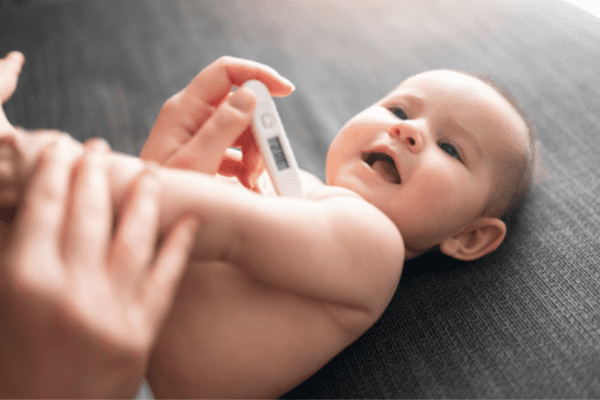
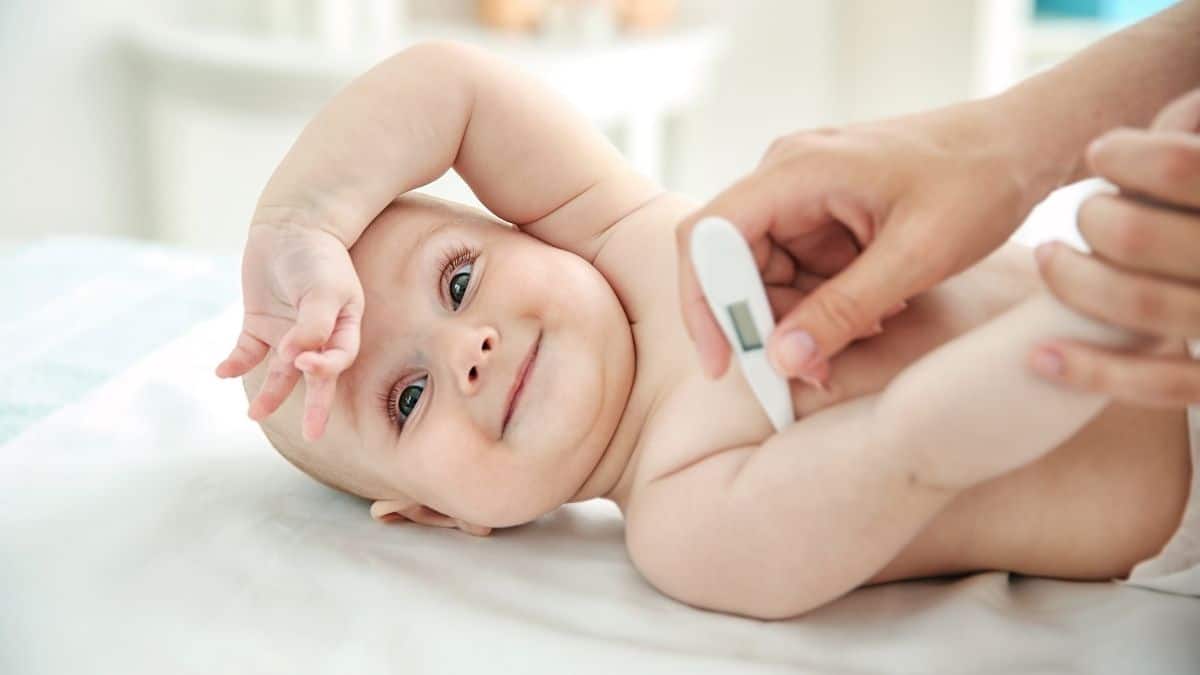
For a young baby, use a digital thermometer under the armpit and follow its instructions. Put the tip against dry skin in the centre of the armpit, hold the arm gently against the body and wait for the reading. Feeling the forehead cannot confirm a fever.
Updated October 2026
If your baby is under 3 months old and their temperature is 38°C or higher, seek urgent medical assessment immediately at a hospital emergency department. Do not wait to see whether it goes down. Healthdirect’s fever guide highlights fever in very young babies as needing immediate help.
Call 000 if your baby is struggling to breathe, is blue or very pale, cannot be woken, or has a first seizure. Do not delay help while trying to obtain another temperature reading.
Which method should you use?
| Age or method | Practical guidance |
|---|---|
| Under 3 months | A digital underarm reading is Healthdirect’s preferred method. A fever needs urgent assessment. |
| 3 to under 6 months | Use an underarm digital thermometer. Ear readings are not recommended by RCH under 6 months. |
| 6 months and older | Underarm digital readings remain an option; an age-suitable ear thermometer needs correct technique. |
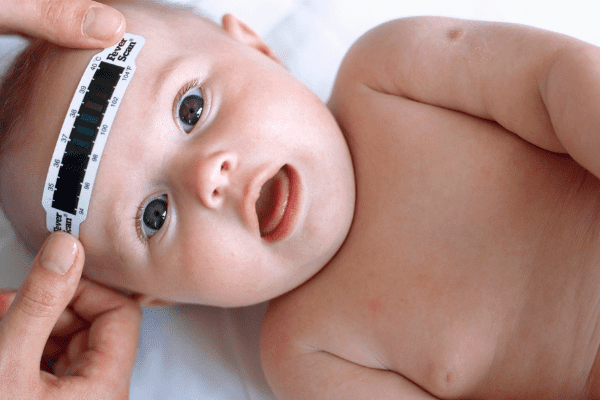
| Forehead infrared or strips | Readings can be unreliable. Do not use a reassuring result to dismiss a baby who looks unwell. |
| Oral, rectal or mercury | Oral readings are unsuitable for babies. Do not attempt rectal measurement without professional guidance; do not use mercury thermometers. |
The method advice comes from Healthdirect’s thermometer guide and The Royal Children’s Hospital’s fever guidance. If your clinician has given you instructions for a premature baby or a child with a medical condition, follow that plan.
How to take an underarm temperature
1. Get the thermometer ready
Use a digital stick thermometer intended for body temperature. Check that it works and that you can read its display. Clean it according to its instructions. A room, bath or cooking thermometer is not a substitute.
2. Place the tip on dry skin
Gently lift your baby’s arm. Place the measuring tip in the middle of the armpit, directly against the skin, with clothing out of the way. Hold the arm gently but securely against the side of the body to keep the tip in position.
3. Wait as directed
Switch on and take the reading in the sequence the device’s instructions specify. Keep the tip still for the required time or until its completion signal. Do not use a fixed time taken from another thermometer, because models differ.
4. Record the reading and method
Write down the temperature, time and “underarm”. Note how your baby is feeding, breathing and responding, plus wet nappies and any medicine already given. This is useful information for a nurse or doctor.
Report the displayed reading and measurement site rather than applying a homemade correction. If the tip moved or you are unsure it touched skin, repeat carefully if your baby is stable. An obviously unwell baby needs help, not repeated measuring until you obtain a reassuring number.
What about ear and forehead thermometers?
An ear thermometer can be convenient for an older baby, but correct placement matters. The Royal Children’s Hospital does not recommend ear thermometers for babies under 6 months. Use a model approved for your child’s age, with the probe covers and technique its instructions require.
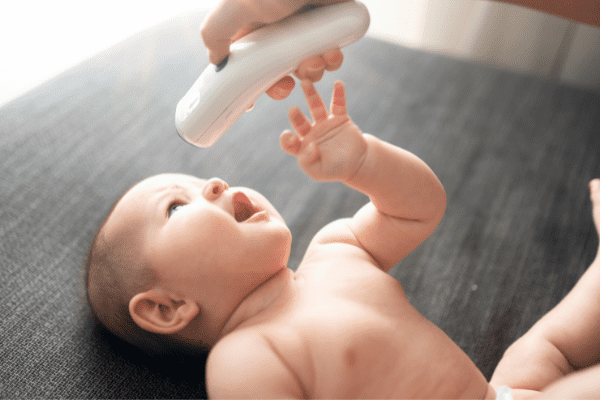
Forehead infrared thermometers are quick, but their readings can be unreliable. Follow the exact measuring distance and device instructions. If a result seems inconsistent with your baby’s condition, use an appropriate underarm method and seek medical advice.
Plastic forehead strips are not a good way to decide whether a baby has a fever. Do not rely on a dummy thermometer or an app to overrule signs of illness. For equipment comparisons, see our baby thermometer guide.
Why mouth and rectal checks are different
Babies cannot reliably keep an oral thermometer under their tongue. Do not put one in a baby’s mouth. Healthdirect also notes that rectal measurement can be dangerous and distressing if the person moves, so it is not a routine technique to improvise at home.
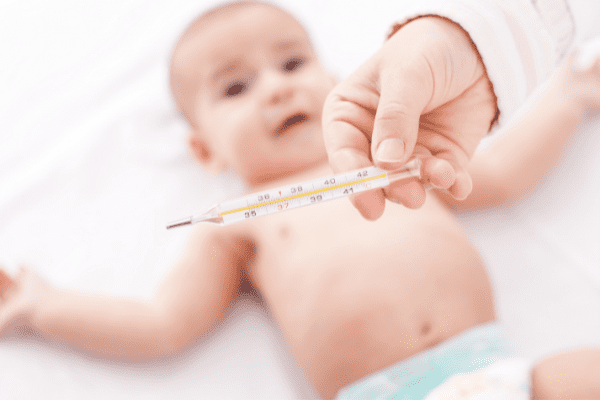
Avoid glass mercury thermometers. Breakage creates both glass and mercury hazards. If you suspect mercury exposure, call the Poisons Information Centre on 13 11 26. Store all thermometers and any spare batteries where children cannot reach them.
The number is only part of the picture
Healthdirect defines fever as 38°C or higher. You do not have to wait for a fever to be “sustained” before responding. Age, appearance and other symptoms matter as well as the temperature.
Seek prompt medical advice for a baby who is feeding poorly, has fewer wet nappies, is unusually floppy or less responsive, is vomiting repeatedly or seems to be getting sicker. Healthdirect’s first-weeks guidance gives particular warning signs for newborns. A normal reading does not guarantee that a young baby is well.
A rash that does not fade when pressed needs urgent hospital assessment. The Royal Children’s Hospital advises calling 000 for severe breathing trouble, blue or very pale colour, inability to wake, a first seizure or a seizure lasting more than five minutes.
What to do after the reading
If your baby needs urgent care, arrange it first. Otherwise, follow advice from your GP or nurse about monitoring, feeding and comfort. Do not give fever medicine simply to chase a normal number. Ask a pharmacist or GP about an age- and weight-appropriate medicine if your baby is uncomfortable.
There is no single rechecking timetable for every baby. Watch how they are doing and follow the clinician’s plan. For non-emergency guidance, healthdirect nurses are available on 1800 022 222. A maternal and child health nurse can also demonstrate the technique at a routine visit.
Keep an appropriate thermometer with your household supplies. Our family first-aid kit guide and first-aid information can help you plan ahead.
Frequently asked questions
What is the best way to take a newborn’s temperature?
Use a digital thermometer under the armpit, following the instructions for that model. Healthdirect prefers this method for babies under 3 months. A reading of 38°C or higher needs immediate medical assessment.
What temperature counts as a fever in a baby?
38°C or higher. For a baby under 3 months, seek urgent assessment immediately. In an older baby, take their symptoms and overall condition into account and get advice if concerned.
Can I check a baby’s temperature without a thermometer?
Touch may alert you that your baby feels hot, but it cannot give a dependable temperature. Seek advice if they appear unwell; do not delay urgent care to buy a thermometer.
Should I add a degree to an underarm reading?
Report the reading shown and tell the clinician you measured under the arm. Do not invent a corrected temperature. Ask your clinician how to interpret a borderline or inconsistent result.
How often should I recheck a fever?
Follow your clinician’s advice and watch your baby’s breathing, feeding and alertness. Rechecking every few minutes does not replace assessment. If your baby deteriorates, seek help rather than waiting for the next check.
Original image downloads
Original article illustrations are available below as downloads. Use the updated advice above when caring for your baby.
Download original illustration 1
Download original illustration 2