Moldavite Buying Guide: 4 Tips For How To Know If It’s Genuine

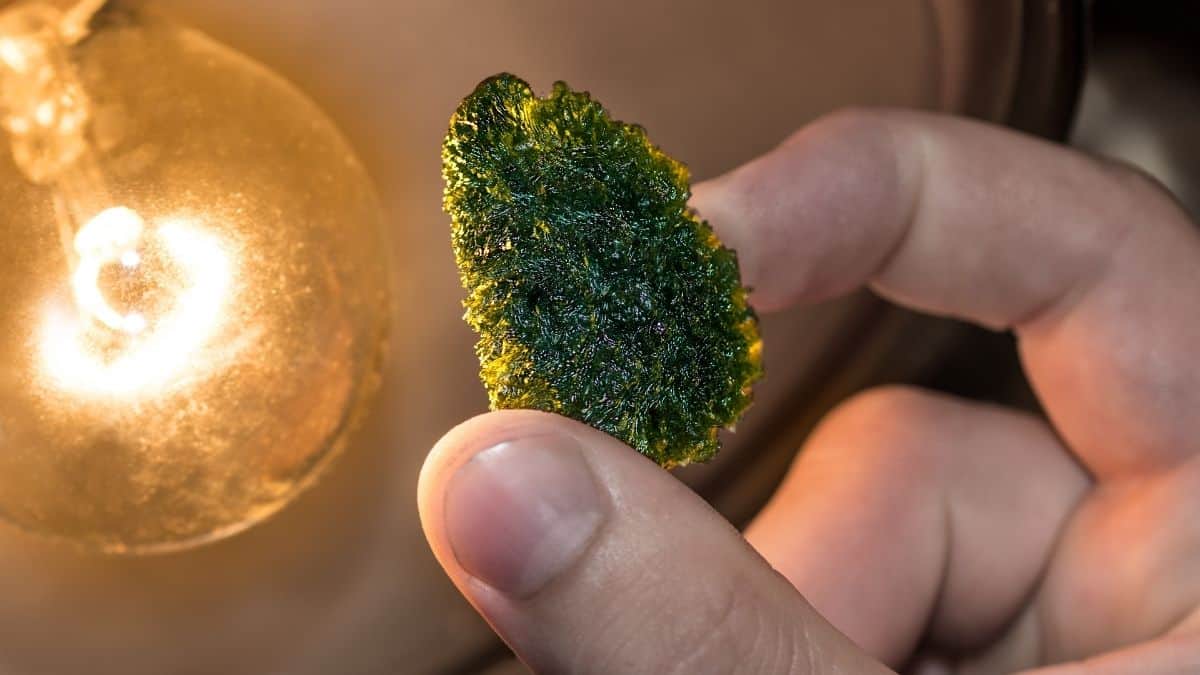
Primarily found in central European countries, moldavite is a natural glass thought to have been formed in the heat of a meteorite impact around 15 million years ago. Moldavite is a valuable translucent stone with a mossy green hue and visible bubbles and swirls.
Moldavite is a relatively expensive stone as it can only be found in Austria, Germany, and the Czech Republic, furthermore, the cost of extracting the precious stones can be considerable. Typically, clearer stones with deeper shades of green are the most sought after and are often used in the production of moldavite jewelry.
In addition to its rarity and unique texture, moldavite has also become a highly sought-after gemstone due to its perceived spiritual and wellness properties which include helping to align chakras, balancing emotions, and attracting good fortune.
When looking to buy any kind of jewelry, it is important to know that the precious metals and gemstones are authentic, therefore the rest of this article gives a step-by-step guide of how to know if you are buying genuine moldavite.
1. Check Where the Moldavite Was Mined
Sizeable deposits of moldavite can be found in regions of Austria and Germany, however, the most significant amount can be found in southern areas of the Czech Republic. Famous for its rich green hues is the Besednice Moldavite that has been mined from Besednice in the Czech Republic, so the name. Moldavite jewelry is also commonly made in this region, with metals such as gold and silver being combined with beautifully cut gemstones to create bracelets, necklaces, and rings.
Generally, when shopping around for moldavite jewelry, most legitimate online retailers will provide you with clear information on where the stones were mined and how the piece was manufactured. Before purchasing, it is worth taking a moment to check the product specifications and the backstory of the retailer.
Typically, nearly all the moldavite nowadays is mined in two regions of the Czech Republic, South Bohemia, and Moravia, so if the product you are looking at is claiming to be sourced from other places it is less likely to be authentic.
2. Request a Certificate of Authenticity
Much like diamonds and rubies, moldavite is also considered a gemstone and any reputable retailer should provide their customers with a certificate of authenticity. These certificates are issued by expert appraisers to show clear proof that the stone is genuine. The document issued by the jeweler should be retained by the customer in case of resale.
3. Inspect the Characteristics of the Moldavite
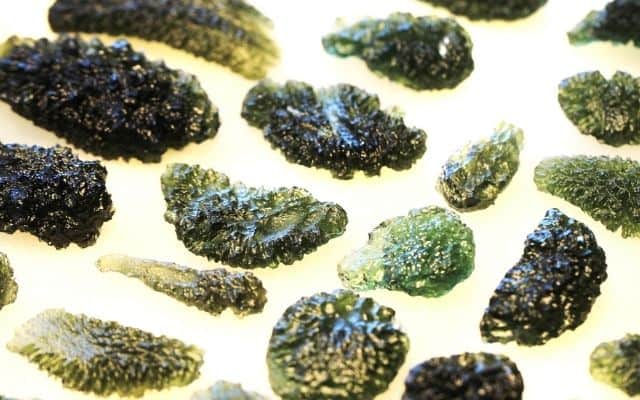
When looking for genuine and high-quality moldavite, it is important to be able to spot possible fakes to ensure you are getting the real deal. Even by studying the photos of moldavite, you can quickly identify whether moldavite is real or fake. This can be done by understanding the following characteristics of authentic moldavite:
- Colour; genuine moldavite exists in different shades of green and in natural light thicker pieces can take on much darker tones. Fake moldavite on the other hand often takes on a shade similar to green glass bottles, but may also appear in shades of blue, red, or yellow.
- Sculpting; natural moldavite features abstract and intricate texturing that is almost unique to every stone, whereas artificial moldavite usually features smooth and uniform surface sculpting.
- Transparency; much like colored glass, fake moldavite appears to be quite transparent compared to genuine moldavite which contains a range of minerals and metals.
- Surface Gloss; most fake moldavite has a gloss finish giving it a shiny appearance. However, real moldavite has a darker matte surface and a backlight is required to see the detail on the stone.
- Every Stone is Unique; similar to the patterns found in snowflakes, the texture of each moldavite fragment is unique, therefore it is important to view photos showcasing moldavite from different angles.
- Weight; on average the weight of a moldavite fragment is approximately four grams with larger pieces weighing around 20 grams are much rarer and cost hundreds of dollars.
- Faceted & Polished Jewelry; in genuine stones lines of lechatelierite are present whilst fakes appear clear like glass, further real moldavite gemstones have tiny bubbles present.
4. Understand the Different Grades of Moldavite
There are many individual pieces of moldavite and excellent jewelry to choose from online, however, it is worth knowing that moldavite comes in different grades of quality which ultimately affects its retail price, these are:
- Regular grade, which looks more weathered and takes on a darker tone akin to seaweed
- Medium quality, offering a balance between more heavily saturated regular grade moldavite and the higher-quality varieties
- High-quality ‘Museum’ grade moldavite is regularly used in the production of handcrafted jewelry
Moldavite is a highly sought-after gemstone that is often used to create bespoke handmade jewelry, however before splashing out the cash it is worth following this moldavite buying guide to make sure it is genuine.