What to Do When Your Baby Has Hiccups

Most baby hiccups need no treatment. If your baby is comfortable, breathing normally and feeding well, let the hiccups pass. You can hold them upright while awake and try gentle burping, but there is no need to force a cure.
Updated October 2026
The little rhythmic jumps can look dramatic, especially in a newborn. The useful question is how your baby looks and feels overall. Pregnancy, Birth and Baby’s hiccup guidance says hiccups usually settle on their own within a few minutes.
Call 000 if your baby has trouble breathing, blue lips or skin, or you suspect choking. Those signs need urgent help. Do not assume they are ordinary hiccups.
What to do when your baby has hiccups
| What you notice | What to do |
|---|---|
| Comfortable baby with occasional hiccups | Wait and offer normal comfort. |
| Hiccups interrupting a feed | Pause if your baby needs a break; support them upright and try gentle burping. |
| Repeated distress, painful feeds or poor growth | Arrange a GP or child health nurse assessment. |
| Breathing difficulty, blue colour or suspected choking | Call 000 immediately. |
1. Give them time
Hiccups are a reflex. Your baby cannot choose to stop them, and you do not have to make them stop either. A calm cuddle is enough if your baby wants one. If they are happily looking around, you can simply carry on with ordinary care.
Try not to judge comfort by how loud the hiccups sound. Look at breathing, colour, alertness and whether your baby seems upset. If something feels wrong, get advice even if the hiccups have only just started.
2. Pause and burp if a feed is becoming uncomfortable
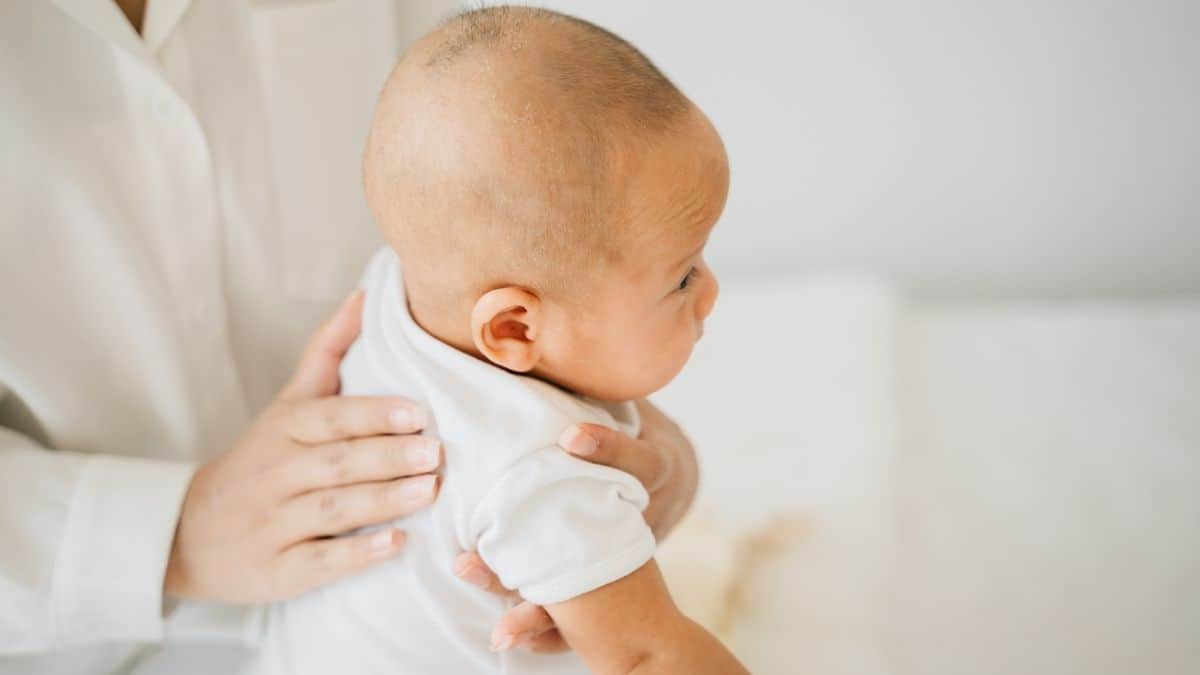
Support your baby’s head and neck and hold them upright against you while they are awake. A gentle rub or pat on the back is reasonable. Avoid vigorous bouncing or shaking. Not every baby will burp, and that is not a reason to keep trying until they do.
You do not need to give an extra bottle or repeatedly offer milk purely to stop hiccups. Follow feeding cues. If feeds are often uncomfortable, ask a maternal and child health nurse or lactation consultant to observe a feed rather than changing several things at once.
3. Keep feeding changes individual
A baby who regularly gulps, coughs or struggles with bottle feeds may need help with positioning or teat flow. That is a feeding assessment, not proof that the bottle is causing hiccups. Our bottle guide explains options, but you do not need to buy a new bottle for ordinary hiccups.
The Australian Breastfeeding Association’s bringing-up-milk advice discusses hiccups alongside milk coming back up. If feeding feels rushed or unsettled, your nurse can help you identify cues and make practical adjustments. Hiccups alone do not show that your milk supply is wrong or that your baby has had too much milk.
Why do babies get hiccups?
A hiccup happens when the diaphragm, a muscle involved in breathing, contracts unexpectedly and the vocal cords close quickly. Babies can hiccup before birth as well as afterwards. The exact reason for an episode is not always clear.
You do not need to identify a trigger for every bout. Focus on whether feeds, growth and comfort are going well. A few hiccups after a feed are different from frequent distress, persistent vomiting or a baby who is becoming less responsive.
Hiccups, spit-up and reflux
Hiccups can happen alongside spit-up, but they do not diagnose reflux disease. The Royal Children’s Hospital explains the difference between reflux and GORD: bringing up milk is common, while reflux that causes troublesome symptoms or complications needs assessment.
Speak to your GP if your baby seems in pain during feeds, refuses feeds, vomits repeatedly or is not gaining weight as expected. Bring notes about when it happens and how feeding is going. Do not start thickeners, reflux medicines or major diet changes for hiccups without professional advice.
Can a baby sleep with hiccups?
Keep the normal safe-sleep routine if your baby is otherwise comfortable. Put them on their back on a firm, flat sleep surface with a clear sleep space. Do not prop up the cot mattress, use a wedge or put them on their side to treat hiccups or reflux.
Red Nose’s advice for babies with reflux confirms that back sleeping and a flat surface remain the safest approach. Upright cuddles are for an awake baby with an awake adult, not a reason to leave them sleeping propped up.
If you are too sleepy to keep holding your baby safely, place them in their safe sleep space. Pregnancy, Birth and Baby’s responsive-settling guidance offers practical ways to respond to fussiness. You can also read our witching-hour explainer for everyday unsettled periods.
Hiccup remedies to avoid
Do not frighten your baby, hold their nose, pull their tongue or try to make them hold their breath. Avoid sugar, honey, lemon juice and water as hiccup remedies. Ordinary hiccups do not need adult tricks or a medicine.
If your baby already uses a dummy, do not force it in or hold it in place to stop hiccups. It is not a proven cure. A calm pause is simpler than trying one remedy after another.
When to ask for help
Contact your GP, midwife or maternal and child health nurse if hiccups repeatedly interfere with feeding or settling, or if you are worried. There is no useful universal “30-minute rule” that makes every episode dangerous or every shorter episode safe.
Healthdirect’s newborn guidance lists other signs that need prompt attention, including poor feeding, fewer wet nappies, unusual floppiness or reduced responsiveness. Green or bloody vomit also needs urgent medical care. Assess the whole baby, not just the hiccup pattern.
If your baby also feels hot or seems unwell, see how to take a baby’s temperature. A fever in a young baby needs prompt medical assessment. For non-emergency advice, call healthdirect on 1800 022 222.
Frequently asked questions
How do I stop newborn hiccups?
Usually you do not need to. Wait, offer comfort and try upright holding with gentle burping if it suits your awake baby. Get feeding support if episodes regularly cause distress.
Are hiccups bad for newborns?
Ordinary hiccups generally do not harm babies. Hiccups with breathing problems, blue colour, poor feeding or other signs of illness need attention to the accompanying symptoms.
Can I feed my baby when they have hiccups?
Follow your baby’s cues. If they are comfortable and feeding well, hiccups alone do not mean you must stop. Pause and seek advice if feeding involves coughing, choking or distress.
Is it safe to lay a baby down with hiccups?
Use their normal safe sleep space and place them on their back. Never use a raised mattress, wedge or side position to manage hiccups. Seek help for breathing concerns before treating it as a settling issue.
Why does my baby get hiccups after every feed?
The timing does not establish a cause. If your baby is otherwise comfortable and growing well, mention the pattern at your next check. If feeds are painful or difficult, arrange an earlier assessment.
Original image downloads
Original article illustrations are available below as downloads. Use the updated advice above when caring for your baby.