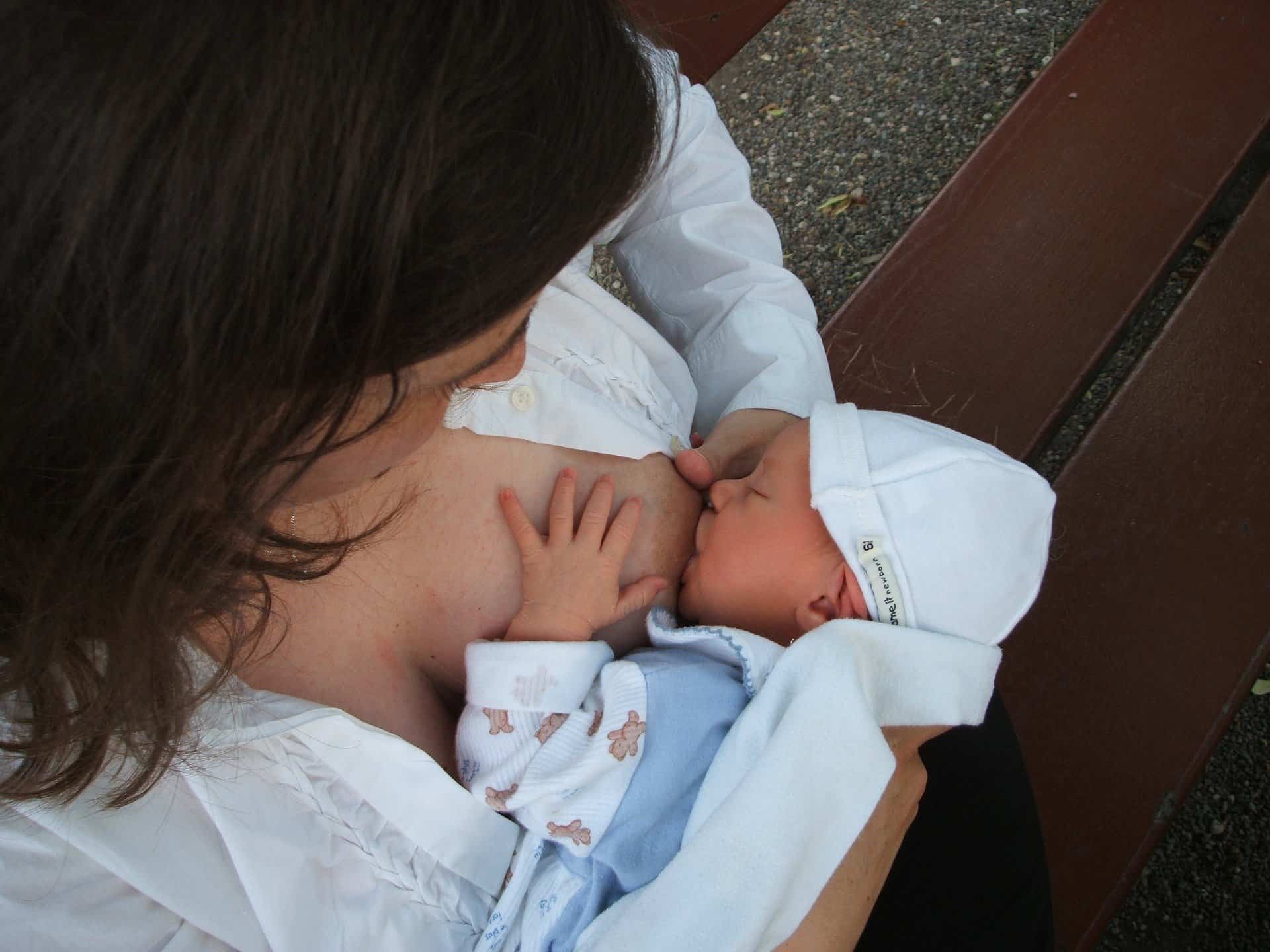
World Breastfeeding Week 2019 – Receiving the Support You Deserve

World Breastfeeding Week is happening soon – 1-7 August 2019. This year, the theme is “Empower Parents, Enable Breastfeeding”, which aims to support and empower parents to realise their breastfeeding goals.
Click here to see the MumsDelivery guide to Breast Pumps
Ahead of this year’s World Breastfeeding Week, MumsDelivery caught up with Denise Condon for the Unperfect Parent Podcast. Denise is a Lactation Consultant at The Mater Hospital, one of Sydney’s leading maternity hospitals. We touch on a number of pressing issues for breastfeeding mums and Denise highlights the support that’s available to you when you’re breastfeeding.
Disclaimer CW: this interview brings the perspective of a lactation consultant. We, at Mums Delivery, understand that not all mums, for different reasons, breastfeed.
Listen to the interview with Denise below, or go to the bottom of this post for the transcription:
Subscribe to the Unperfect Parent Podcast on Apple Podcasts, Spotify, Stitcher, Pocket Casts or wherever you listen to podcasts!
Breastfeeding at work
If you are still conquering the first month of breastfeeding, the return to work may be far from mind. Many women mistakenly think they cannot breastfeed if they plan to return to work after childbirth however there are three key things your employer should provide for you:
• Space – You should be provided with a private space for you to feed your baby or express milk.
• Time – There should be a breastfeeding policy that clearly outlines the support for lactation breaks to allow you time to feed/express during working hours.
• Support – There should be a comprehensive communication strategy in place for both stakeholders and staff which outlines the needs and considerations of breastfeeding staff/mothers.
If this level of support is not in place, there needs to be a shift within the organisation to create a supportive environment. If you are on maternity leave and are considering or planning a return to work, be sure to speak to your employer in advance about accessing the Australian Breastfeeding Association’s comprehensive ‘Return To Work’ toolkit. They are obligated by law to take reasonable measures to accommodate your breastfeeding needs.
The ABA’s toolkit includes in-depth information on finding solutions to common problems that might be encountered and also includes templates and examples to help make the implementation process straightforward. Working through the toolkits will also set your organisation up to be eligible for Breastfeeding Friendly Workplace Accreditation.
Childcare and breastfeeding
When your child starts care, you can make arrangements with your childcare provider to allow you to keep breastfeeding. You can either breastfeed your child or provide your child with expressed breastmilk while they are in childcare.
Your childcare provider:
• Cannot refuse your application for a childcare place, or not offer you a place, because your child is breastfed
• Cannot ask you to stop breastfeeding when your child starts in care • Must let you breastfeed or express milk on the premises
• Cannot refuse to feed your expressed breastmilk to your child
Breastfeeding in public
You can breastfeed and express anywhere that suits you and your baby. You do not need to ask permission. It is your right.
Breastfeeding at home
MumsDelivery has previously written about how to set up a breastfeeding sanctuary. But, breastfeeding also happens more easily when the people closest to the breastfeeding mother support her. A partner who is there for you as you learn to breastfeed will help you both share the role of caring for your baby. Here are five ways your partner can support you in breastfeeding:
• Understand the importance of breastfeeding. Breastfeeding is the normal way to feed babies. Refrain from suggesting formula at the sign of first difficulty – be aware of the extra support available.
• Support you when you feed your baby in public, rather than suggesting covering up or going somewhere else to nurse.
• Give support as you learn to breastfeed. Tell you that you’re doing a great job and how proud they are. Help you to relax with a shoulder rub, or take care of baby while you shower.
• Do as much they can at home, ensure you’re able to rest, eat regularly and drink plenty of water. If possible, takes some leave from work.
• Is patient with your emotions. Simply listen to you or just keeping you company, and with patience – is often all you need.
Extra support
The Australian Breastfeeding Association (ABA) runs the National Breastfeeding Helpline 1800 mum 2 mum (1800 686 268) which is available seven days a week. It is staffed by trained volunteer counsellors who answer calls on a roster system in their own homes. Private Lactation Consultants are available through the Lactation Consultants of Australia and New Zealand (LCANZ) (www.lcanz.org) and your local Early Childhood Centre. So do call when you feel you need the extra support.
Transcription
Silvia: Good morning, Denise. Thank you for joining us today and welcome to the Unperfect Parent Podcast. So, Denise is a lactation consultant based at the Mater Hospital in Sydney, is that correct?
Denise: That’s correct. I am a midwife and I have been for over 36 years. I’ve worked in all areas of midwifery but became quite passionate about breastfeeding about 10 years ago and supporting women. I am now an internationally certified lactation consultant so with having that credentials, I suppose I do a lot more support and I’m keeping up to date with evidence and research that’s out there to help support women.
Silvia: What is your day to day life? What does a lactation consultant do?
Denise: It is a very rewarding position that I have because what I’m doing is really supporting women on this breastfeeding journey. So, we know the environment that I work in does– at the Mater, we’re very lucky there because we do have midwives that are working with our mums all the time. But I suppose the lactation consultant comes in when the mum has more challenging breastfeeding issues. There can be a number of challenges, breastfeeding.
Silvia: I bet. (laughs) Before this podcast, I had a quick look at data and we know that data suggests that most women do want to breastfeed and start on that journey and that quickly drops down as the weeks go past. I think it goes around 40% around the six month’s mark?
Denise: That’s true, Silvia.
Silvia: Do we know why women don’t keep up…?
Denise: I think we do know why and it’s really about supporting that mum through those early days. Most of it is about education. And again, as a lactation consultant, that’s what I’m doing. Part of my working day is educating parents because look, I think you know mums, they are very focused on getting this beautiful baby, getting through the labor and the birthing experience. And I think we have our culture as such that we’re not seeing new mums breastfeeding out in the world. I think a new mum’s just sort of, they know breastfeeding is best for their baby so that’s why there’s that initial take-up but a lot of them sort of don’t realize that it can be quite challenging in those first weeks. I think that a lot of my job is just letting women or parents know that it is a learned skill, breastfeeding. Both the mother and baby have to come together and we truly say it takes about four to six weeks to get that breastfeeding into some sort of established, you know. With the baby’s feeling, getting to the breast, mums getting more confident with her feeding. So I think in those early days, it’s about getting support. If there’s no support, it can be a very difficult journey.
Silvia: We have world breastfeeding week coming up very soon. What is the theme for this year’s World Breastfeeding Week?
Denise: The theme that we have this year is ‘empowering parents enables breastfeeding’, which is a wonderful theme because it’s making- I suppose people are aware that breastfeeding is actually – a team effort. It requires support from both the partner, from families, from the community. By having this sort of an environment for mums, it enables her to sort of, “Oh, okay. I do want…” As you say, initiation is really high but without that support around her… That’s why the percentages of women tend to drop because they haven’t got that support. So again, it’s not so much even like the family. Even the environments that she’s in. Like her work, if she wants to return to work, we sort of need to let mums know that workplaces have to support mums about getting back to work. They have to by law provide a safe, supportive and space environment for her to be able to maybe express if she needs to, but support her breastfeeding. Even out in the community, we need to be letting mums know that, yeah, it’s okay to breastfeed. We need to encourage that so that’s why that’s empowering parents. We’re really trying to focus on getting that breastfeeding rates to increase. That’s actually part of what World Health Week this year is. By empowering parents. They’re looking at trying to raise that 40% drop-off rate to actually increase it to 50% by 2020. So that’s really what, and that’s globally. That’s really what we want to achieve, through getting this word out to people. Not just parents, the community as well.
Silvia: Do you think that’s also related with the way life is in general? I know we are so busy. There’s so much pressure on mums. They feel like they need to be always perfect. To be a breadwinner. Doing one million things around the house and be that amazing professional and be there for their partners. Do you think that it gets to a point that something’s got to go?
Denise: Exactly. Yes. That’s so true, Silvia. That’s why it’s really important about education and part of what my job is as a lactation is really just trying to educate the parents about the importance of breastfeeding. We know that breast milk is specifically designed for their baby’s needs and it changes that whole time as baby’s growing. So at different stages of infant growth, there are changes in the breast milk to sort of, support that. Also, there’s a lot of research that’s happening now about the gut flora of babies. A lot of people are starting to hear that saying that if mum has a lot of time with her baby, with that skin to skin and that breast milk, then they are actually sort of changing the baby’s gut flora to sort of be more adaptable as time goes on. So, we know the benefits of breastfeeding but yes, as you say, it is such a busy time. There are a lot of pressures on mum. That’s why we need to sort of, I suppose be educating the dads or the partners to be really there for mums to help support that breastfeeding. If things are getting challenging, the partner needs to be able to look at ways that they can support her just by simple things. Just by making sure she’s had something to eat, making sure she’s had some rest, encouraging her.
Silvia: Can I play the devil’s advocate now in talking about partners? Do you think some mums will say that actually, a way for the partners to be more involved is actually to bottle feed the baby? And personally, I breastfeed until 26 months. I don’t know how I managed but looking back, I was a single parent.
Denise: Well done. That’s amazing!
Silvia: (laughs) I think not having a partner that I could share the load or anything facilitated the breastfeeding because it was me and me. So if I had someone that I could [say to], “Oh, here is baby, go and feed that baby.” (laughs) How do we tackle that?
Denise: Yes. In fact, that’s a really important thing, Silvia. We do know that. When I give classes, that’s one of the questions. I encourage the dads or the partners to come to the classes as well because if they have the information that’s needed to help support their partners, then they have to know as well. Quite often, you sort of get the dads and go, “Oh actually, this is breastfeeding. I’ll leave.” No, no, no, you need to stay. And that’s exactly what they might ask. Well look, wouldn’t it be better if I gave the baby a bottle and then that way mum can sleep? We do know to protect that milk production, we have to keep the baby feeding. So what starts to happen if we start to introduce that bottle, it does start to decrease the milk production. The more bottles that we give the baby, the less the milk production, the mum. So, we do sort of find its mum that’s got to be doing the breastfeeding and the way the dads [or partner] can support is just to be there. When the baby wakes up for a feed, they need to sort of go and get the baby, change the nappy, bring the baby to the mum, let the mum do the feeding, then they can do the settling of the baby. They are the ones that can sort of walk around and try to get that baby… Because truly, the feeding part is the easiest part. Mums are pretty much tuned to their babies and they know what they need. So quite often I sort of say, “Look, you know it’s fine if you think that that’s the way you can help it, I’m just going to be awake anyway.” She’d be lying in bed and she’ll be going like, “What are you doing? Are you changing that nappy alright? Are you feeding that baby alright?” And what’s happening is if the dad’s giving that bottle, the mum’s not emptying her breast so she could wake up a bit later and she has painful breasts and then we start to run into those problems. People know about breast complications like blocked ducts, mastitis. So, the way that we can prevent that is just to keep emptying the breast. We need the support of the partners, but we need that support by really empowering the mother to sort of keep that breastfeeding environment going.
Silvia: Yes. I’m interested now to maybe ask you about the return to work. As I said, I went all the way to 26 months and I was back at work at six months expressing, you know, during that period. And yes, I remember I felt really there were some {gaps} … in my workplace, no dedicated places where I could go and express. I mean, often I’ll resort to go to meeting rooms but you know, those meeting rooms were [often] taken. I would go down the foyer and I remember there was like a baby room, and then to my surprise, there was only one power outlet that I could to hook my electric pump into and right next to the sink was like a terrible thing. I just really came to me {this realisation}. It’s like, “Wow {where can I go?} …” It was a big blow, and if I recall this… Really, workplaces are not designed for it, are they? Is there a legislation? Is there anything that we can do or any support to actually make employers see that, “Well you actually need to support this.”
Denise: Yes, there is. All workplaces, by law, have to provide those facilities for a mum that returns to work. There is actually the Australian Breastfeeding Association, which is great support for women in the community with breastfeeding. They actually have put together like a tool kit with the return to work. So that means that the mum can, you know. Even just go on that site and start getting some facts about that. And what that provides for the mum is information about how she can approach her workplace. I suppose it’s just contacting the HR people and just going through those things that you’ve said. They have to provide time for you to be able to do that. They have to provide a space and they have to provide the support. Now that is part of all workplace environments, but I suppose a lot of people are not adhering to that. So that’s why it really is something that you need to get onto your HR people and really try and get that going. In fact, with someone at work, I was talking about breastfeeding recently and how like this thing is about. Getting mums, supporting them back to work. And she said, “Oh, my husband actually works in an environment and that was his job. He had to actually thought of…
Silvia: (laughs)
Denise: In his work environment, because he’s wife was a midwife, he was sort of given the job to like, “How can we try and make this a little bit easier for mums coming back to work?” Because that’s the pressure at mums these days, “I have to get back to work” and it is sad. For some of them to say, “I don’t think I’m going to be able to breastfeed very long because I’ve got to get back to work.” But you need to sort of make it easier for them.
Silvia: In an ideal world, what is the recommendation like for breastfeeding? How long should…? Or what time at what stage do we introduce solids? At what stage should we introduce some milk in dairy products?
Denise: One of the information that we have comes from the guidelines have come out from the World Health Organization and UNICEF. Their recommendation or the main thing is to get the baby to the breast within the first hour of the… We know that by getting that baby to the breast in the first hour, that the outcomes for breastfeeding improve. Babies instinctively have that ability to come to the breast quite amazingly. We’ve got video footage of babies actually being delivered vaginally and crawling to the breast without any assistance from their mum, just through smell and touch. So, we know that smell and touch is really important and by initiating that first breastfeed, we know the outcomes for longer-term breastfeeding improved. So that’s the first recommendation that they have. The other one is exclusive breastfeeding for six months. I suppose that’s the one that we really need to improve our rates with.
Silvia: Does that include also expressed milk?
Denise: That includes getting the baby breast milk for six months. That’s the recommendation. Also, to be breastfeeding for up to two years with the introduction of nutritional solids from six months. So, at six months of age, we start to introduce those nutritional supplements, but breastfeeding is still part of their main diet. And so are the recommendations that we work with. That’s what we’re trying to support mums with.
Silvia: Denise, we’re just wondering. Do you have any memorable cases that you could share with us? Maybe women that you have supported who were really struggling with all those things that you were talking about. The right support was actually able to overcome the difficulties and get there.
Denise: Education is what I do every day and what I like to do when I have a group of mums is always find out which of the mums that have had a baby previously. And it’s those mums that are able to sort of help those first-time mums. Quite often, it’s those mums that are able to share their stories about how it was difficult. And quite often from mums, they have difficulty with getting that positioning, that latch. They have quite painful nipples for a period of time. Again, I was very lucky enough that breastfeeding… I have four children and I breastfed them all for at least a year. I was very lucky that I didn’t have lots of issues with breastfeeding, but one of my colleagues was telling me that she was a… Again, she was a midwife, and she just could not believe how much pain she was in when she first started to breastfeed. Being a midwife, she did feel quite some—
Silvia: More pressure.
Denise: Yes. “I can do this” “I know this is fine” But even herself, she said, “It really wasn’t until I got past that.” As we say, it takes about four to six weeks for things to settle down. One of the things that is happening and because the mums can have pain, the nipples are quite sensitive from pregnancy. And that sensitivity stays through those four to six weeks. So, the women are sort of finding that they are having that more sensitive feeling to their nipples as well. So that sort of makes it difficult for them. And if they’re not getting that positioning and latch right, it really can just exacerbate things. So, sometimes we just have some really lovely moments when we hear stories from mums that sort of go, “Yes, no, that’s exactly what happened. I really struggled for those first six weeks, but then like yourself, I went on and breastfed 15 months.” So working in the community, I did for a while there and it was really nice to see those mums as they sort of, you know, we’re able to feel more confident with feeding and really start to establish that wonderful breastfeeding bond that they have. Every day, there’s a story. Yesterday at work, I had a woman, she was ready to go home and the baby hadn’t put on as much weight and she was feeling quite… I went in and saw her in tears. So, what we look at is sort of just keep reassuring her. When women sort of feel like they don’t have enough milk, what we need to reassure them is it does take time for that milk production to come in. We sort of say 72 hours, but some women it takes a little bit longer.
Silvia: How does that balance with women waiting for that production to kick in and seeing your baby distressed and crying?
Denise: Yes, it is happening.
Silvia: That’s a really hard for mums, I imagine.
Denise: Yes. That’s exactly right and that’s where the support is. But we know that the more the mums feed, the more that milk production starts to come in. This particular mum who I saw, she was crying, upset. Anyway, we sort of spent a bit of time just positioning the baby a little bit better so that the baby was actually getting a deeper latch, which enables the baby to get a good milk transfer. Sometimes, getting that baby to feed well at the breast is really about getting the positioning, getting the baby that it can get the milk from the breast well. And so by spending a bit of time with her, she then was able to do lots of good feeding in that next 24 hours and that milk production started to pick up. So, it’s really just supporting mum. What goes in has got to come out. So, if we could see the baby doing some wet and dirty nappies, you know the baby is starting to build up that supply. So, to support the mum through that “My baby is sort of giving me messages that I want to keep feeding and I’m getting very tired.” It’s really just, again, just trying to get her to be feeding regularly. When the baby’s having a rest, making sure she’s resting and making sure that we’re just checking that the output for the baby is going okay. Because as the milk production starts to pick up, the baby will start to adjust to that. So in those early days, it’s really one day at a time. It’s even one feed at a time. Don’t get too far ahead of yourself is what I keep saying. And the most important thing is just to trust your instincts as a mother and just listen to the baby because the baby’s going to tell you when it needs to be fed. When it needs a cuddle when it needs a bit of, you know, just mum time. So, it’s very important just to be reassuring and supporting the mum through those early days.
Silvia: Yes. I have to confess. When we say we’re going to do this podcast, we run a website with lots of mums. In my experience in social media in general and then also around my own social circle, for women who didn’t make the journey to breastfeeding, they feel extremely under pressure. They feel stigmatized. And they feel like the society’s putting this pressure on them and they are pretty much telling them that they have failed [if they can’t go ahead]. What can we say to those women?
Denise: As we say, going back to those, most women, we say like 98% of women want to initiate breastfeeding but those rates dropped. So those mums go in not expecting to fail. They go in very positive about what they want to achieve for their babies. So, what we have to do is really congratulate the mums that have been able to feed their baby for whatever period it is. If it’s two weeks, if it’s four weeks, if it’s six weeks, we need to just sort of, they did a great job. They gave what they could. And if it didn’t quite work out for them, then at the end of the day, all we really have to do is just give them that confidence to understand that truly, you’ve just got to feed the baby and give them lots of love. That is really what they’ve got to do for their baby. How they achieve that is going to be about what works for them. They want to enjoy their baby. They don’t want to be feeling the pressure of it and they really just have to be… If that’s the decision that they feel comfortable with, if there haven’t been– I suppose that’s the thing. It’s just making them aware. If it’s something that they want to keep doing, get the support that’s there. If they’ve tried the support and it hasn’t worked for them, then they’ve done a great job because they have able to, you know. Even if they can do it a couple of days. I did have a patient recently who did have a medical reason and there’s very few medical reasons that you have to give up breastfeeding, but sadly she did have one. We just supported her to breastfeed for about three or four days so that the baby got that early colostrum, which we know is very important for the baby. But her health, she did have quite a life-threatening medical issue that she had to take care of that. She did a fantastic job supporting her baby for those four days that she could. We’ve just got to really makes sure that the women do understand that if that’s what’s worked for them, that’s really the most important thing. So, if we can educate them, we can give them the support, get them in contact with the support that’s available, which is the Australian Breastfeeding Association, which is the early childhood center. A lot of early childhood centers have Breastfeeding Dropping Clinics. And also, the LCANZ, which is Lactation Consultants of Australia & New Zealand. They have a website and they have access to private lactation consultants that can do a bit of a one-on-one with them. So, it’s really just giving the mums the information or the support. But at the end of the day, they’ve done a great job supporting their baby, feeding their baby and caring for their baby. And even for those mums that aren’t able to breastfeed, doing that skin to skin and that bonding with them is really important. And just letting them know, that’s okay. They are feeding their baby, that’s the most important thing, but they are doing that bonding with their baby and that’s really what it’s all about. So, it’s just acknowledging that they have done a great job.
Silvia: That’s a great message to end our podcast with. I would like to thank you, Denise, for being part of it today. All the best for the World Breastfeeding Week coming up. Are there any other final messages you would like to share with our audience?
Denise: Thanks Silvia for giving myself the opportunity or really on behalf of the Mater because as I say, it’s really about the initial. Where people start their breastfeeding journey. So, we want to give them support. Really, it’s just about education, support. At the end of the day, as I said to you, they just need to feed them and give them lots of love. And listen to their babies, trust themselves because they are wonderful mothers. That’s the most important thing. And making sure the partners are on board with all of that too. Thank you for your time and being able to share the message of empowering parents and enabling breastfeeding, which is the message we want to get out there for breastfeeding week. Thanks, Silvia.
Silvia: Thank you, Denise. Have a wonderful day!