Free Reward Chart Template: Printable and Easy to Personalise

Use the free reward chart template below to track one small, achievable goal. Print it, add your child’s name and agree on a simple reward together. You can use ticks, drawn stars or stickers; there is nothing to buy and no sign-up.
Updated October 2026
Free printable weekly reward chart
My name: ____________________ Week starting: ____________________
My goal: ________________________________________________________
I earn a tick or star when I: __________________________________________
My reward: ____________________ My target: ______ ticks or stars
| My goal | Mon | Tue | Wed | Thu | Fri | Sat | Sun |
|---|---|---|---|---|---|---|---|
| ________________ | □ | □ | □ | □ | □ | □ | □ |
Stars or ticks earned: ______ Something I’m proud of: ____________________
How to print: open your browser’s Print menu (Ctrl+P on Windows or Command+P on Mac). Choose A4 and look at the preview. Landscape may help the weekly table fit. Print only the page or pages containing the chart. For a cleaner one-page version, copy the chart heading, name and goal lines, table and total into a document first, then print that document.
How to edit: select and copy the chart into Word, Google Docs or another document editor, then replace the blank lines with your own wording. The table on this page is not a fill-in form or a separate downloadable editable file. If the table does not paste neatly, create an eight-column table and use the headings above. You can also draw the same layout on paper.
Themed printable reward charts (PDF downloads)
Prefer a ready-made design? Download one of our themed charts and print it at A4. Each opens as a PDF in a new tab.
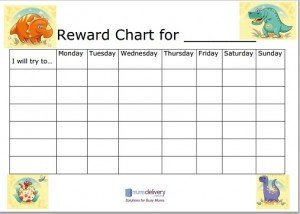 Dinosaur chart (PDF)
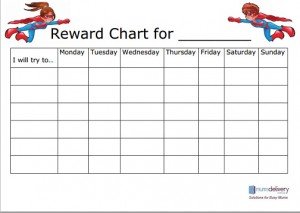 Superhero chart (PDF)
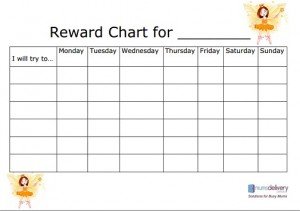 Fairy ballerina chart (PDF)
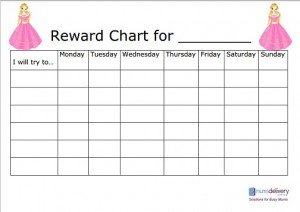 Princess chart (PDF)
 Reward ideas (boys) chart (PDF)
 Reward ideas (girls) chart (PDF)
A five-star chart for a shorter goal
A week can feel like a long wait. If your child prefers a smaller target, use the five spaces below. They do not have to represent five consecutive days: agree on five opportunities to practise the goal.
| Star 1 | Star 2 | Star 3 | Star 4 | Star 5 |
|---|---|---|---|---|
| □ | □ | □ | □ | □ |
My goal: ____________________ My reward: ____________________
What helped me: __________________________________________________
What should you put on a reward chart?
Make the wording something you can both recognise. “Be good” leaves too much room for disagreement. A small action is easier to explain and record. These examples are starting points to adapt to your child, rather than a list of things every child should already be able to do.
| Instead of… | Try a goal like… | What the adult can do |
|---|---|---|
| Be tidy | Put the blocks in their box after play | Keep the box within reach and help start |
| Get ready faster | Put my shoes beside the door after taking them off | Use a picture reminder near the door |
| Be helpful | Put my empty plate on the kitchen bench after dinner | Choose a safe place the child can reach |
| Stop forgetting everything | Put my library book beside my bag after reading | Give one calm reminder at the agreed time |
Pick one row or write your own. For a child learning a new skill, the goal can include help: “Put my shoes beside the door with a reminder” is still a clear action. Avoid comparing one child’s chart with a sibling’s; their goals and starting points may be different.
How to use the chart without turning it into a battle
Raising Children Network’s reward-chart guide says charts tend to work well for children aged three to eight. Its advice is to choose one behaviour, describe it positively, give a sticker soon after it happens and avoid taking earned stars away. The aim is to notice progress and encourage practice.
- Agree on the goal before starting. Check that your child understands what the words mean.
- Decide when a tick can be earned. For example, once after the evening pack-up, rather than at an uncertain time later.
- Put the chart somewhere easy to see, or keep it private if your child prefers.
- Check in briefly at the agreed time. Keep the conversation about what happened, without a long lecture.
- Review the plan together after a short trial. You can make the task smaller or choose a different goal.
Keep a pencil beside the chart and write the reward on it before you begin. That saves a surprisingly common disagreement: a parent remembers “choose a game” while a child remembers “choose a new game from the shop”. Specific wording makes the arrangement clearer for everyone.
Reward ideas that cost little or nothing
Choose something realistic that you are happy to offer. A reward does not need to be a toy, a treat or a big outing. You might write one of these on the chart:
- Choose which board game the family plays.
- Pick the music for the drive home.
- Plan a picnic in the backyard or at a nearby park.
- Choose a craft from materials you already have.
- Be the family’s movie chooser for the next movie night.
- Pick a favourite story for an extra read together.
Keep ordinary affection, meals and care available every day. A reward is an extra activity or choice. If you cannot fit the agreed activity in immediately, tell your child exactly when it will happen and put that time on the chart.
Let your child choose the theme
The same chart can suit a dinosaur fan, a superhero fan, a child who loves fairies or someone who prefers plain stars. Add a drawing at the top or let your child colour the border. Themes do not need to be labelled “for boys” or “for girls”. The goal, the spaces and the reward stay the same.
For a Monday-to-Friday chart, copy the weekly version and delete the weekend columns. For a sticker chart, enlarge the boxes in your document before printing. For a gold-star chart, draw or colour a star each time. A black-and-white printout works just as well as a colourful one.
What if the chart is not helping?
Look at the task before looking at the blank boxes. Is it too big? Is there enough time? Does your child know the steps? A chart cannot teach a skill on its own. You may need to practise together, change the environment or use a picture reminder.
Raising Children Network’s routine guidance explains how predictable routines help children know what to expect. For example, putting the toy basket in the same place and giving a familiar pack-up cue can support the goal. Keep the chart as a small part of the routine, rather than the whole parenting plan.
Notice effort outside the chart too. Specific praise and encouragement can name what your child did: “You remembered where the blocks go” gives more information than “Good child”. If you have ongoing concerns about behaviour or the goal keeps causing distress, talk to your GP, MCHN or the professionals who already support your child.
For related ideas, see our morning-routine article, toddler toothbrushing ideas and article on understanding children’s behaviour. Use any goal in a way that fits your own child’s abilities and needs.
Frequently asked questions
Is this reward chart template free to print?
Yes. The weekly chart and five-star chart on this page are free to copy and print for home use. Use your browser’s print preview to select the chart pages, or copy the template into a document to print just the chart.
Can I edit the reward chart template?
Yes, by copying it into your own document and changing the goal, days or reward there. The themed PDFs above are print-only; this page does not provide an editable file or an online form. You can also draw the template by hand.
Can I make a superhero or dinosaur reward chart?
Yes. Add your child’s own superhero or dinosaur drawing above the table, or let them decorate the border. The simple template works for any interest and any child, without dividing designs by gender.
How many stars should a child need to earn a reward?
There is no single number that suits everyone. Start with a target that feels achievable for this child and this task. The five-star version is an option, not a rule. You can agree on fewer opportunities if a longer wait is discouraging.
Can I use this as a behaviour or sticker chart?
Yes. Write a clear positive action in the goal line and record it with a tick, sticker or drawn star. Focus on a skill your child can practise, rather than a broad judgement such as “good behaviour”.