
How To Take A Good Care Of Your Child’s Smile?

Are you familiar with how good oral hygiene leads to better overall health? Poor oral health is also linked to a range of negative effects, including general health problems, cardiovascular disease, and dementia. For this reason, it is important to teach children proper oral hygiene habits from an early age if they are to maintain a healthy and wonderful smile throughout their lives and improve their self-confidence. Here are some tips that can help you with your child’s oral health.
Proper Oral Hygiene
The first step is going to be making sure your child knows how to properly care for their teeth. Children are not born with knowledge about oral health. Just like they probably don’t know how to use the toilet or tie shoelaces, they don’t know exactly how to brush or floss until you show them how. You have to lead by example. Teach your child how to brush their teeth regularly, how to floss after each meal, and how to avoid things that are bad for their teeth. Teach them how to clean it; the best way is going to be if you show them yourself. You can also enjoy these things, especially if you have young children. Play a game to see how quickly you can learn how to brush yourself, or try a special flavored toothpaste. This gives them the knowledge and incentive to care for their teeth. It also prepares them to acquire these skills and use them for a lifetime.

Regular Check-Ups
At the very least once every six months, children need to see the dentist. You are able to evaluate the general health of your child’s gums and teeth and confirm that their teeth are shedding in an appropriate manner. Depending on the particular oral health difficulties that a kid is dealing with, the dentist may recommend that you schedule more frequent appointments at the dentist clinic for your little one to ensure proper oral health. Inquire with the pediatric dentist about how often your child should go to the office and whether or not visits twice a year are adequate.
Role of Fluoride
Fluoride is important for dental health. It is known to reduce tooth decay in baby teeth (primary teeth) and adult teeth (permanent teeth). It also helps make teeth stronger by hardening the enamel. Most children have fluoride in their drinking water. Many cities require the addition of fluoride to tap water. Filters like Brita are not removing fluoride and are safe to use. Consult your doctor to see if your child needs this. As soon as your child goes to the dentist, they will get a fluoride varnish or tooth cleaning. Too much fluoride can stain teeth and be harmful to children’s health. Keep children from swallowing fluoride toothpaste and mouthwashes.
Flossing and Brushing
Dental hygiene should start when a child is a baby. Begin using a child-sized soft toothbrush at 1-2 years of age. At least you should brush the child’s teeth twice a day with water. You can also add a small amount of fluoride-free toothpaste. This toothpaste is safe for children to swallow. Once your child can spit out toothpaste, you can switch to fluoride toothpaste. Use only small amounts. Teach your child to spread it between their teeth, gums, and tongue. Ask your doctor or dentist for guidance on how to explain it to your child. A child will need help brushing their teeth until age 7 or 8. After some time, you can start using a larger toothbrush. Toothbrushes should be replaced every 3 to 6 months, or when they look worn out. The required time for brushing is around 2 minutes. Dental floss is another important part of your child’s oral care routine. Buying dental floss with handles makes it easy to use.
Sealants
A sealant is basically a coating that is applied to teeth to prevent cavities. These are most commonly placed on molars and premolars in both adolescents and children. These molars have many areas where plaque and food can stick and accumulate, which is why they are prone to decay. Sealants are good at preventing cavities from forming on these teeth by creating a protective layer on these areas.

Sugar Limitation
It’s no secret that children love sweet treats. Ice cream, brownies, candies, sodas, cakes, and more. A high-sugar diet is not only bad for your child’s health, but it can also increase the risk of cavities and tooth decay. Bacteria in the mouth produce large amounts of acid when in contact with sugary foods, which can lead to spoilage and damage. Sugar promotes plaque formation and can also cause tooth decay. The best way to reduce the risk of developing these problems is to limit their sugar intake. We now know that completely eliminating sugary foods from a child’s diet is not practical. And we’re not saying that the occasional sweet treat will rot your child’s teeth. However, reducing the number of sugary foods can greatly reduce the risk of developing tooth decay. Combining this with good oral hygiene and regular dental visits can help keep your child smiling.
Right Toothbrush
Different age groups need different types of toothbrushes. For babies and young children, use a toothbrush with soft bristles. As your child grows, you can replace these toothbrushes with larger models with stiff bristles that can remove plaque and food debris. Let your child choose his or her toothbrush. This encourages them to participate in the process and use their toothbrush the way it was meant to be used. There are also fun toothbrushes with favorite characters and cool colors and patterns. Anything you can do to get your child interested in oral health will benefit their smile and health in the long run.
Braces
Not all children need to wear braces for some time, but a significant percentage do. In fact, 4 million Americans now have some form of orthodontic treatment to correct crooked, crowded, or misaligned teeth. Although orthodontics can be had at any point in life, the best times for orthodontic treatment are childhood or adolescence. This is because the teeth are still moving and erupting at this point, making them easier to adjust with braces.
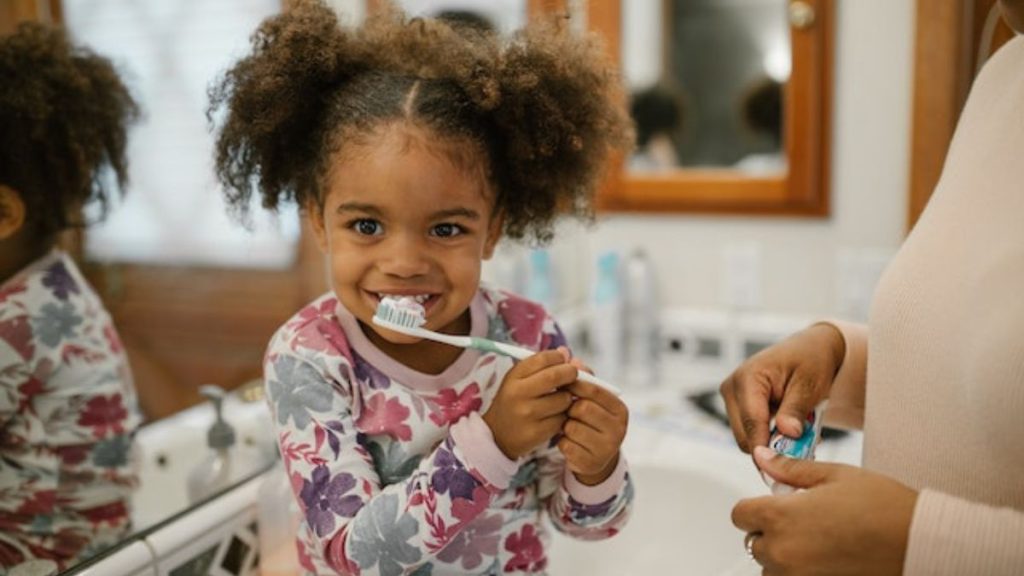
Seeing your child smile is one of the greatest joys of being a parent. By following these steps, you can improve your child’s smile and keep it that way for the rest of their life. They will definitely be thankful for that.