Fly Zapper Not Working? Safe Checks for a Bug Zapper

If your fly or bug zapper is not working, check its power source, operating mode, lamp and accessible collection tray. A lamp that lights up does not prove the killing grid works. Stop using the unit if it is damaged, wet, overheating or repeatedly tripping power.
Updated October 2026
Keep children and pets away while you check it. Switch it off and unplug it before any maintenance allowed by the manual. Do not bend the grid, bridge it with a screwdriver or dismantle the electrical housing. Those are repair jobs, not routine household troubleshooting.
Match the symptom to a safe next step
| Symptom | Possible explanation | Safe next step |
|---|---|---|
| No light or indicator | No supply, wrong mode, discharged battery or a fault. | Check external controls and the correct power supply; stop if damaged. |
| Light on, but no zapping | No insect contact, dirty accessible parts, ageing lamp or killing-circuit fault. | Read the manual, clean only permitted parts and seek service if unresolved. |
| Repeated crackling without obvious insects | Debris, moisture or an electrical fault. | Switch off and unplug; do not keep running it to clear the problem. |
| Trips the safety switch or smells burnt | An electrical fault may be present. | Stop use and arrange qualified advice. Do not keep resetting it. |
1. Check the power supply and settings
Start with the simple external checks. Is the plug fully inserted, is the outlet switched on and is the appliance’s own switch on? Does the unit have a timer, daylight sensor or separate lamp setting? A device designed to activate after dark might be behaving normally.
For a rechargeable unit, charge it only with the supply specified by the manufacturer. For a battery model, follow the battery instructions and check orientation. A solar unit may need charging time or a different position, but do not substitute a charger or power adaptor that merely seems to fit.
If the lead, plug or socket is damaged, unusually hot or shows scorching, stop there. A supply problem is not permission to repair a lead at home. Queensland’s electrical safety at home guide advises safe appliance handling and qualified electrical repairs.
If a safety switch has tripped, avoid repeated resets to keep the zapper running. Disconnect the suspected appliance if it is safe to do so and get advice. Other equipment or the circuit itself may be involved, so do not assume a new zapper would solve the problem.
2. Check what the lamp can tell you
Compare the light and indicator behaviour with your exact manual. A UV lamp may still look lit while needing replacement according to the manufacturer’s schedule. On other models, the lamp is not user-replaceable. Do not buy a globe based only on its shape or wattage.
If the manual permits a lamp change, use the specified replacement and follow its full procedure. This includes disconnecting power and observing any cooling or waiting period. If replacing it requires opening the electrical housing or exposing the grid, ask the manufacturer or an authorised repairer to do it.
LED units and fluorescent-lamp units do not share one universal replacement method. A Black Flag, Stinger, Aspectek or Zap It model found in a search result may have different parts, power requirements and servicing limits from the unit in your Australian home.
3. Clean only the parts the manual allows
Insect debris can collect in a removable tray or accessible cleaning area. After switching off and unplugging, wait for the period specified in the manual. Empty a tray only if it is designed to be removed by the user. Use the cleaning method the manufacturer gives.
Do not reach through the guard to scrape the grid. Do not spray water, household cleaner or compressed air into the appliance unless its instructions explicitly allow that method. Keeping the unit unplugged is essential, but it does not make every internal part safe to touch.
If insects are stuck somewhere you cannot access without tools or removing a protective guard, leave them and ask for service advice. A quick brush through the wires can damage the unit and put your hands near components you should not handle.
4. Check placement and expectations
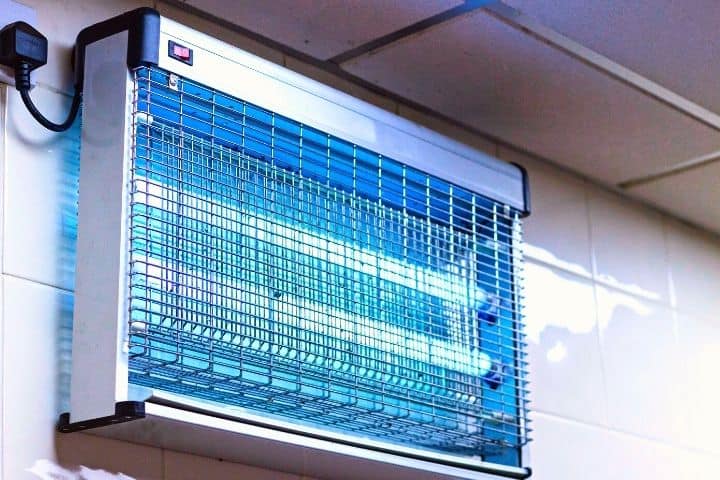
A working zapper may be quiet simply because no insect has contacted its grid. You do not need to hear regular zaps, a hum or crackling to prove normal operation. Observe it from outside the guard without putting your face close to it.
Check the intended indoor or outdoor use, recommended placement and operating conditions in the manual. Keep it away from food and children’s play spaces. Do not move it beside a cot or dining table to attract insects closer to people.
If the concern is mosquito bites, a new bulb might not fix your actual problem. NSW Health Pathology’s mosquito advice explains the limits of bright-light zappers. Our guide to whether bug zappers work separates mosquito protection from simply catching insects.
Light on but not zapping: what should you do?
After external checks and permitted cleaning, the unit may still have a fault in its killing circuit. You cannot safely diagnose that by crossing wires, pressing a screwdriver between bars or placing an insect on the grid. The grid’s voltage also cannot be judged from the brightness of the lamp.
Contact the retailer or manufacturer with the model number, purchase date and a description of what you have observed. A photo of the intact exterior or indicator can help. Ask whether the unit needs an approved replacement part, warranty service or replacement.
Do not take apart a sealed low-cost unit because a repair costs more than a replacement. If a repair is not supported, ask how to dispose of it appropriately. Before reusing an older unit, check the ACCC Product Safety website for recalls. Its Garden Edge bug-zapper recall is one example of why a damaged or recalled device should stay out of use.
When to stop using the zapper straight away
Stop for a cracked casing, loose or damaged guard, exposed wires, burnt smell, smoke, overheating, persistent unexplained sparking or power trips. Water damage also needs advice before reuse. Our wet-weather guide can help you check the right questions, but your appliance’s rating and instructions decide where it belongs.
Keep children away from the unplugged unit as well as the operating one. Store it where they cannot poke the grid, pull the cable or reach it from furniture. See Queensland’s child electrical safety guidance for household precautions.
If the popping noise upsets your pet, do not keep moving it closer to the animal to test its reaction. The dog and bug-zapper guide covers noise concerns. If mosquitoes are the issue, our Japanese encephalitis explainer provides background; use current health advice for bite prevention and any vaccination questions. For product options, see our baby insect-repellent guide, then check each product’s age limits and label directions with a pharmacist.
Frequently asked questions
Why does my bug zapper light up but not zap?
The light and killing circuit have different jobs. There may be no insect contact, a maintenance issue or an electrical fault. Check the manual and accessible parts, then ask for service advice if it remains unresolved.
How do I test a bug-zapper grid?
Do not test it by touching, bridging or inserting an object into the grid. Use only a user check specifically described in your model’s manual. Electrical testing belongs with a qualified repairer.
Why is my Black Flag or Stinger zapper not working?
Find the manual for the exact model and market. Start with permitted power, mode and maintenance checks. Do not copy repairs for a different model or adapt an overseas unit’s power supply.
Why does my bug zapper keep zapping?
Occasional noise can be insect contact. Persistent unexplained crackling can also involve debris, moisture or a fault. Turn it off and unplug it rather than leaving it running to burn debris away.
Does a bug zapper have to make a humming sound?
No. A hum is not a reliable working test across different designs, and silence does not prove failure. Use the manufacturer’s instructions and indicators, with service advice if performance is unclear.
If you need to replace an unserviceable unit, our bug-zapper buying guide is a starting point. Check the intended use and safety features before choosing another appliance.
Original image downloads
The original article images are kept here as downloads. They are illustrative and do not show repair instructions.