Can a Humidifier Set Off a Smoke Alarm? Safe Next Steps

Yes, a humidifier can set off a smoke alarm. Moisture from steam, mist or condensation can contribute to a nuisance alarm. But an alarm sounding while the humidifier is running does not prove that moisture caused it. First rule out a fire without putting yourself in danger; if there is smoke, fire or uncertainty, get everyone to safety and call Triple Zero (000).
Updated October 2026.
Once you know there is no fire, turn off the humidifier and investigate the cause. Never remove a battery, cover an alarm or disconnect it so you can keep using the humidifier. A working alarm matters more than continuing to add moisture to a room.
What to do at a glance
| Situation | Practical response |
|---|---|
| Alarm sounds and you see smoke, smell burning or are unsure | Follow your escape plan, get everyone to safety and call 000. |
| No fire; humidifier is producing mist or steam nearby | Switch the humidifier off. Clear the moisture safely and follow the alarm manual. |
| Alarm sounds repeatedly, including with the humidifier off | Arrange inspection or maintenance; do not assume it is a moisture problem. |
| Windows, walls or bedding are becoming wet | Stop adding moisture and address dampness. |
| You want to remove smoke from the air | A humidifier cannot remove bushfire smoke particles. Follow local health and emergency advice. |
Why moisture can trigger an alarm
Fire and Rescue NSW lists steam among common causes of unwanted alarms. That guidance covers automatic fire alarm systems, but the issue also appears in domestic alarm manuals: this First Alert manual identifies humidifiers as sources of high humidity. The practical conclusion is that a humidifier can be a possible cause, rather than that every humidifier will trigger every alarm.
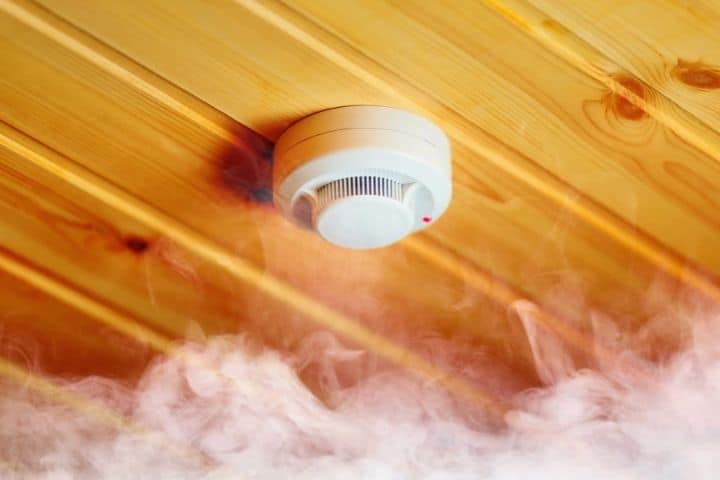
Photoelectric smoke alarms detect changes in light inside a sensing chamber. Moisture droplets can interfere with that process. Brooks’ technical manual explains light scattering and notes that steam can cause false alarms in photoelectric units. A newer alarm is therefore not automatically immune to a humidifier’s output.
There is no single room-humidity reading or separation distance that guarantees no nuisance alarm. Sensor design, airflow and the location of the moisture source all matter. Use the instructions for your own alarm and humidifier, and seek advice if the two cannot be used together safely.
If the alarm is sounding now
Start with fire safety, even if the same thing happened yesterday. Queensland Government advice says to check for a fire when a smoke alarm sounds. Do not spend time adjusting a humidifier when you suspect a real fire. In an apartment building, follow the building’s emergency procedures.
- If there is a fire or you cannot safely rule one out, move everyone to safety and call 000. Do not go back for belongings.
- Only after confirming there is no fire, switch off the humidifier. If safe and outdoor air is suitable, ventilate the room to clear moisture.
- Use a temporary hush function only as directed by the alarm manufacturer, after ruling out a fire. It does not fix the underlying cause.
- If the alarm keeps sounding or you cannot identify the cause, contact your property manager, alarm service provider or a qualified electrician.
Reduce repeat alarms without weakening protection

Review the humidifier’s position and output
Keep its output away from the alarm, bedding, walls and electrical equipment. Move the portable humidifier to a suitable stable surface if its manual allows, rather than relocating the smoke alarm. Keep the unit and cord out of children’s reach. If no suitable position is available, stop using it until you have advice.
A hygrometer can help you track room moisture, but do not use it as proof that an alarm is false. Reduce output or stop use if surfaces become damp. Our guide to humidifiers making things wet explains the practical warning signs.
Check other likely sources

Steam from showers, cooking fumes, aerosols, dust and insects are also recognised causes of unwanted alarms. Note what was happening when the alarm sounded and whether it happens when the humidifier is off. A brief record can help a technician find the problem. Avoid deliberately reproducing an alarm with steam or sprays.
Keep alarms maintained
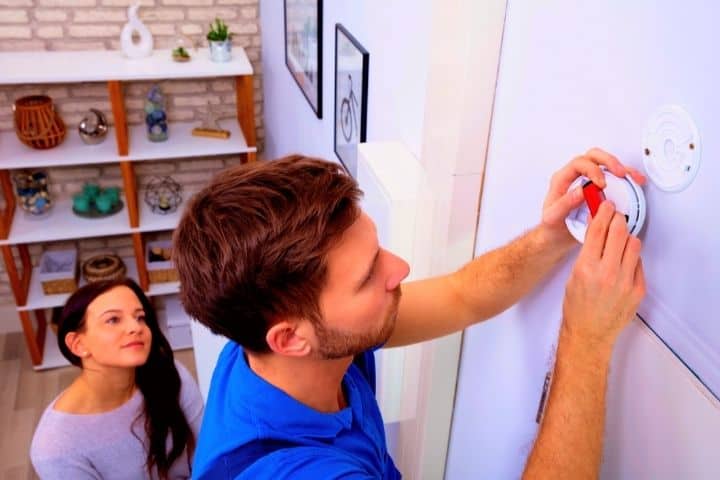
Fire and Rescue NSW recommends monthly testing and vacuuming dust off alarms every six months. Follow your model’s instructions and local requirements. Do not wet the alarm, spray cleaning products into it or open its sensor chamber. Fault warnings and replacement dates need attention; sealed batteries and hardwired systems require the appropriate service rather than improvised repairs.
If you rent, report repeated alarms or a fault promptly to the property manager. Alarm placement and replacement must preserve the protection required in your state or territory. Do not replace an alarm with a different sensor type simply to make a nuisance alarm stop.
Does a humidifier help with smoke in the air?
No. A humidifier adds moisture; it does not clean smoky air. NSW Health specifically says humidifiers do not remove fine particles in bushfire smoke. It advises limiting exposure, following warnings and keeping indoor air cleaner. An appropriately used air purifier with a HEPA filter can help remove smoke particles indoors.
During outdoor smoke events, follow local advice about doors, windows and air conditioning. Opening windows to clear humidity may bring smoke inside, so switching off the humidifier can be the better immediate choice once fire has been ruled out. If smoke is coming from a fire in your home, escaping and calling 000 take priority over any appliance.
Using a humidifier around children

For advice about whether added moisture is useful, read how humidifiers work and our baby-room humidifier guide. Steam and hot water can burn; Raising Children Network warns against steam baths for children. Seek your GP’s or maternal and child health nurse’s advice about persistent congestion rather than treating the appliance as a cure.
Dampness is also a reason to stop. NSW Health recommends limiting humidifier use to help prevent mould. Use the cleaning and water instructions supplied with the unit, and never leave standing water or visible contamination untreated.
Frequently asked questions
Can a cool-mist humidifier set off a smoke detector?
It can. Cool mist still introduces moisture, and an alarm may react to conditions around its sensor. Switching to cool mist does not guarantee that nuisance alarms will stop. Always rule out fire first.
Can a diffuser set off a smoke alarm?
A diffuser that releases mist may also contribute to moisture around an alarm. Do not assume a sounding alarm is reacting to fragrance or mist. Turn the diffuser off only after dealing with possible fire danger, and check its instructions.
Will a dehumidifier set off a smoke alarm?
A dehumidifier removes moisture, so it is not normally producing the mist discussed here. If an alarm sounds while one runs, investigate the alarm and the appliance rather than dismissing it. Burning smells or smoke require an emergency response.
How far should a humidifier be from a smoke alarm?
There is no universal distance for all models and rooms. Consult both manuals, keep the humidifier’s output away from the alarm and seek professional advice if alarms recur. Leave alarm positioning to someone who understands the applicable installation requirements.
Should I switch to a different smoke alarm?
Ask a qualified installer or your property manager if your alarm needs replacement or assessment. Choose compliant protection for the home, with local requirements and compatibility checked. Keeping an unsuitable or faulty unit, or disabling one to avoid alarms, is unsafe.